

SoftWave Therapy for Plantar Fasciitis & Foot Pain in Rochester, NY
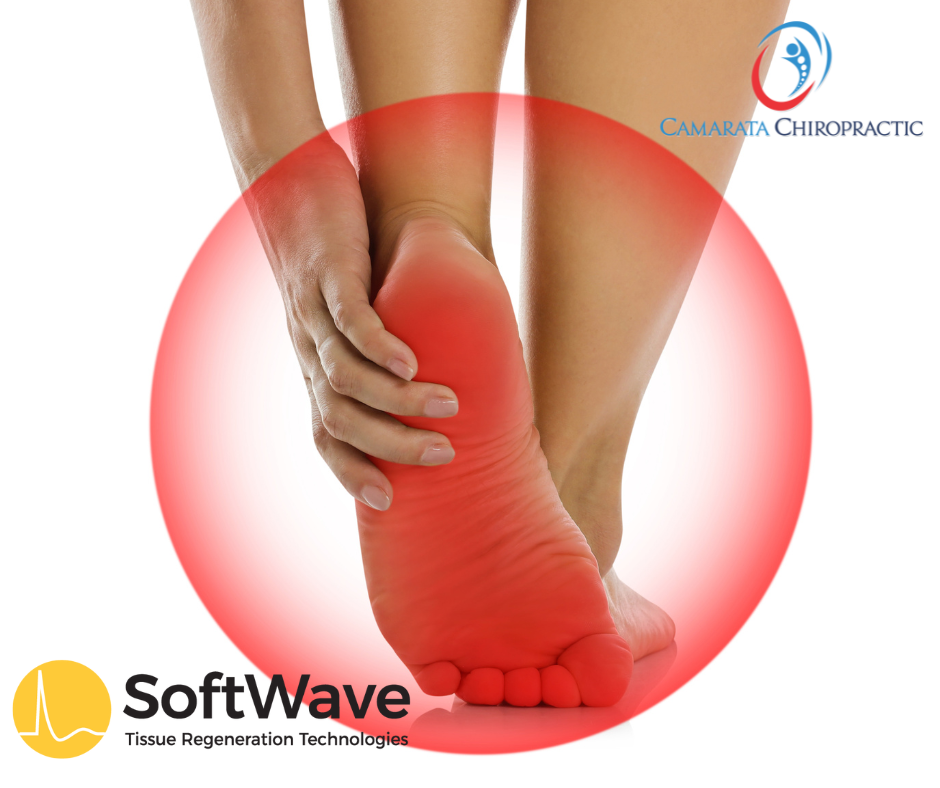
That first step out of bed in the morning feels like stepping on a nail. It eases up after a few minutes, then comes roaring back after a long shift, a walk along the Erie Canal, or an afternoon on hard floors. Many Rochester patients tell us they have tried new shoes, inserts, stretching, night splints, and rolling a frozen water bottle under the arch, and their heel still hurts months later.
At Camarata Chiropractic & Wellness, Dr. Sam Camarata helps people from Brockport and all over the Rochester area find a better path for plantar fasciitis and stubborn foot pain. SoftWave Tissue Regeneration Technology (TRT) is a non-surgical, drug-free option designed to help the plantar fascia and surrounding tissue repair, so you are not just getting through each day on your feet.
Common Plantar Fasciitis & Foot Pain Problems We See
- Plantar fasciitis: sharp heel or arch pain from irritation and breakdown of the thick band of tissue under the foot, often worst with the first steps of the day.
- Chronic plantar fasciopathy: long-standing heel pain where the fascia has thickened and degenerated rather than simply inflamed.
- Heel pain with a bone spur: a spur that shows up on X-ray alongside heel pain, where the irritated soft tissue is often the real pain source.
- Achilles tendinopathy: pain and stiffness at the back of the heel or along the Achilles tendon, common in runners and walkers.
- Posterior tibial tendon dysfunction: inner ankle and arch pain that can come with a slowly flattening arch.
- Big toe joint pain: stiffness and aching at the base of the big toe from hallux rigidus or turf toe.
- Standing-all-day foot pain: nurses, teachers, retail and warehouse workers who spend long shifts on concrete and hard floors.
Why Plantar Fasciitis Pain Often Lingers
The plantar fascia works like a bowstring that supports your arch every time you take a step. When it is overloaded by long hours standing, a jump in running mileage, weight changes, tight calves, or worn-out footwear, tiny tears develop where it attaches to the heel bone. In many long-term cases, the tissue is no longer truly inflamed. It has become thickened, disorganized, and poorly supplied with blood, which makes natural healing slow.
The other challenge is obvious: you cannot stop walking. Every step loads the same tissue that is trying to heal. Stretching, orthotics, and supportive shoes can reduce strain, and they are worth doing, but they do not directly rebuild the fascia. Cortisone shots may calm pain temporarily, yet repeated steroid injections can weaken the fascia and the fat pad that cushions your heel. Surgery is an option for some, but many people would rather try conservative care first.
Rochester life adds its own twist. Heavy winter boots, icy sidewalks that change how you walk, and then a sudden spring jump into running, hiking, or yard work can all set off heel pain or keep it from settling down.
How SoftWave Therapy Helps Plantar Fasciitis & Foot Pain
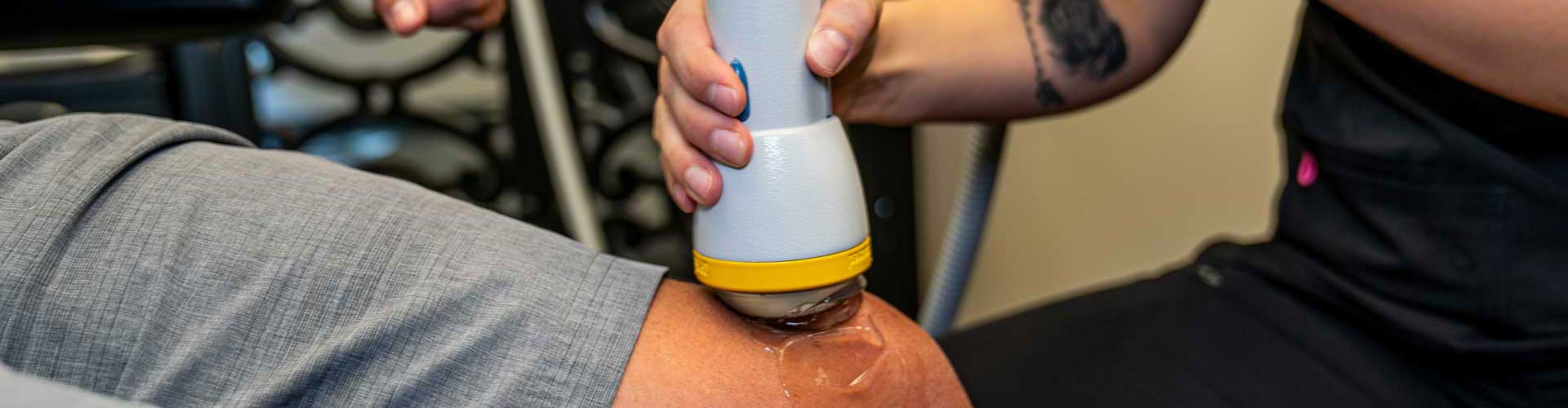
SoftWave uses electrohydraulic, spark-generated acoustic waves shaped by a patented parabolic reflector. It is the only broad-focused shockwave technology, reaching a wider and deeper area of tissue than radial pressure wave devices or narrowly focused electromagnetic and piezoelectric systems. For the foot, that means we can treat the heel attachment, the length of the arch, and the calf and Achilles connections in the same visit.
- Activating repair cells: SoftWave signals the body's resident stem cells in the fascia and tendons to activate and begin repair.
- Restoring blood flow: it promotes the growth of new small blood vessels (angiogenesis) through VEGF and eNOS signaling, helping bring oxygen and nutrients to poorly supplied tissue.
- Rebuilding collagen: growth signals such as PCNA and BMP support new, organized collagen to replace degenerated fascia fibers.
- Regulating inflammation: SoftWave helps modulate the inflammatory response, including toll-like receptor activity, rather than shutting down healing.
- Clearing stuck tissue: it may help the body clear senescent cells that keep chronic heel pain from resolving.
SoftWave is FDA-cleared for activation of connective tissue, temporary increase in blood flow, and temporary relief of minor muscle and joint pain. Some patients add our Trifecta Red Light bed as a complementary recovery option.
What to Expect at Camarata Chiropractic & Wellness
Your visit begins with a consultation. Dr. Sam will ask when your foot pain started, what time of day it is worst, what shoes you wear, and what you have tried. He will examine your foot, ankle, knee, hip, and low back, because how you move higher up can change how your foot is loaded. If anything points to a stress fracture, nerve problem, or circulation concern, we will tell you and help you get the right care.
If SoftWave is right for you, sessions are short, usually about 10 to 15 minutes. There are no needles, no medication, and no downtime, so you can walk out and go about your day. Treatment is typically a series of sessions over several weeks, and healing continues after your final session as the tissue keeps remodeling. We may also recommend calf and foot exercises, footwear tips, and chiropractic care to support your results.
If heel pain is shaping your mornings and limiting your walks, book your SoftWave consultation with Dr. Sam and let's find out whether it can help.
Plantar Fasciitis & Foot Pain Articles from Our Blog
- Plantar Fasciitis Relief in Rochester, NY: Why SoftWave Therapy Works When Stretching, Inserts, and Injections Haven't
- Achilles Tendinopathy and Stubborn Heel Pain in Rochester, NY: How SoftWave Heals the Tendon
- Teachers, Nurses, and Retail Workers on Their Feet All Day: SoftWave Relief for Back to School Season
- Posterior Tibial Tendon Dysfunction and Collapsing Arches: A SoftWave Option for Inner Ankle Pain
- Hallux Rigidus and Big Toe Arthritis: Non-Surgical Relief with SoftWave in Rochester, NY
- Turf Toe and Big Toe Joint Pain: How SoftWave Supports Healing for Rochester Athletes
Frequently Asked Questions
I have had plantar fasciitis for over a year. Is it too late for SoftWave?
Not necessarily. Long-standing heel pain is often a chronic tissue problem, which is the kind of stalled healing SoftWave is designed to address. Every case is different, and Dr. Sam will give you an honest opinion after your exam.
Can I keep walking, working, or running during treatment?
There is no downtime after a session, so you can keep working and walking. If you run, we may suggest adjusting your mileage for a while so the fascia has a better chance to rebuild.
Should I keep wearing my orthotics?
Usually, yes. Supportive footwear and inserts can reduce strain while the tissue heals. We will review what you are using and let you know if anything should change.
What if my heel pain is from a bone spur?
Many people have a heel spur on X-ray, but the pain often comes from the irritated soft tissue around it. SoftWave focuses on that tissue, and we will discuss what your exam and any imaging show.
Schedule Your SoftWave Consultation in Rochester
Your mornings should not start with heel pain. Let's find out whether SoftWave can help your feet heal so you can get back to walking, working, and enjoying Rochester on your feet.
Book your SoftWave consultation today
Camarata Chiropractic & Wellness
3237 Union St
North Chili, NY 14514
Phone: 585-617-4145

 3237 Union St,