
Blog & Resources
Plantar Fasciitis Relief in Rochester, NY: Why SoftWave Therapy Works When Stretching, Inserts, and Injections Haven't

You step out of bed in the morning, and the first stride lights up your heel like you stepped on a tack. By the time you make it to the coffee pot, the sharpness eases — but it’s back the moment you sit for a while and stand up again. That’s plantar fasciitis. And if you’ve had it for more than a few weeks, you already know it doesn’t just “walk itself off.”
At Camarata Chiropractic & Wellness in North Chili of Rochester, NY, plantar fasciitis is one of the most common conditions we treat with SoftWave Tissue Regeneration Therapy. Patients come in after months — sometimes years — of stretching, rolling a frozen water bottle, wearing inserts, getting cortisone injections, and still being unable to stand for a full shift or run without pain.
Here’s why so many of those approaches stall, and why SoftWave is helping Rochester patients finally turn the corner.
What Plantar Fasciitis Actually Is
The plantar fascia is a thick, fibrous band of connective tissue that runs along the bottom of your foot, from the heel bone to the base of the toes. It supports the arch and absorbs load every time you take a step.
When that tissue gets overloaded — from running, walking on hard surfaces, standing all day at work, sudden weight gain, tight calves, or just years of cumulative wear — tiny tears develop where the fascia attaches to the heel. The body tries to repair them, but if the area keeps getting reloaded before it heals, the tissue slips into a state of chronic, low-grade dysfunction. That’s when pain becomes a daily companion.
Classic plantar fasciitis symptoms include:
- Sharp heel pain with the first steps in the morning
- Pain after long sitting (the “start-up” pain)
- Aching arches after standing or walking
- Pain that improves with movement but flares again after rest
- Tenderness when you press on the inside of the heel
Why Stretching, Inserts, and Injections Often Fall Short
Most plantar fasciitis advice you’ll find online focuses on managing the symptom: stretch the calves, roll the foot, wear supportive shoes, ice it, take an anti-inflammatory. Those things have their place, especially early on.
But once plantar fasciitis becomes chronic, the tissue itself has changed. The fascia thickens, becomes fibrotic, and loses its normal blood supply. Stretching a degenerated tendon doesn’t regrow it. Inserts redistribute load but don’t repair tissue. Cortisone injections can quiet inflammation for a few weeks, but they can also weaken the fascia — and rupture is a real risk after multiple injections in the same spot.
What chronic plantar fasciitis actually needs is regeneration — new blood flow, new repair signaling, and a way to break up the disorganized scar tissue that’s replaced healthy fascia.
How SoftWave Therapy Targets Plantar Fasciitis
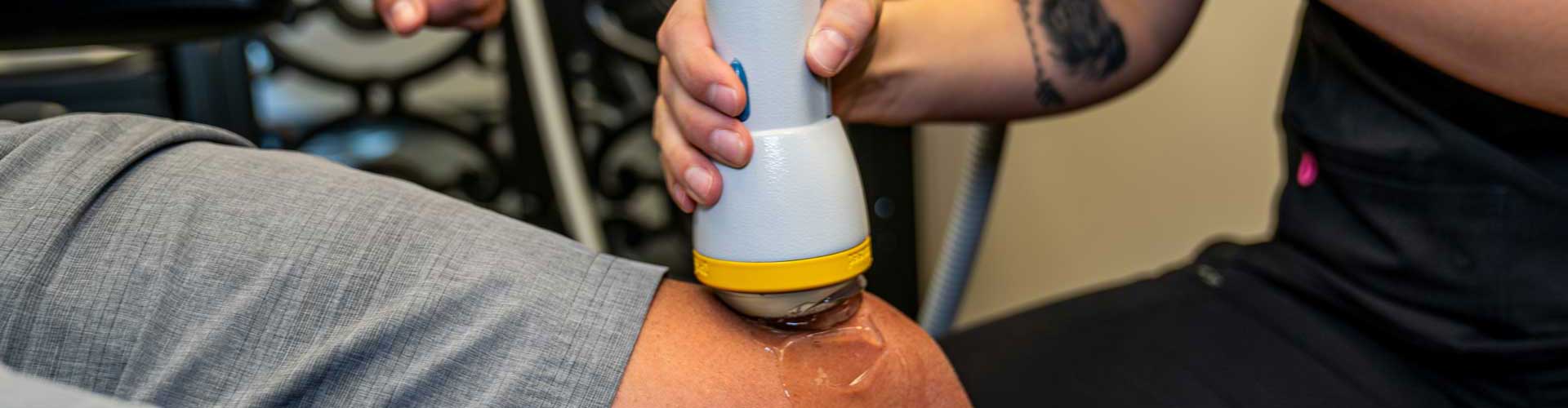
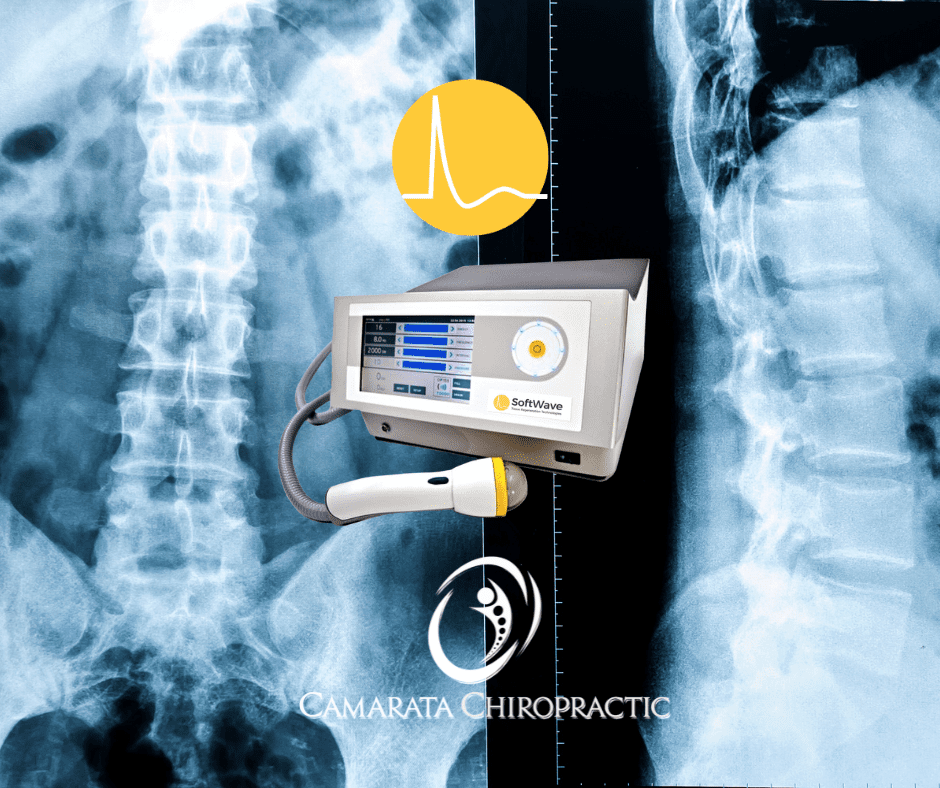
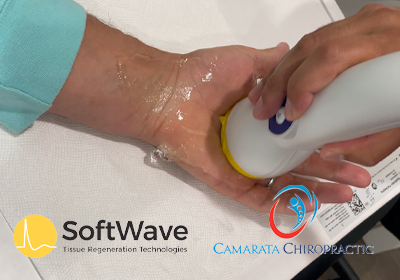
SoftWave delivers broad-focused electrohydraulic acoustic waves directly into the heel, arch, and surrounding tissue. The mechanical energy creates a biological cascade that addresses the actual problem — not just the pain signal.
In plantar fasciitis specifically, SoftWave:
- Increases blood flow to a region of tissue that has notoriously poor circulation
- Stimulates angiogenesis — the formation of new blood vessels — so the fascia can finally get the oxygen and nutrients it needs to heal
- Activates resident stem cells in the foot, which migrate to the damaged fascia and contribute to repair
- Breaks up fibrotic scar tissue that’s replaced healthy fascia
- Reduces inflammation through the body’s natural anti-inflammatory response
This is the same category of regenerative shockwave therapy that has FDA clearance for chronic plantar fasciitis — one of the few non-surgical interventions with that indication on the books.
What a SoftWave Session Looks Like for Plantar Fasciitis
If you come in for a plantar fasciitis evaluation at our North Chili office, we start by understanding the load story: your job, your activity level, your footwear, what you’ve already tried, how long the pain’s been with you. From there a typical SoftWave session involves:
- Treatment along the heel, the medial arch, and the plantar fascia itself
- Treatment up into the calf if the calf complex is contributing to the load (it usually is)
- About 10–15 minutes of hands-on application
- No needles, no anesthesia, no downtime — you walk out and go on with your day
The treatment feels like firm, rapid tapping. Most patients tolerate it easily. Many feel reduced morning pain within the first two or three sessions.
How Many Sessions Are Usually Needed?
Plantar fasciitis that’s been around for months or years didn’t happen overnight, and it doesn’t resolve in one visit either. We typically recommend a treatment series so the fascia has consistent regenerative input over several weeks — long enough for new tissue to form and remodel.
Some patients see a meaningful drop in morning pain within the first few sessions. Others, especially those with longer-standing cases or heavier mechanical loads, need a longer runway. We’ll lay out exactly what your case calls for at the consultation.
You can browse real patient testimonials and SoftWave reviews from Rochester patients to see how others have responded.
Why Rochester Patients Are Choosing SoftWave for Heel Pain
The patients who come to us for plantar fasciitis are usually frustrated. They’ve done the stretches. They’ve bought the shoes. They’ve had the injection. They want to walk the dog, finish a shift, or get back on the trail without limping.
SoftWave is a fit because it works on the actual tissue dysfunction — not just the inflammatory layer on top. It’s drug-free. It doesn’t weaken the fascia the way repeated steroid shots can. And it leaves the door open for surgery to remain a last resort, not a first response.
To learn more about how the technology works and what it can address beyond plantar fasciitis, the Experience Healing page walks through the bigger picture.
Ready to Take the First Step Without Pain?
If you’ve been living with plantar fasciitis in Rochester, Chili, Churchville, Henrietta, Brighton, Webster, or anywhere in greater Rochester, we’d love to take a look at your case. SoftWave Therapy might be the missing piece you’ve been searching for.
Book your SoftWave Discovery Day here and let’s build a plan to get you back on your feet — literally.
Get a Hold of Us
Ready to upgrade your health from the inside out?
At Camarata Chiropractic & Wellness, we focus on identifying the root cause of dysfunction and optimizing your body’s performance through SoftWave Therapy, Red Light Therapy, chiropractic care, recovery strategies, and lifestyle guidance.
Address: 3237 Union St, North Chili, NY 14514
Phone: 585-617-4145
Email: info@camaratachiropractic.com
Website: https://www.camaratachiropractic.com
Facebook: https://www.facebook.com/camaratachiropractic
Instagram: https://www.instagram.com/camarata_chiro/
Schedule Your $99 New Patient Special Here! Choose SoftWave Therapy!
‹ Back



 3237 Union St,