
Blog & Resources
Achilles Tendinopathy and Stubborn Heel Pain in Rochester, NY: How SoftWave Heals the Tendon
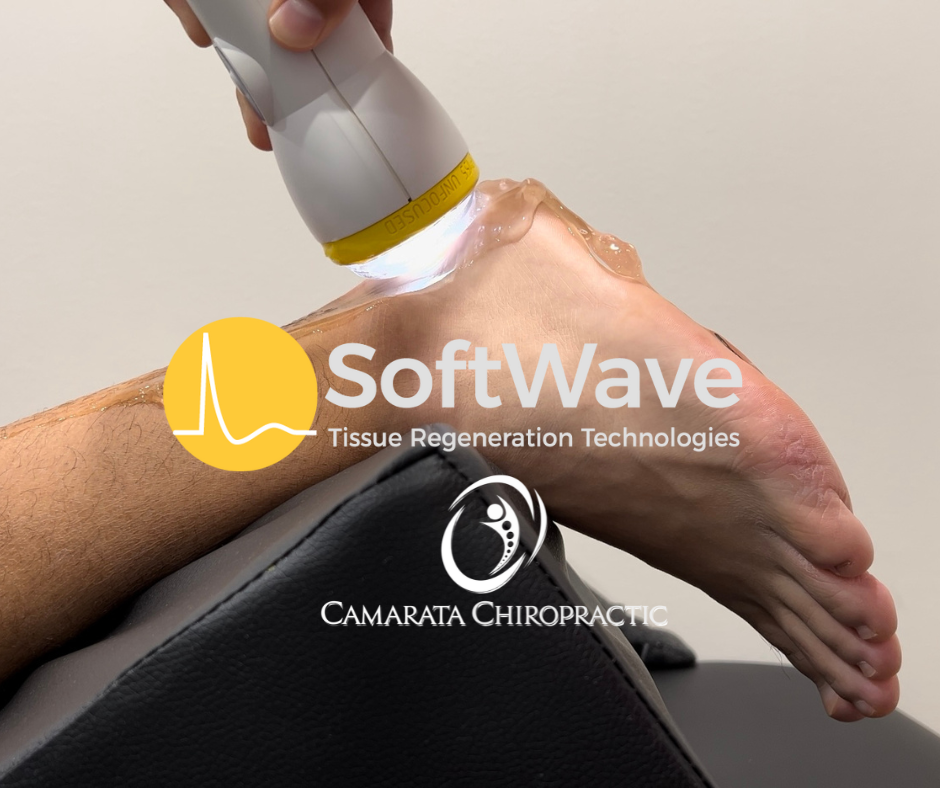
If you wake up most mornings and feel that familiar stiffness and ache at the back of your heel before you even take your first step, you already know how disruptive Achilles tendinopathy can be. It is not the kind of pain that simply fades on its own after a few days of rest. For many people in the Rochester area, it lingers for months, interferes with walking, running, and climbing stairs, and seems to resist almost everything that is supposed to help.
This is a particularly frustrating injury because the Achilles tendon is essential to nearly every movement we make on our feet. Whether you are a runner logging miles along the Erie Canal path, a walker who takes advantage of the parks and neighborhoods that come alive as warmer months arrive in Western New York, or simply an active adult who wants to stay on the move, Achilles pain has a way of sidelining you fast. The good news is that there are now options beyond stretching programs and cortisone shots. At Camarata Chiropractic & Wellness, we use SoftWave Tissue Regeneration Therapy to address Achilles tendinopathy at the tissue level, targeting the root cause rather than simply masking the discomfort.
Understanding what makes the Achilles so difficult to heal is the first step toward understanding why SoftWave can make such a meaningful difference. This post walks through the biology of the condition, why conventional care sometimes stalls, and how SoftWave creates the tissue environment that genuine tendon repair requires.
What Is Achilles Tendinopathy?
Achilles tendinopathy is a degenerative condition of the Achilles tendon, the thick band of connective tissue that links your calf muscles to your heel bone. It is distinct from plantar fasciitis, which affects the band of tissue running along the bottom of the foot. Achilles tendinopathy lives at the back of the heel and up into the tendon itself, and it comes in two primary forms.
- Mid-portion tendinopathy occurs roughly two to six centimeters above the heel bone insertion point. This is the most common form and tends to produce a visible or palpable thickening of the tendon in that zone.
- Insertional tendinopathy occurs right where the tendon attaches to the heel bone. This type can be especially stubborn and is sometimes accompanied by bone spur formation at the back of the heel.
Common signs of Achilles tendinopathy include:
- Morning stiffness at the back of the heel or lower leg that loosens slightly after you move around
- Pain that worsens with walking, running, or climbing stairs
- A thickened or nodular feel to the tendon when you press on it
- Discomfort that may ease during light activity but flares after exercise or prolonged standing
Why the Achilles Is So Slow to Heal
The Achilles tendon carries some of the highest mechanical loads in the human body, yet it is also one of the most poorly vascularized tendons. Blood supply is the foundation of tissue repair, and the Achilles has a region known as the watershed zone, located in that same mid-portion area most commonly affected by tendinopathy. In this zone, blood flow is naturally sparse. When tissue is damaged, the body’s usual healing cascade requires adequate circulation to deliver oxygen, growth factors, and repair cells. In the watershed zone, that supply is simply limited.
Over time, the damaged collagen fibers in the tendon begin to be replaced by disorganized, inferior collagen. Instead of the tightly woven, parallel collagen structure that gives healthy tendons their tensile strength and resilience, the tendon develops a jumbled matrix that is weaker and more prone to re-injury. This state is sometimes called tendinosis rather than tendinitis, because there is actually very little active inflammation present. The tissue is not acutely inflamed, it is chronically degenerated, and that distinction matters enormously for how you treat it.
Why Eccentric Exercise Sometimes Stalls
Eccentric calf loading protocols (the kind where you slowly lower your heel below a step) have solid evidence behind them and should still be part of most Achilles rehabilitation plans. However, they work by stimulating mechanical load through the tendon, which can support collagen remodeling and strength development in tissue that still has decent baseline vascularity and cell activity. When the tendon has progressed into a more degenerated, avascular state, the mechanical signal from exercise may not be enough to trigger meaningful repair. The cells needed to lay down new collagen are not showing up in sufficient numbers, and the blood vessels needed to support the process are not there. Exercise keeps pushing the signal, but the tissue cannot respond adequately.
This is the gap that SoftWave is designed to fill.
What Our Rochester Patients Are Saying
Real reviews from real SoftWave patients at Camarata Chiropractic & Wellness
How SoftWave Addresses the Root Cause in the Tendon
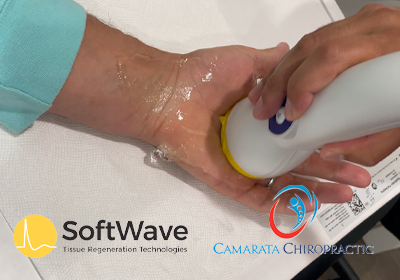
SoftWave Tissue Regeneration Therapy uses electrohydraulic extracorporeal shockwave technology to deliver a broad-focused acoustic wave into the target tissue. The waves are not injections and they are not heat-based. They create a mechanical signal that the body’s own cells can read and respond to through a process called mechanotransduction. In plain English: SoftWave talks to the tissue in the language tissue understands, mechanical force, and the tissue responds by activating its own repair biology.
In the context of Achilles tendinopathy, SoftWave is designed to:
- Stimulate angiogenesis, the formation of new blood vessels, directly addressing the vascularity deficit in the watershed zone and improving the local supply of oxygen and growth factors.
- Activate resident stem cells in and around the tendon, encouraging the migration of repair cells to the damaged area.
- Promote collagen remodeling, helping to replace disorganized scar-type collagen with a more structured, functional matrix over time.
- Break up fibrotic adhesions that may have developed within the tendon tissue and surrounding structures, improving mobility and reducing mechanical restriction.
- Modulate the local inflammatory environment, not by suppressing inflammation entirely, but by nudging it toward a productive, repair-oriented state rather than a chronic, dysfunctional one.
Many patients who have been doing everything right, stretching, loading, resting, modifying activity, find that SoftWave provides the additional biological stimulus that finally allows the tendon to move toward genuine healing.
What Candidacy Looks Like
SoftWave for Achilles tendinopathy tends to be a strong fit for people who:
- Have been dealing with Achilles or insertional heel pain for more than a few weeks and are not seeing meaningful progress
- Have tried rest, physical therapy, orthotics, or anti-inflammatory approaches without lasting relief
- Want to avoid cortisone injections (which can weaken tendon tissue with repeated use) or surgical options
- Are active adults, runners, walkers, or recreational athletes who want to return to their activities
- Are in their 30s through their 70s and are dealing with the cumulative wear that can accumulate over years of activity or occupational loading
SoftWave is non-surgical, non-injection, and requires no downtime. It is not appropriate for active tendon tears, so a proper evaluation is important before starting care.
If you are ready to find out whether SoftWave is right for your Achilles pain, you can book a SoftWave consultation at Camarata Chiropractic & Wellness and get a clear picture of what is happening in the tendon and what a care plan would look like for you.
What a SoftWave Plan for Achilles Tendinopathy Looks Like
Treatment begins with a thorough evaluation to confirm the type and severity of tendinopathy and rule out any structural issues that would need a different approach. SoftWave sessions themselves are typically brief, often 10 to 15 minutes focused on the affected tendon and surrounding tissue. Most patients report minimal discomfort during the session, and many notice a change in how the tendon feels in the days following.
A typical Achilles care plan involves a series of sessions over several weeks, often paired with guidance on loading and activity modification. Because the mechanism of SoftWave is tissue repair rather than symptom suppression, the improvement tends to build progressively. Many patients report meaningful reduction in morning stiffness, improved tolerance for walking and stairs, and a gradual return to the activities that Achilles pain had been limiting.
Rochester Runners and Active Adults: Timing Matters
For Rochester-area residents who have been nursing Achilles pain through the winter months with the hope of being ready when the weather turns, now is the time to act. Trying to ramp activity back up on a tendon that has been in a chronic, degenerative state is a reliable way to set the injury back further. SoftWave gives the tissue a head start on repair so that when you do return to your regular walks, runs, or recreational sports, the tendon is better prepared to handle the load.
You can read about the experiences of patients who have found relief at Camarata Chiropractic & Wellness on our SoftWave TRT reviews page, and if you want to understand the full scope of what the practice offers, the experience healing page gives a clear overview of how the approach works and what to expect from care.
A Drug-Free Path to Tendon Repair
Achilles tendinopathy persists not because the body is incapable of healing the tendon, but because the tendon’s limited blood supply and the degenerative changes that accumulate over time create a tissue environment where healing stalls. SoftWave is designed to reset that environment: building new vascularity, activating repair cells, and guiding the collagen remodeling process that the tendon needs. It is a drug-free, non-surgical approach that works with the body’s own biology rather than around it.
For many patients who had all but accepted that Achilles pain was just going to be part of daily life, SoftWave has offered a different outcome. If you have been tolerating heel and tendon pain and wondering whether anything can actually change it, this is a therapy worth understanding.
Ready to Get Started?
If you’re dealing with chronic pain in Rochester, Chili, Churchville, Spencerport, Gates, Greece, Hilton, Rush, Henrietta, Scottsville, Caledonia, LeRoy, Brighton, or anywhere in the greater Rochester area, we’d love to help you find a path that works with your body, not against it.
Book your consultation here and let’s build a plan around what your tissue actually needs.
Get a Hold of Us
Ready to upgrade your health from the inside out?
At Camarata Chiropractic & Wellness, we focus on identifying the root cause of dysfunction and optimizing your body’s performance through SoftWave Therapy, Red Light Therapy, chiropractic care, recovery strategies, and lifestyle guidance.
Address: 3237 Union St, North Chili, NY 14514
Phone: 585-617-4145
Email: info@camaratachiropractic.com
Website: https://www.camaratachiropractic.com
Facebook: https://www.facebook.com/camaratachiropractic
Instagram: https://www.instagram.com/camarata_chiro/
Schedule Your New Patient Special Here!
Learn about our newest offering and the powers of red light therapy at RedLightRochester.com.
‹ Back


 3237 Union St,