
Blog & Resources
Posterior Tibial Tendon Dysfunction and Collapsing Arches: A SoftWave Option for Inner Ankle Pain
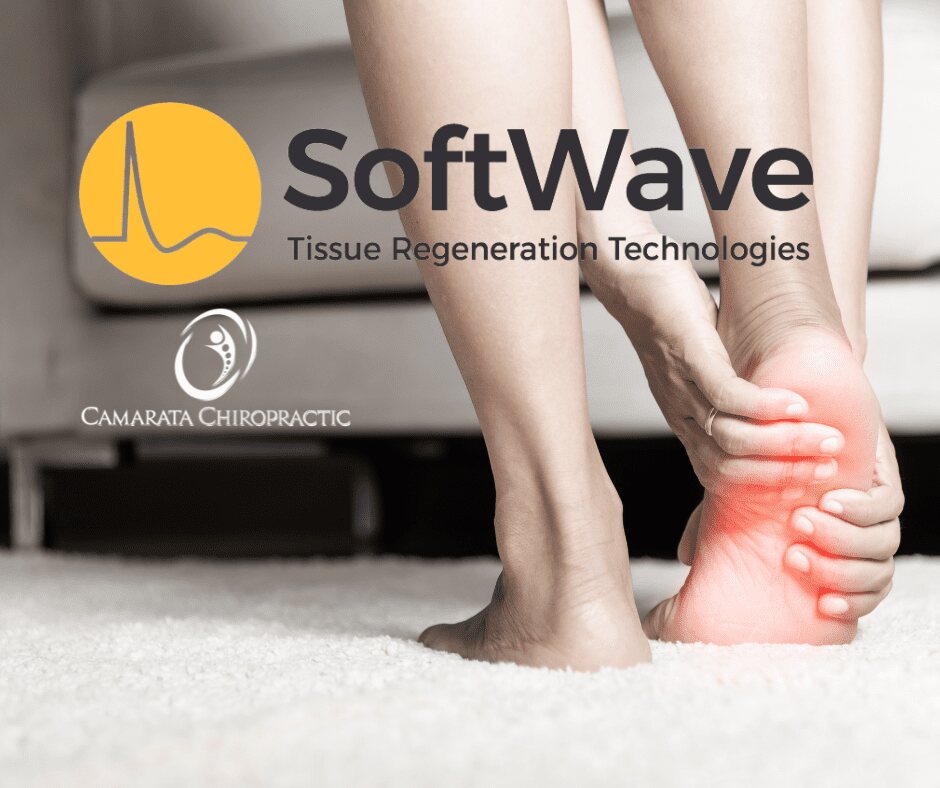
Inner Ankle Pain and a Flattening Arch? Rochester, Your Posterior Tibial Tendon May Be Asking for Help
Maybe you first noticed it as an ache along the inside of your ankle after a long walk along the Erie Canal path. Maybe your favorite shoes started wearing unevenly, or someone pointed out that one foot looks flatter than the other. Those changes are easy to dismiss, but they can be early signs of posterior tibial tendon dysfunction, a condition that tends to slowly progress if it is ignored.
At Camarata Chiropractic & Wellness in North Chili, Dr. Sam Camarata sees patients from across the Rochester area who have been told they have "flat feet" without anyone explaining what is driving the change. In this article we will cover what the posterior tibial tendon does, why it breaks down, how the condition is usually managed, and where SoftWave Tissue Regeneration Technology may fit as a non-surgical option.
Meet the Posterior Tibial Tendon
The posterior tibialis muscle sits deep in the back of the lower leg, between the tibia and fibula. Its tendon curves around the inside of the ankle, just behind the bony bump known as the medial malleolus, and attaches mainly to the navicular bone on the inner midfoot, with additional slips to other bones on the bottom of the foot.
This tendon is one of the main supports of the arch. Every time you take a step, it helps hold the arch up, controls how much your foot rolls inward, and locks the midfoot into a rigid lever so you can push off. When it is healthy you never think about it. When it weakens, the arch slowly loses its support.
Why This Tendon Is Vulnerable
The section of the tendon that wraps behind the inner ankle has a relatively poor blood supply. It also changes direction sharply at that point, which concentrates stress. Repeated loading in that spot can lead to degeneration over time rather than a single dramatic injury.
Who Develops Posterior Tibial Tendon Dysfunction?
PTTD is often described as a common cause of adult-acquired flatfoot. It can affect anyone, but it shows up more often in certain groups:
- Women over 40
- People carrying extra body weight
- Those with diabetes, high blood pressure, or inflammatory arthritis
- People who already had flexible flat feet earlier in life
- Anyone with a history of ankle injury or steroid injections near the tendon
- Workers who stand or walk on hard floors all day, and runners or walkers who ramp up mileage quickly
Signs and Symptoms to Watch For
- Pain and swelling along the inside of the ankle, often following the line of the tendon
- An arch that seems to be flattening, sometimes on one side only
- The heel drifting outward when viewed from behind, sometimes called the "too many toes" sign because more of the toes are visible on the outside of the foot
- Difficulty or pain when trying to rise up onto the toes of one foot
- Fatigue in the foot and ankle after standing, and in later stages, pain on the outside of the ankle as the bones begin to crowd together
Why Stage Matters
In early stages the tendon is irritated but the foot is still flexible, meaning the arch can be restored when the foot is unloaded. In later stages the deformity can become rigid, and arthritis may develop in the hindfoot. The earlier the tendon gets attention, the more options remain on the table.
Red Flags
Please see a medical provider promptly if you felt a sudden pop with immediate weakness, if your foot shape changed rapidly, if you have diabetes with numbness and a warm, red, swollen foot (which can signal a Charcot foot), or if you cannot bear weight. These situations need proper imaging and medical care.
What Our Rochester Patients Are Saying
Real reviews from real SoftWave patients at Camarata Chiropractic & Wellness
Conventional Treatment and Its Limits
Standard care usually starts with reducing load on the tendon. That can include supportive shoes, custom orthotics or an ankle brace, a walking boot for a flare-up, anti-inflammatory medication, and physical therapy focused on strengthening the posterior tibialis and the muscles of the foot and hip.
These steps matter, and we often encourage them. The limitation is that braces and orthotics support the arch from the outside without changing the health of the tendon itself. Cortisone injections near this tendon are generally used cautiously because of concerns about weakening it further. When conservative care is not enough, surgical options range from tendon transfers to bone realignment procedures and fusions, which involve lengthy recovery time. Many patients come to us hoping to give the tendon a better chance to heal before that conversation happens.
How SoftWave Helps the Tendon Heal
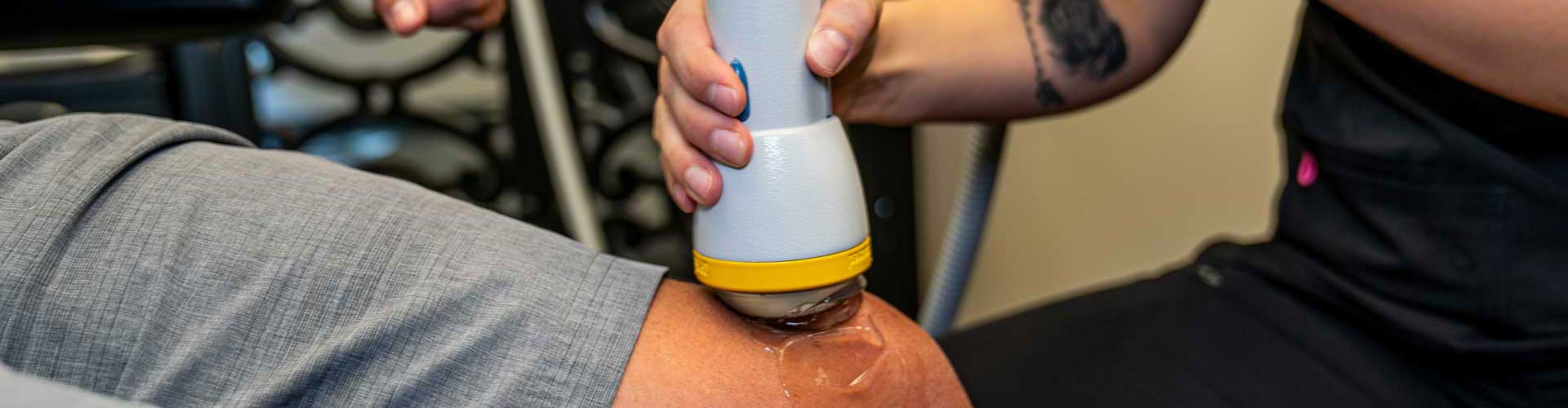
SoftWave Tissue Regeneration Technology uses an electrohydraulic spark to generate an acoustic wave, which a patented parabolic reflector shapes into a broad-focused wave. It is the only broad-focused shockwave technology, which sets it apart from radial pressure wave devices and from electromagnetic or piezoelectric devices that focus energy into a small point. A broad-focused wave can cover the full curve of the tendon behind the ankle and into the arch, rather than a single spot.
If inner ankle pain is cutting your walks short, book a SoftWave consultation with Dr. Sam and let's see where your tendon stands.
Here is what SoftWave's acoustic energy is designed to do inside the tissue, in plain language:
- Wake up repair cells: SoftWave activates resident stem cells that are already present in the tissue.
- Improve circulation: by stimulating VEGF and eNOS, it may support new blood vessel growth, which matters for a tendon segment with a limited blood supply.
- Rebuild tissue: growth signals like PCNA and BMP are linked to cell proliferation and new collagen formation, the raw material of tendon.
- Calm chronic inflammation: SoftWave modulates the inflammatory response through toll-like receptor regulation, helping shift tissue from a stuck state toward repair.
- Clear out worn cells: it may help the body remove senescent cells that no longer function well.
SoftWave is FDA cleared for activation of connective tissue, temporary increase in blood flow, and temporary relief of minor muscle and joint pain. It is not a way to reverse a rigid, arthritic flatfoot, and we will be honest with you about what is realistic for your stage.
What Treatment Looks Like
Your visit starts with a careful history and exam. Dr. Sam will look at how your foot moves when you stand, walk, and attempt a single-leg heel raise, and will check the ankle, knee, and hip, since alignment higher up the chain can increase stress on the arch. If your presentation suggests a later stage or a tear, we may recommend imaging or a referral first.
SoftWave treatment itself is non-invasive, with no needles, no medication, and no downtime. Sessions take about 10 to 15 minutes, and a typical plan is a series of visits over several weeks. Because SoftWave sets a healing process in motion, improvement often continues for weeks after the final session. Many patients report less inner ankle soreness and better tolerance for standing and walking as the series progresses.
We usually pair SoftWave with practical support: footwear guidance, continuing to use orthotics or bracing when appropriate, and progressive strengthening so the tendon can handle more load over time. You can learn more about our overall approach on our Experience Healing page.
Ready to Get Back on Your Feet Without Inner Ankle Pain?
A collapsing arch does not have to be a one-way street, especially when it is caught early. Let's find out whether SoftWave can help your posterior tibial tendon get stronger.
Book your SoftWave consultation here
Learn more: SoftWave Therapy for Plantar Fasciitis & Foot Pain in Rochester, NY
Get a Hold of Us
Ready to get to the root of your pain instead of just managing it?
At Camarata Chiropractic & Wellness, we focus on identifying the root cause of dysfunction and helping your body heal through SoftWave Therapy, Red Light Therapy, chiropractic care, recovery strategies, and lifestyle guidance.
Address: 3237 Union St, North Chili, NY 14514
Phone: 585-617-4145
Email: info@camaratachiropractic.com
Website: https://www.camaratachiropractic.com
Facebook: https://www.facebook.com/camaratachiropractic
Instagram: https://www.instagram.com/camarata_chiro/
Schedule Your SoftWave Therapy Visit Here!
Learn about our newest offering and the powers of red light therapy at RedLightRochester.com.
‹ Back

 3237 Union St,