
Blog & Resources
Hallux Rigidus and Big Toe Arthritis: Non-Surgical Relief with SoftWave in Rochester, NY
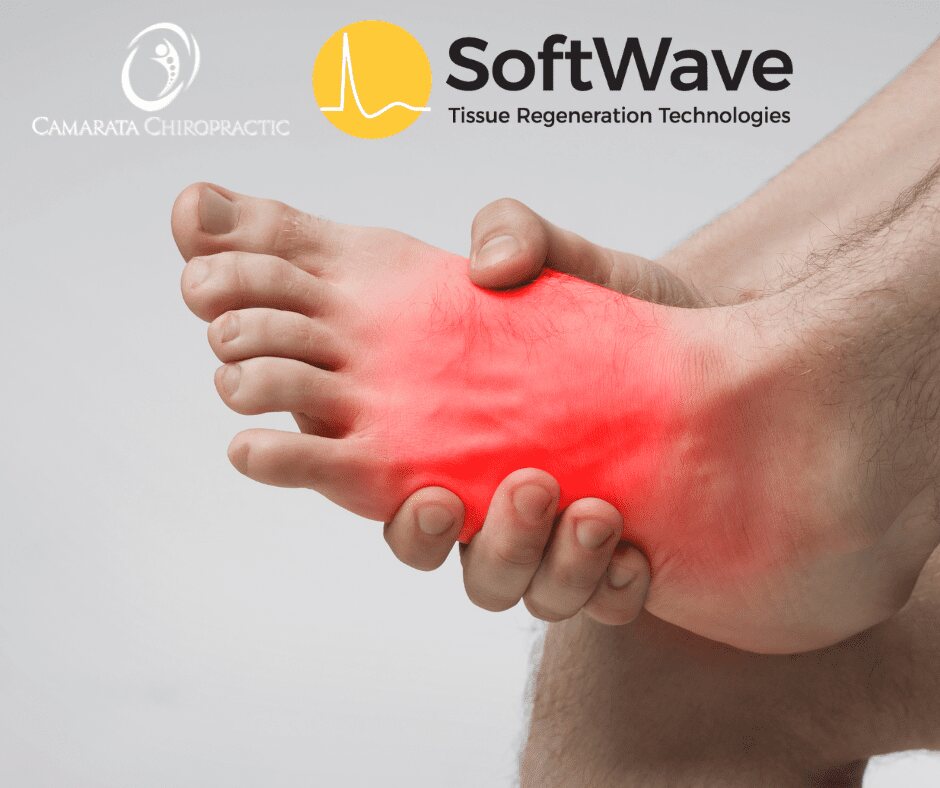
A Stiff, Achy Big Toe Is More Than an Annoyance: Hallux Rigidus Care in Rochester
Your big toe does a surprising amount of work. Every step you take, it bends upward as you roll off the foot. When that joint becomes arthritic and stiff, everything changes: walking the dog around the neighborhood, climbing stairs, squatting to garden, or getting through a round at one of Rochester's golf courses. Many people start walking on the outside of their foot just to avoid the pain, which can create new problems in the ankle, knee, and hip.
At Camarata Chiropractic & Wellness in North Chili, Dr. Sam Camarata regularly meets patients who have been told their only real option for big toe arthritis is to live with it or have surgery. In this article we will look at what hallux rigidus is, why it develops, what conventional treatment offers, and how SoftWave Tissue Regeneration Technology may provide a non-surgical option worth considering.
What Is Hallux Rigidus?
Hallux rigidus is osteoarthritis of the first metatarsophalangeal joint, where the big toe connects to the foot. Over time, the smooth cartilage covering the joint surfaces wears down. The body responds by building bone spurs, typically on the top of the joint, and those spurs physically block the toe from bending upward.
In its earlier stage it is often called hallux limitus, meaning motion is reduced but not lost. As it progresses toward hallux rigidus, the toe becomes stiffer and the joint may ache even at rest.
How It Differs From a Bunion
People often confuse the two. A bunion (hallux valgus) is when the big toe drifts toward the other toes and a bump forms on the inside of the foot. With hallux rigidus, the toe usually stays straight, but the bump forms on top of the joint and the main problem is lost motion. They can occur together, but the treatment approach is different.
Who Gets It and Why
Hallux rigidus most commonly appears in adults from their 30s onward and becomes more common with age. Contributing factors include:
- A past injury to the joint, such as turf toe or a stubbed or jammed toe
- Foot structure, including a long or elevated first metatarsal or a flatter foot type
- Repetitive loading from running, court sports, or jobs that involve a lot of squatting or kneeling
- Family history and inflammatory conditions such as gout or rheumatoid arthritis
Common Symptoms
- Pain and stiffness in the big toe joint, especially when pushing off while walking or running
- A tender bump on top of the joint that rubs in shoes
- Swelling and achiness after activity or in cold, damp weather (a familiar complaint in a Western NY winter)
- Pain on the outer foot or other joints from walking differently to protect the toe
Red Flags
A big toe that suddenly becomes hot, red, and very swollen, especially overnight, may be gout or an infection and needs prompt medical care. Numbness, open sores, or color changes in the foot, particularly if you have diabetes or circulation problems, also require medical evaluation.
Conventional Treatment Options and Their Limits
Non-surgical care usually focuses on reducing how much the toe has to bend. That includes stiff-soled or rocker-bottom shoes, carbon fiber inserts, a Morton's extension orthotic, avoiding high heels, and anti-inflammatory medication. Cortisone injections may provide temporary relief, though the effect often fades and repeat injections into a joint are typically limited.
When pain becomes severe, surgical options include a cheilectomy (removing the bone spurs), joint replacement or implants, and fusion of the joint (arthrodesis). Fusion can be effective for pain, but it permanently eliminates motion at the joint and involves a significant recovery period.
The gap many patients feel is in the middle: the shoe changes and medication help a bit, but the joint still aches, and they are not ready for surgery. That is often where SoftWave enters the conversation.
What Our Rochester Patients Are Saying
Real reviews from real SoftWave patients at Camarata Chiropractic & Wellness
How SoftWave Helps: A Plain-Language Look
SoftWave Tissue Regeneration Technology is electrohydraulic. A spark generates an acoustic wave, and a patented parabolic reflector shapes it into a broad-focused wave. It is the only broad-focused shockwave, unlike radial pressure wave devices that disperse energy near the surface or electromagnetic and piezoelectric devices that focus on a tiny point. The broad field allows treatment of the whole joint area, including the capsule, surrounding ligaments, and tendons that become irritated as the joint stiffens.
If big toe pain is changing the way you walk, book a SoftWave consultation with Dr. Sam to see whether you are a good candidate.
Inside the tissue, SoftWave is designed to support several biological processes:
- Resident stem cell activation: it signals the body's own repair cells in and around the joint.
- New circulation: through VEGF and eNOS pathways, it may encourage angiogenesis, bringing more blood flow to the area.
- Tissue support: signals like PCNA and BMP are linked to cell proliferation and collagen production in connective tissue.
- Inflammation modulation: by regulating toll-like receptors, SoftWave helps calm the chronic, low-grade inflammation that keeps arthritic joints aching.
- Senescent cell clearance: it may help remove aged, dysfunctional cells that contribute to ongoing joint irritation.
To be clear and honest: SoftWave does not dissolve bone spurs or regrow a worn joint surface overnight. Its FDA clearances include activation of connective tissue, temporary increase in blood flow, and temporary relief of minor muscle and joint pain. What many patients report is less pain, less swelling, and an easier time walking, which can make a real difference in daily life.
What to Expect at Our North Chili Office
Your first visit includes a thorough history and exam of the big toe joint, the rest of the foot, and how you walk. If you have X-rays already, bring them. If not, we may recommend imaging to understand the stage of the arthritis, particularly if surgery has already been mentioned.
SoftWave sessions are non-invasive, with no needles, no drugs, and no downtime. Each session lasts about 10 to 15 minutes, and most people describe the feeling as a firm tapping. A typical plan involves a series of sessions over several weeks, and since the treatment stimulates a healing response, improvement can continue after the series is complete.
We also address the bigger picture. When you have been walking around a painful toe, the ankle, knee, hip, and low back often compensate, and chiropractic care may help restore better mechanics. Footwear and orthotic guidance remain part of the plan. You can read more about how we approach care on our Experience Healing page.
Ready to Get Back to Walking Comfortably?
Big toe arthritis does not have to mean giving up the walks, hikes, and activities you love. Let's explore whether SoftWave can help you take each step with less pain.
Book your SoftWave consultation here
Learn more: SoftWave Therapy for Plantar Fasciitis & Foot Pain in Rochester, NY
Get a Hold of Us
Ready to get to the root of your pain instead of just managing it?
At Camarata Chiropractic & Wellness, we focus on identifying the root cause of dysfunction and helping your body heal through SoftWave Therapy, Red Light Therapy, chiropractic care, recovery strategies, and lifestyle guidance.
Address: 3237 Union St, North Chili, NY 14514
Phone: 585-617-4145
Email: info@camaratachiropractic.com
Website: https://www.camaratachiropractic.com
Facebook: https://www.facebook.com/camaratachiropractic
Instagram: https://www.instagram.com/camarata_chiro/
Schedule Your SoftWave Therapy Visit Here!
Learn about our newest offering and the powers of red light therapy at RedLightRochester.com.
‹ Back

 3237 Union St,