

Blog & Resources
Snow Shoveling Season in Rochester: Protecting Your Back and Treating Shoveling Strains with SoftWave
Snow Shoveling Season Is Here, and So Are the Back Strains
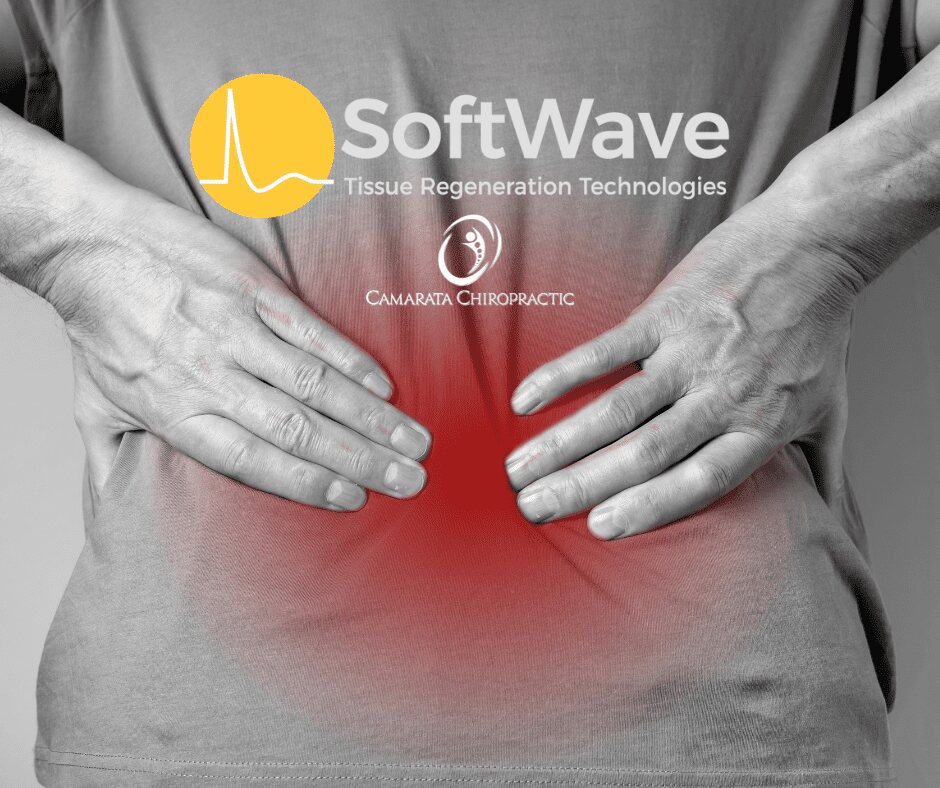
The first big lake effect dump of the season always brings two things to Rochester: buried driveways and a wave of sore backs. The plow leaves a heavy wall of slush at the end of the driveway, you head out before work with a coffee in one hand and a shovel in the other, and by the next morning you can barely bend over to tie your boots.
At Camarata Chiropractic & Wellness in North Chili, Dr. Sam Camarata sees shoveling injuries every winter, from mild muscle strains to stubborn low back and shoulder pain that hangs around for weeks. This guide explains why shoveling is so hard on the body, how to protect yourself, how to recognize a strain versus something more serious, and how SoftWave Tissue Regeneration Technology may help you recover faster when your back does get tweaked.
Why Shoveling Is So Hard on Your Back
Shoveling looks simple, but it combines nearly every movement your spine dislikes, often in cold, stiff muscles first thing in the morning.
- Repeated bending. Flexing forward over and over loads the discs and the muscles that hold your spine upright.
- Lifting with long arms. A full shovel held out in front of you acts like a lever. Wet snow is surprisingly heavy, and the load at your low back is far greater than the weight on the blade.
- Twisting and tossing. Pivoting from the spine to throw snow to the side combines rotation with load, a classic recipe for strains.
- Cold tissue. Muscles and tendons are less pliable when cold, and most people skip any warm-up.
- Bad footing. Bracing on ice tightens everything and can lead to sudden, awkward movements.
- Doing too much at once. We tend to tackle the whole driveway in one push rather than pacing ourselves.
The Most Common Shoveling Injuries We See
Lumbar Muscle Strains
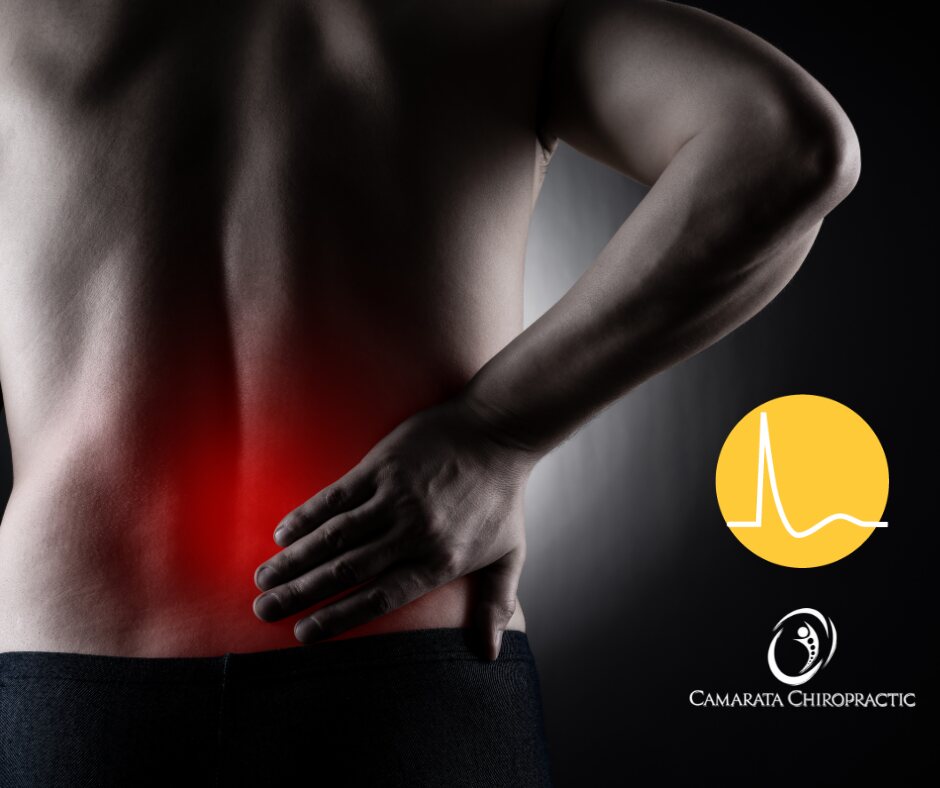
The paraspinal muscles that run along the spine and the quadratus lumborum, which connects the pelvis to the lower ribs, take the brunt of shoveling. A strain feels like a deep ache or sharp catch on one or both sides of the low back, often worse when bending, twisting, or getting out of a chair.
Sacroiliac (SI) Joint Irritation
Pain just to one side of the tailbone, sometimes radiating into the buttock, often points to the SI joint and its supporting ligaments.
Disc Irritation
Repeated bending and lifting can aggravate a disc. Pain that travels down the leg, numbness, or tingling suggests nerve involvement and needs a careful evaluation.
Shoulder and Upper Back Strains
Throwing heavy snow strains the rotator cuff, the muscles between the shoulder blades, and the upper trapezius. Many people feel this a day or two later.
Elbow and Wrist Overuse
Gripping a shovel tightly for long periods can irritate the forearm tendons, much like tennis elbow.
Shovel Smarter: Tips to Protect Your Back
- Warm up for five minutes. March in place, do gentle hip hinges, and roll your shoulders before heading outside.
- Push, don't lift, whenever possible. Use a wide pusher-style shovel to move snow to the edge of the driveway.
- Take smaller scoops. Especially with the heavy, wet snow we often get in late fall and early spring.
- Hinge at the hips and bend your knees. Keep the load close to your body and your back long.
- Move your feet to turn. Step in the direction you are throwing instead of twisting through your spine.
- Go out more than once. Clearing a few inches at a time during a storm is easier than tackling a foot at the end.
- Take breaks and hydrate. Fatigue is when form breaks down.
Important Safety Note
Shoveling is strenuous and can strain the heart, especially in the cold. If you have heart disease, high blood pressure, or are not regularly active, talk with your physician before shoveling or hire help. Stop immediately and call 911 for chest pain or pressure, shortness of breath, lightheadedness, or pain spreading to the arm, jaw, or back.
What Our Rochester Patients Are Saying
Real reviews from real SoftWave patients at Camarata Chiropractic & Wellness
Strain or Something More? Know the Red Flags
Most shoveling backaches are muscular and improve with time and care. See a doctor promptly or go to the emergency room for:
- Numbness in the groin or inner thighs, or new trouble controlling your bladder or bowels.
- Leg weakness, foot drop, or worsening numbness.
- Pain after a fall, or severe pain that does not ease with rest or position changes.
- Fever, unexplained weight loss, or a history of cancer with new back pain.
If none of those apply and your back is still sore after a few days, schedule a SoftWave and chiropractic evaluation with Dr. Sam. We will figure out which tissues are involved and build a plan to get you back to normal.
How SoftWave Helps Shoveling Strains Heal
Muscle and ligament strains heal by laying down new tissue. When that process stalls, you end up with lingering tightness, guarding, and a back that "goes out" every time you overdo it. SoftWave is designed to support the body's natural repair process at the tissue level.
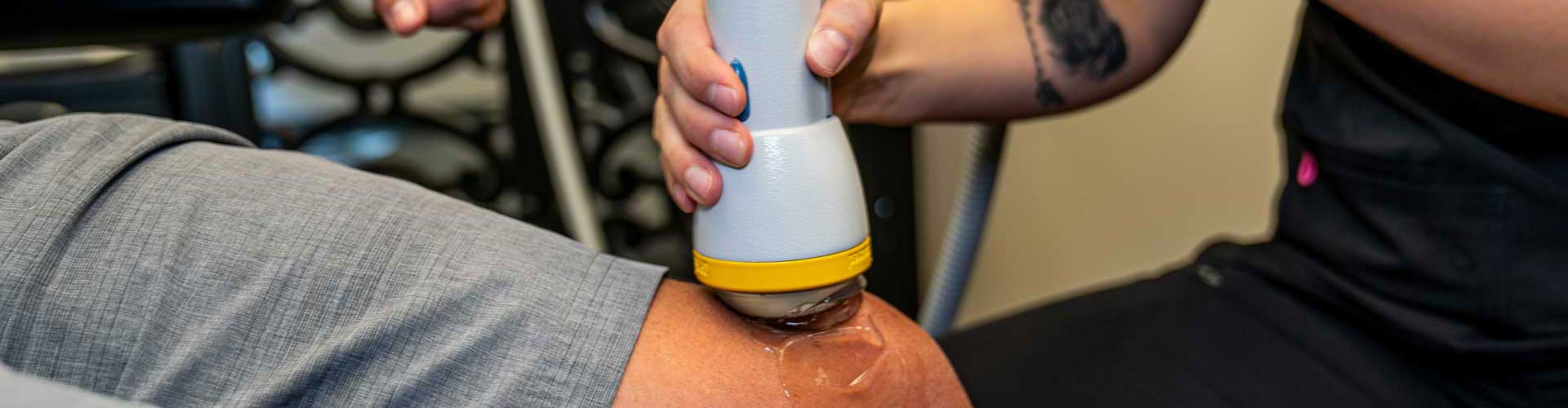
SoftWave TRT uses electrohydraulic technology: a spark generates an acoustic wave, and a patented parabolic reflector shapes it into a broad-focused field. It is the only broad-focused shockwave system, distinct from radial pressure wave devices and electromagnetic or piezoelectric focused units. The broad field covers the larger muscle groups of the low back and shoulder effectively.
- Activates resident stem cells in the injured muscle and connective tissue.
- Supports new blood vessel formation through VEGF and eNOS signaling, improving circulation to strained tissue.
- Encourages tissue rebuilding through PCNA and BMP activity and new collagen.
- Modulates inflammation, including toll-like receptor regulation, so healing can progress instead of stalling.
- Helps clear senescent cells that no longer contribute to repair.
SoftWave is FDA-cleared for activation of connective tissue, temporary increase in blood flow, and temporary relief of minor muscle and joint pain, among other uses. Many patients report moving more easily after their first few sessions, though everyone heals differently.
What Recovery Looks Like at Our Office
- A hands-on exam to identify the strained tissues and any joint restrictions.
- SoftWave sessions of about 10 to 15 minutes, with no needles, no drugs, and no downtime.
- A short series over several weeks, with healing continuing after each visit.
- Chiropractic adjustments and simple core and hip exercises to help prevent the next strain.
Our Trifecta Red Light bed is also available as a complementary recovery session that supports circulation on those cold, stiff mornings. See what other patients have experienced on our SoftWave reviews page.
Ready to Get Back to Clearing the Driveway Without Pain?
Rochester winters are long, and your back needs to last all season. Let us help you heal that shoveling strain and stay strong through spring.
Book your SoftWave consultation here
Learn more: SoftWave Therapy for Back Pain in Rochester, NY
Get a Hold of Us
Ready to get to the root of your pain instead of just managing it?
At Camarata Chiropractic & Wellness, we focus on identifying the root cause of dysfunction and helping your body heal through SoftWave Therapy, Red Light Therapy, chiropractic care, recovery strategies, and lifestyle guidance.
Address: 3237 Union St, North Chili, NY 14514
Phone: 585-617-4145
Email: info@camaratachiropractic.com
Website: https://www.camaratachiropractic.com
Facebook: https://www.facebook.com/camaratachiropractic
Instagram: https://www.instagram.com/camarata_chiro/
Schedule Your SoftWave Therapy Visit Here!
Learn about our newest offering and the powers of red light therapy at RedLightRochester.com.
‹ Back

 3237 Union St,