

Blog & Resources
Peroneal Tendinitis and Outer Ankle Pain: A Non-Surgical SoftWave Option in Rochester, NY
Outer Ankle Pain That Won't Quit? Peroneal Tendinitis Care in Rochester, NY
If the outside of your ankle aches after a walk along the Lake Ontario shoreline, a run through Genesee Valley Park, or a long day on uneven ground, you may be dealing with more than a simple sore spot. Pain that wraps behind and below the bony bump on the outer ankle is often a sign of peroneal tendinitis, an overuse problem affecting two tendons that stabilize your foot with every step.
At Camarata Chiropractic & Wellness in North Chili, Dr. Sam Camarata works with runners, hikers, soccer and basketball players, and everyday walkers who have lived with this kind of outer ankle pain for far too long. Many have already tried rest, ice, and new shoes. Here is what the peroneal tendons do, why they get irritated, why the problem drags on, and how SoftWave Tissue Regeneration Technology (TRT) offers a non-surgical option designed to help the tendon heal.
Meet the Peroneal Tendons
The peroneal (fibularis) muscles run along the outside of your lower leg. There are two main ones:
- Peroneus longus: Its tendon runs behind the outer ankle bone (the lateral malleolus), curves under the foot, and attaches near the base of the big toe, helping support the arch.
- Peroneus brevis: Its tendon runs alongside the longus and attaches to the outer edge of the foot at the base of the fifth metatarsal. It turns the foot outward.
Together, these tendons act like guy wires on the outside of your ankle, resisting the foot rolling inward under you. Because they wrap around a bony pulley behind the ankle bone, held in place by a band called the superior peroneal retinaculum, they experience significant friction and load, especially on uneven surfaces.
What Causes Peroneal Tendinitis?
- Previous ankle sprains: Stretched outer ligaments leave the peroneals working overtime to stabilize the joint.
- High arches: A high-arched foot tends to tilt outward, increasing tension on the tendons.
- Uneven terrain: Trail running at Mendon Ponds, hiking in Letchworth, or walking canal path gravel demands constant side-to-side control.
- Cutting sports: Soccer, basketball, tennis, and volleyball load the peroneals heavily.
- Training jumps and worn shoes: Ramping up mileage quickly or running in shoes that collapse on the outside edge.
Typical symptoms include aching or sharp pain behind and below the outer ankle bone, pain along the outside of the foot, swelling along the tendon path, morning stiffness, and a feeling of weakness when turning the foot outward. A snapping sensation behind the ankle can mean the tendons are slipping out of their groove, which deserves a careful evaluation.
Why Outer Ankle Pain Lingers
Tendons are dense, rope-like tissues with a limited blood supply. When the peroneals are repeatedly overloaded, small areas of damage build up faster than the body can repair them. Over time the tendon can become thickened and disorganized, a state called tendinopathy, where the issue is less about inflammation and more about tissue that has lost its normal structure.
The location makes things harder. Because the tendons wrap around the ankle bone, they are under friction with nearly every step, and you cannot easily rest an ankle you need to walk on. That is why the pain often improves for a few days, then returns as soon as normal routines resume.
What Our Rochester Patients Are Saying
Real reviews from real SoftWave patients at Camarata Chiropractic & Wellness
Conventional Treatment Options and Their Limits
- Rest, ice, and anti-inflammatories: Useful early on, but they do not rebuild tendon tissue.
- Bracing or a walking boot: Can calm things down, though long immobilization may weaken surrounding muscles.
- Physical therapy and orthotics: Strength, balance work, and lateral wedges are valuable for long-term success.
- Steroid injections: Used cautiously around the peroneals because of concerns about tendon weakening.
- Surgery: Considered for tears, chronic instability, or tendons that keep dislocating.
For many patients, the missing piece is something that actively supports tendon repair while they work on strength and mechanics.
How SoftWave Helps the Peroneal Tendons
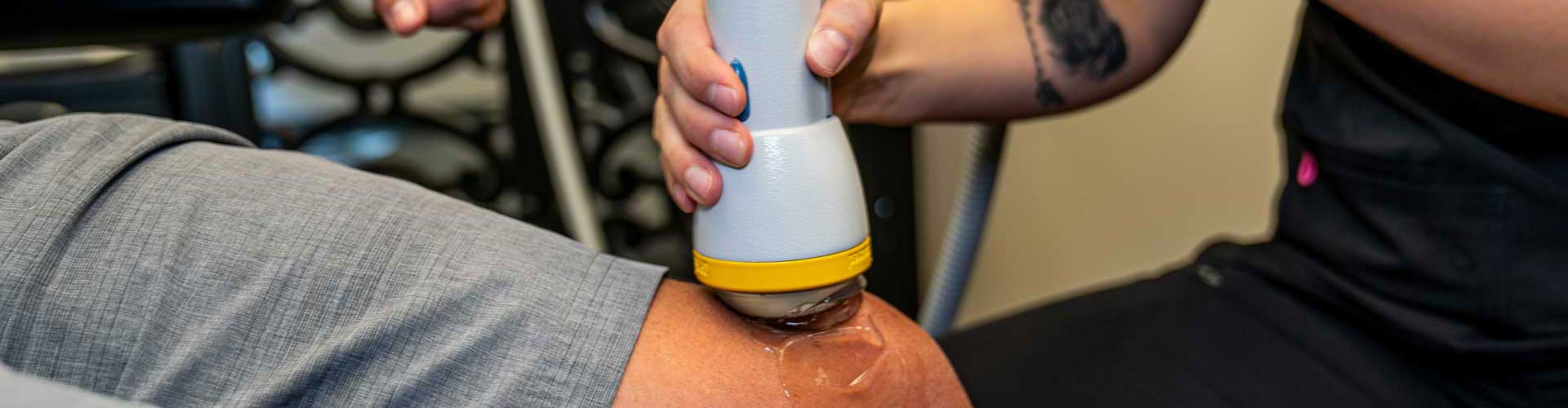
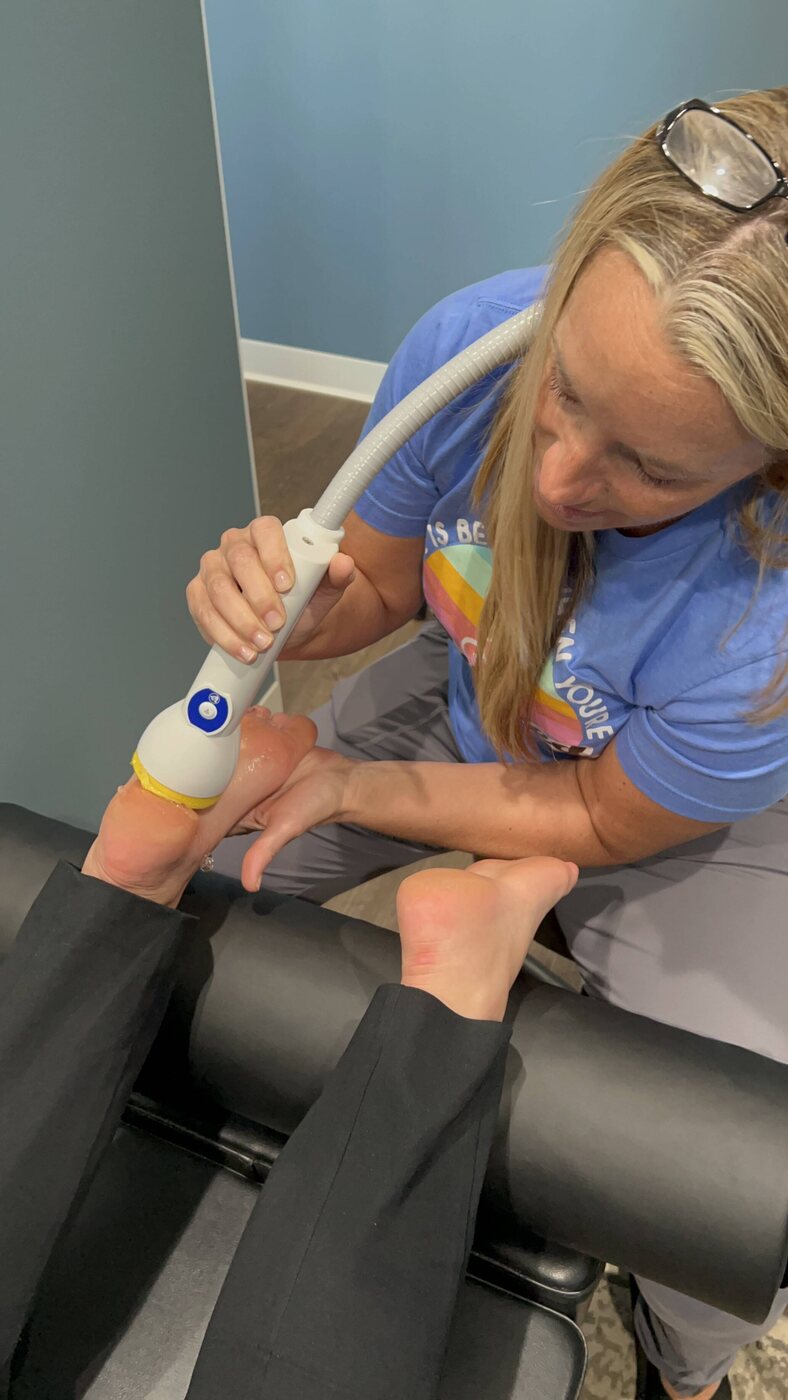
SoftWave TRT uses an electrohydraulic applicator. A spark generated in water creates an acoustic wave, and a patented parabolic reflector shapes it into a broad-focused field. SoftWave is the only broad-focused shockwave technology, distinct from radial pressure wave (RPW) devices and from electromagnetic and piezoelectric focused devices. The broad-focused design is intended to treat the full length of the peroneals, from behind the ankle bone to their attachments on the foot, at therapeutic depth.
If outer ankle pain has been slowing you down, schedule a SoftWave evaluation with Dr. Sam Camarata and find out whether this non-surgical approach is right for you.
In plain language, SoftWave is designed to:
- Activate resident stem cells already present in and around the tendon.
- Encourage new blood vessel growth through VEGF and eNOS signaling, bringing circulation to a poorly supplied tissue.
- Support collagen production through proliferation markers such as PCNA and BMP, helping rebuild organized tendon fibers.
- Modulate inflammation through toll-like receptors, moving the tissue from a stuck, irritated state into productive healing.
- Help clear senescent cells that no longer contribute to healthy tissue.
SoftWave is FDA-cleared for activation of connective tissue, temporary increase in blood flow, and temporary relief of minor muscle and joint pain, effects that line up well with what a chronically irritated tendon needs.
What Treatment Looks Like at Camarata Chiropractic & Wellness
Your visit begins with a thorough history and exam. Dr. Sam will test ankle stability, look at your arch, and watch how you walk. Because the ankle is part of a chain, he will also check the knee, hip, and lower back, since problems higher up can change how the foot lands.
- Each session takes about 10 to 15 minutes.
- No needles, no drugs, and no downtime. You walk out and go about your day.
- Care is typically a series of sessions over several weeks, and the healing response is designed to continue afterward.
Alongside SoftWave, Dr. Sam may recommend chiropractic adjustments for the ankle, foot, and spine, footwear guidance, peroneal and hip strengthening, and a gradual return to running or sport. Learn more about our approach on our Experience Healing page.
Red Flags: When to Seek Prompt Care
Get checked promptly for a sudden pop with immediate swelling, inability to bear weight after an injury, pain at the base of the fifth metatarsal after a rolled ankle, a tendon that visibly slips over the ankle bone, redness and fever, or numbness on the side of the foot. These can point to a tear, fracture, or infection. Dr. Sam will refer you for imaging or to a specialist when needed, because SoftWave is designed to complement, not replace, proper medical evaluation.
Ready to Get Back on Your Feet?
Whether you want to return to the trails, the field, or a pain-free walk around the neighborhood, there may be a better path than waiting it out. Let Dr. Sam Camarata help you find what is driving your outer ankle pain.
Book your SoftWave consultation here
Learn more: SoftWave Therapy for Plantar Fasciitis & Foot Pain in Rochester, NY
Get a Hold of Us
Ready to get to the root of your pain instead of just managing it?
At Camarata Chiropractic & Wellness, we focus on identifying the root cause of dysfunction and helping your body heal through SoftWave Therapy, Red Light Therapy, chiropractic care, recovery strategies, and lifestyle guidance.
Address: 3237 Union St, North Chili, NY 14514
Phone: 585-617-4145
Email: info@camaratachiropractic.com
Website: https://www.camaratachiropractic.com
Facebook: https://www.facebook.com/camaratachiropractic
Instagram: https://www.instagram.com/camarata_chiro/
Schedule Your SoftWave Therapy Visit Here!
Learn about our newest offering and the powers of red light therapy at RedLightRochester.com.
‹ Back

 3237 Union St,