

Blog & Resources
Hiking Letchworth and the Finger Lakes Trails: SoftWave for Knee and Ankle Pain on the Trail
Hiking Letchworth and the Finger Lakes: Keep Knee and Ankle Pain From Ending Your Season
Rochester sits within easy reach of some of the best hiking in the Northeast. The Gorge Trail at Letchworth State Park, the stone stairways of Watkins Glen, the waterfalls at Taughannock and Robert Treman, and the long, rolling stretches of the Finger Lakes Trail all draw local hikers every summer and fall. Closer to home, Mendon Ponds and Harriet Hollister Spencer give us plenty of hills to train on.
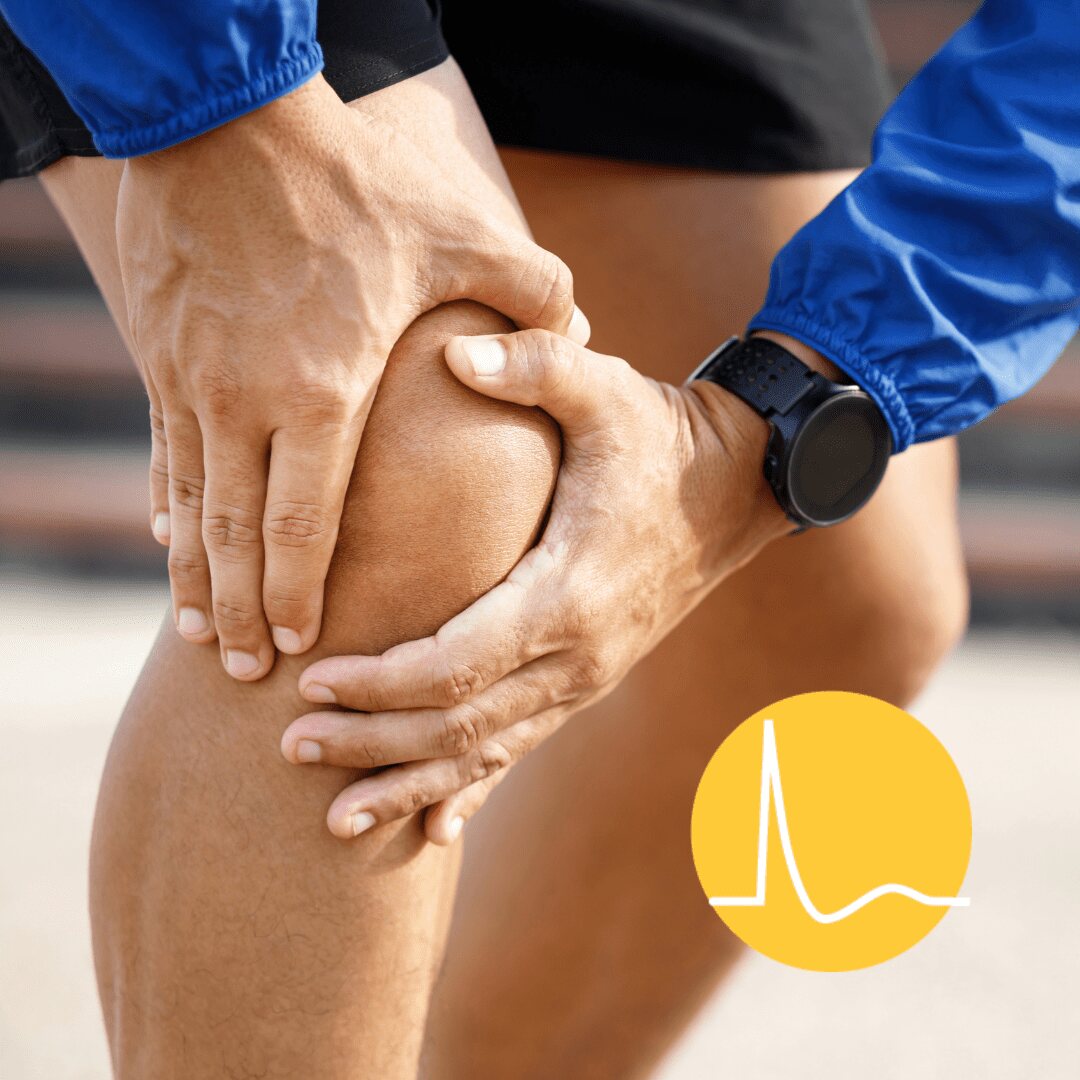
Those same trails are hard on knees and ankles. Steep descents, wet rock, roots, and long staircases put a different kind of stress on the legs than a walk around the neighborhood. At Camarata Chiropractic & Wellness in North Chili, Dr. Sam Camarata regularly sees hikers whose season is being cut short by aching knees or ankles that never quite recovered from an old sprain. SoftWave Tissue Regeneration Technology (TRT) gives us a non-invasive way to support healing in those tissues so you can get back on the trail.
Why Trails Are Tough on Knees
Climbing uphill works the muscles hard, but descending is often what hurts. Going downhill, the quadriceps work eccentrically, lengthening under load to control each step, and the kneecap presses firmly into its groove on the thigh bone. Gorge trails with stone steps repeat that stress over and over on a single outing.
Common hiking knee problems include:
- Patellofemoral pain, an ache around or behind the kneecap that worsens on stairs and descents
- Patellar tendinopathy, pain just below the kneecap where the tendon attaches to the shin
- IT band irritation, pain on the outside of the knee that often appears partway through a long hike
- Arthritis flare-ups, as uneven terrain and longer distances load joints that are already worn
Weak hip muscles, a heavy pack, worn-out footwear, and jumping into long hikes without building up all make these problems more likely.
Why Trails Are Tough on Ankles
Every root, rock, and muddy patch asks your ankle to adapt in a split second. The most common trail injury is a rolled ankle, where the foot turns inward and stretches the ligaments on the outside of the ankle. Many people treat a sprain as a minor annoyance, but ligaments that do not heal well can leave the ankle loose and prone to rolling again.
Hikers also commonly deal with:
- Chronic ankle instability, a "wobbly" ankle that gives way on uneven ground after repeated sprains
- Achilles tendinopathy, pain and stiffness at the back of the heel, often worse on climbs
- Tendon irritation on the outer ankle, as the peroneal tendons work overtime to stabilize the foot
- Plantar fascia pain, heel pain that is especially sharp with the first steps in the morning
Why These Injuries Hang On
Ligaments and tendons have a limited blood supply compared with muscle, so they heal slowly. When hikers return to the trail before that tissue has fully remodeled, it can heal with disorganized, weaker collagen. Over time, the area becomes stuck in a cycle of irritation and incomplete repair. Pain eases with rest, then returns the moment you tackle a big descent or rocky stretch.
Compensation adds to the problem. A sore knee changes how you load the ankle, and an unstable ankle changes how you load the knee and hip. That is why we look at the whole leg, not just the spot that hurts.
Conventional Options and Their Limits
Rest, ice, bracing, anti-inflammatory medication, and strengthening exercises are the standard starting points, and good rehab is essential, especially balance training after ankle sprains. Trekking poles and quality footwear help too. When pain persists, people may be offered corticosteroid injections, which can calm pain for a while but do not rebuild tendon or ligament tissue and are typically used with caution around tendons. Surgery is sometimes discussed for severe instability or structural damage. For many hikers, the gap is a way to actively support the tissue's own healing.
What Our Rochester Patients Are Saying
Real reviews from real SoftWave patients at Camarata Chiropractic & Wellness
How SoftWave Helps Hikers' Knees and Ankles
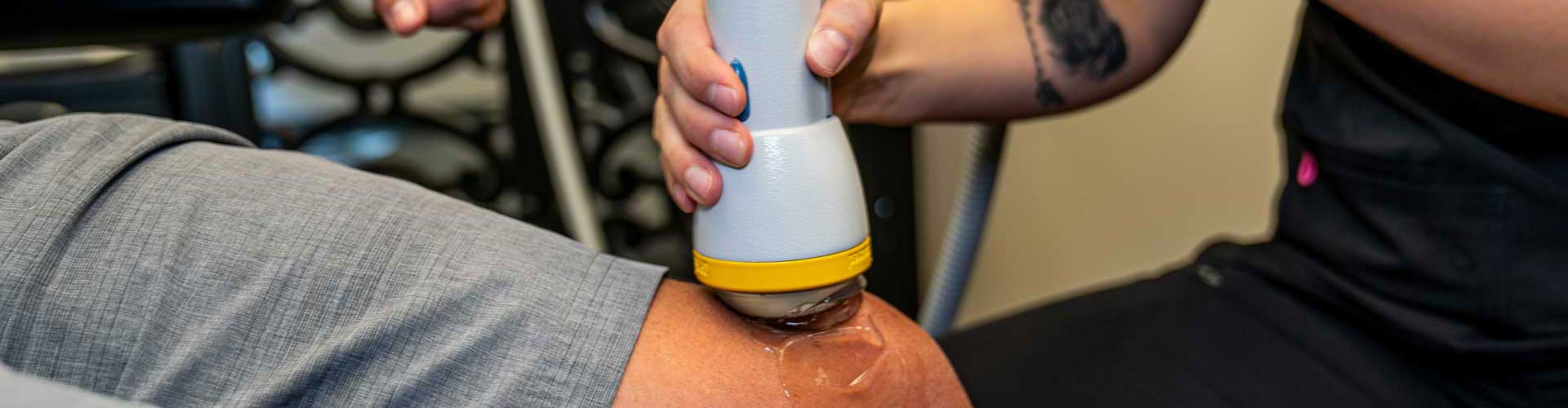
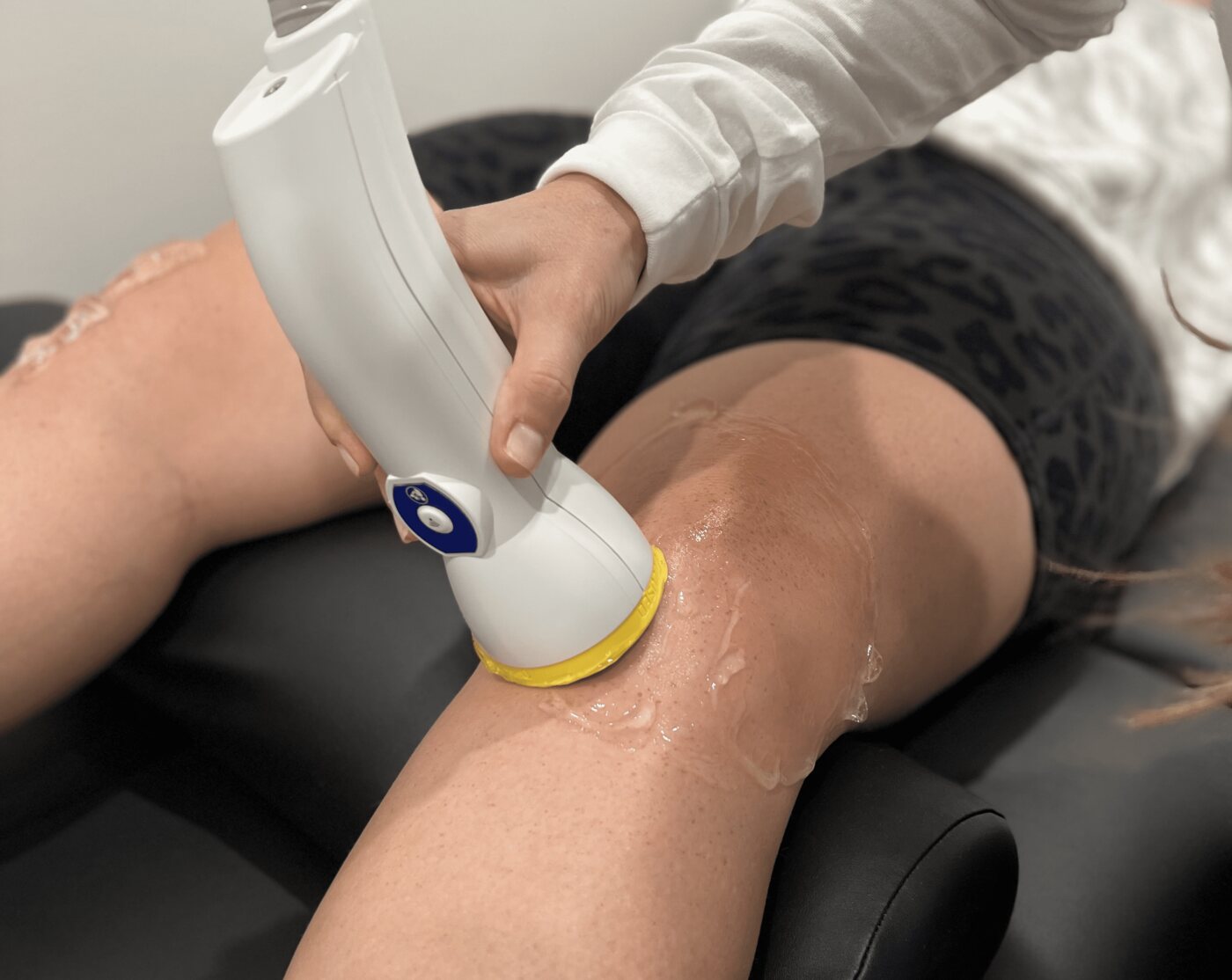
SoftWave TRT uses electrohydraulic technology. A spark in water creates an acoustic wave, and a patented parabolic reflector shapes it into a broad-focused wave. It is the only broad-focused shockwave, which distinguishes it from radial pressure wave devices, whose energy weakens near the surface, and from electromagnetic or piezoelectric devices that focus energy into a narrow point. The broad field lets us treat the whole front of the knee, or the full circle of ligaments and tendons around the ankle, in one session.
In plain language, SoftWave is designed to:
- Activate resident stem cells already present in your tissue
- Support new blood vessel formation through VEGF and eNOS pathways, bringing circulation to slow-healing ligaments and tendons
- Encourage tissue rebuilding, with proliferation markers like PCNA and BMP and new collagen production
- Modulate inflammation, including regulation of toll-like receptors
- Help clear senescent cells that keep chronic tissue stuck
SoftWave is FDA-cleared for activation of connective tissue, temporary increase in blood flow, and temporary relief of minor muscle and joint pain.
If your knees or ankles are making you skip the trails you love, schedule a SoftWave consultation with Dr. Sam and let us find the real source of the problem.
What to Expect at Camarata Chiropractic & Wellness
Your visit starts with a conversation about where and how you hike, any past sprains or knee injuries, and when the pain shows up. Dr. Sam will check knee tracking, ankle stability and mobility, hip strength, and foot mechanics to understand how the whole leg is working together.
SoftWave sessions take about 10 to 15 minutes, with no needles, no medications, and no downtime. Most people can keep walking and doing lighter hikes during care. Plans usually involve a series of sessions over several weeks, and the healing response continues after each visit. Many patients report feeling a difference early in their series, though everyone responds differently. Some hikers also add our Trifecta Red Light bed after big trail days as a complementary way to support circulation and recovery. Learn more about our approach on our Experience Healing page.
Trail Tips From Dr. Sam
- Use trekking poles on descents and stairs to share the load with your arms.
- Shorten your stride downhill and keep knees slightly bent.
- Build up distance gradually before tackling the full Letchworth Gorge Trail.
- Train balance at home: single-leg stands help ankles react faster on uneven ground.
- Strengthen your hips and glutes to support knee alignment.
- Replace worn footwear and choose boots or shoes with good traction for wet gorge rock.
When to Seek Medical Care Right Away
Get prompt medical attention if you cannot put weight on the leg after an injury, hear a pop with immediate swelling, notice a visible deformity, have a knee that locks or gives way, or develop calf pain and swelling, numbness, or redness and fever. A suspected fracture or complete tear needs proper imaging and evaluation. SoftWave is a valuable tool for overuse and lingering injuries, not a replacement for emergency or medical care.
Ready to Get Back on the Trail?
The gorges, waterfalls, and fall colors of Western New York are worth every step. Let Dr. Sam help you heal stubborn knee and ankle pain so you can enjoy them all season.
Book your SoftWave consultation here
Learn more: SoftWave Therapy for Plantar Fasciitis & Foot Pain in Rochester, NY
Get a Hold of Us
Ready to get to the root of your pain instead of just managing it?
At Camarata Chiropractic & Wellness, we focus on identifying the root cause of dysfunction and helping your body heal through SoftWave Therapy, Red Light Therapy, chiropractic care, recovery strategies, and lifestyle guidance.
Address: 3237 Union St, North Chili, NY 14514
Phone: 585-617-4145
Email: info@camaratachiropractic.com
Website: https://www.camaratachiropractic.com
Facebook: https://www.facebook.com/camaratachiropractic
Instagram: https://www.instagram.com/camarata_chiro/
Schedule Your SoftWave Therapy Visit Here!
Learn about our newest offering and the powers of red light therapy at RedLightRochester.com.
‹ Back

 3237 Union St,