
Blog & Resources
Why NSAIDs and Pain Meds Stop Working: Masking Pain Versus Actually Healing Tissue
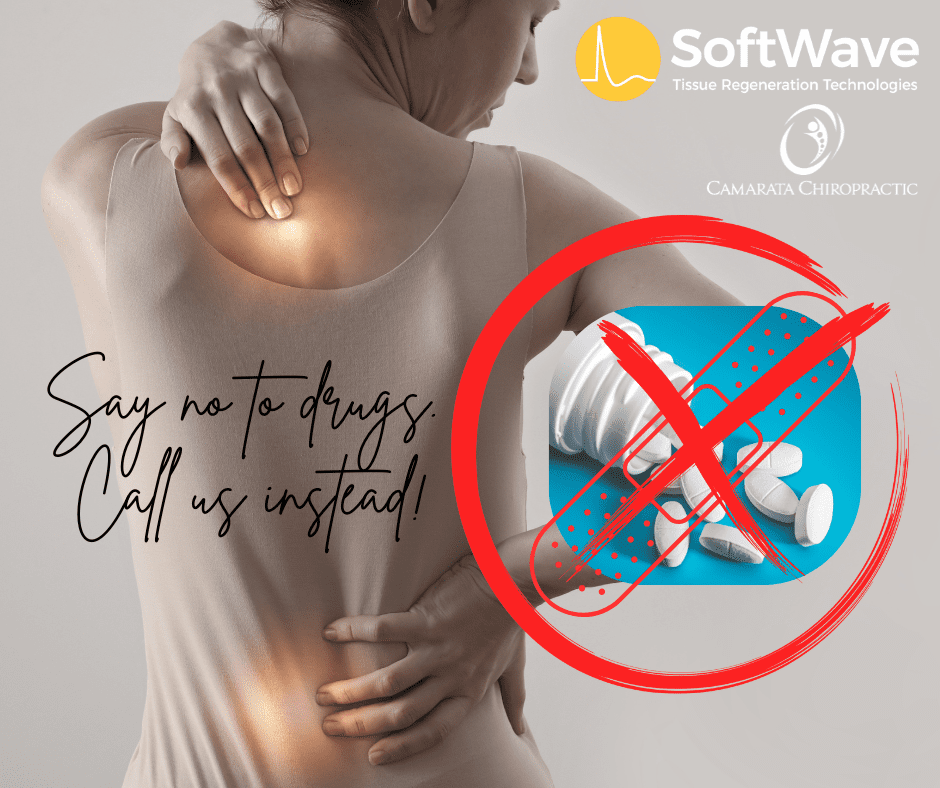
If you have ever relied on ibuprofen or naproxen to get through the day, you know the feeling: the pill takes the edge off, you move more freely for a few hours, and then the pain creeps back. You take another dose. Weeks pass. Months pass. The bottle is always nearby. The problem is still there. That experience is not a failure of willpower or a sign that your pain is untreatable. It is a clue that something important is being missed, which is the difference between turning down the volume on a signal and actually fixing what is generating that signal.
Anti-inflammatory medications and common pain relievers are genuinely useful tools. Nobody should feel guilty for reaching for them after an acute injury or a rough flare-up day. The issue comes when short-term relief becomes the long-term plan, because the biology of how these drugs work means they were never designed to repair tissue. Understanding that distinction is, for many people in Rochester and the surrounding area, the first step toward a genuinely different outcome.
This post is not an argument against medication. It is an explanation of what medications do and do not do at the tissue level, and why a growing number of people dealing with persistent musculoskeletal pain are finding that a regenerative approach like SoftWave Tissue Regeneration Therapy addresses the underlying problem in a way that pain suppression alone simply cannot.
How NSAIDs Actually Work
NSAIDs (non-steroidal anti-inflammatory drugs) include familiar names like ibuprofen, naproxen, aspirin, and prescription options like diclofenac and celecoxib. They work by blocking enzymes called COX-1 and COX-2, which are responsible for producing prostaglandins. Prostaglandins are signaling molecules that do several things at once: they amplify pain signals, they promote local inflammation, and they are also critical messengers in the tissue repair process.
Block those enzymes, and you accomplish several things simultaneously:
- Pain signals become less amplified, so the brain registers less discomfort.
- Local swelling and heat are reduced, which can improve short-term function.
- The inflammatory cascade is blunted, which is exactly the goal after an acute sprain or post-surgical swelling.
In the right context, that is useful medicine. Acutely, inflammation can spiral into a level of pain and swelling that prevents any movement or sleep, and calming it down buys time for the body to begin healing. The problem arises when “buying time” becomes the permanent strategy.
The Problem With Long-Term Suppression
Inflammation is not the enemy. It is a signaling state. When tissue is damaged, inflammation is the body’s call to action, recruiting repair cells, increasing blood flow, and initiating the cascade that ultimately rebuilds collagen and restores tissue integrity. When you chronically blunt that signal with NSAIDs, you are not resolving the problem that triggered the signal. You are muting the alarm while the fire continues to smolder.
Research in sports medicine and orthopedics has shown that prolonged NSAID use can actually interfere with tendon healing, bone remodeling, and muscle repair. The prostaglandins that these drugs suppress are the same molecules that activate satellite cells in muscle tissue and signal fibroblasts to lay down new collagen in tendons and ligaments. Suppress them long enough, and you may be slowing down the very repair process your body is trying to run.
There is also the issue of tissue that has moved into a chronic state. In chronic musculoskeletal pain, the biology of the affected tissue changes. Tendons that never fully healed become fibrotic and poorly vascularized. The inflammatory state shifts from acute and purposeful to low-grade and dysfunctional. At this point, the tissue is not generating inflammation because it is freshly injured. It is generating a distress signal because it is stuck in a repair loop that never completed. Taking an NSAID may quiet the symptom temporarily, but it does nothing to resolve the fibrosis, restore circulation, or reactivate the cellular machinery that could actually rebuild the structure.
Chronic Pain as a Signaling Problem
One of the most important reframes in modern pain science is recognizing that persistent pain is often not a measure of ongoing damage. It is a measure of unresolved tissue dysfunction. The nervous system has learned to amplify signals from an area that never fully healed. Fibrotic tissue, poor vascularity, and dormant or insufficient cellular repair activity keep the alarm ringing even when no new injury is occurring.
This means that for many people, the question is not “how do I suppress this signal” but rather “what does this tissue actually need to stop sending this signal?” The answer, almost always, is activation and repair: new blood vessel formation, stem cell recruitment, collagen remodeling, and the resolution of fibrotic adhesions. None of those processes are initiated by a pain pill. They require a biological stimulus.
What Our Rochester Patients Are Saying
Real reviews from real SoftWave patients at Camarata Chiropractic & Wellness
The Downsides of Chronic NSAID Use
Beyond the tissue-repair concern, long-term reliance on NSAIDs carries real systemic risks that are worth understanding clearly:
- GI irritation and ulcers: COX-1 also protects the stomach lining. Block it chronically and the risk of gastritis and peptic ulcers rises significantly.
- Cardiovascular effects: COX-2 selective NSAIDs (and even some traditional ones) are associated with elevated risk of cardiovascular events with long-term use.
- Kidney stress: NSAIDs reduce blood flow to the kidneys, and chronic use can contribute to kidney dysfunction over time.
- Rebound pain sensitivity: Some evidence suggests that chronic analgesic use can contribute to central sensitization, a state where the nervous system becomes more reactive rather than less.
None of this means never take an NSAID. It means that using them as a long-term management plan, without addressing underlying tissue pathology, carries a cost that compounds over time. If you are on a prescribed regimen, always discuss any changes with your prescribing provider. The goal here is not to tell you what to stop taking. It is to show you why addressing the root cause is worth pursuing alongside any medication conversation you have with your doctor.
What SoftWave Does Differently
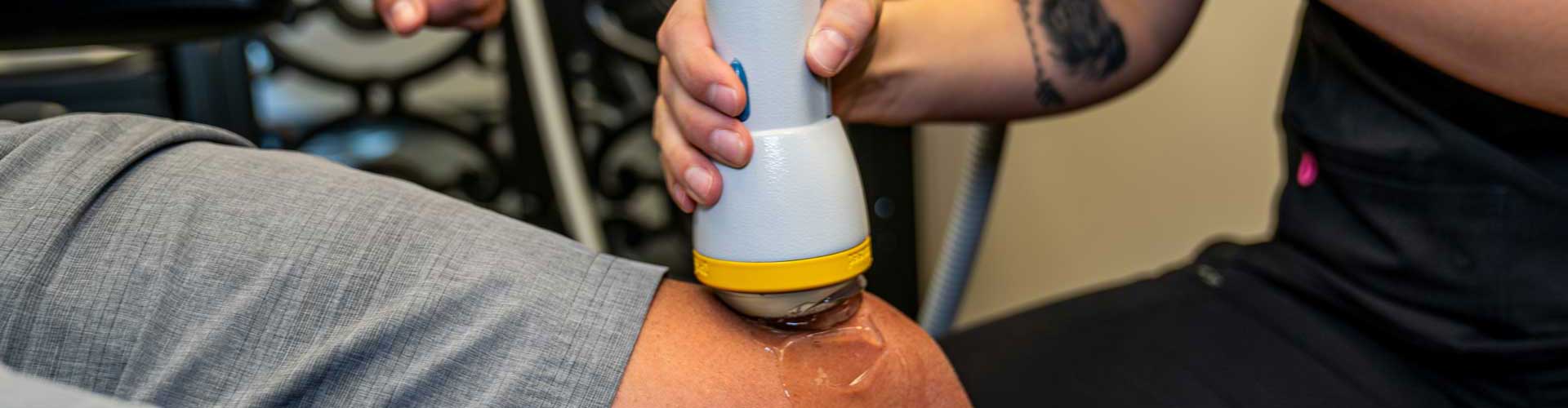
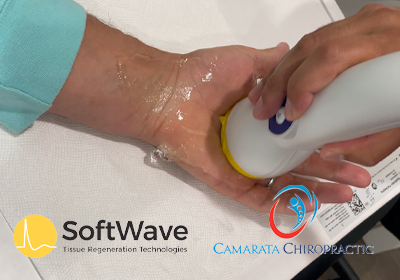
SoftWave Tissue Regeneration Therapy is not a pain drug, and it does not work like one. It delivers a series of broadfocused electrohydraulic shockwaves into the target tissue, creating a precise mechanical stimulus at the cellular level. That stimulus triggers a cascade of biological responses through a process called mechanotransduction, the mechanism by which cells convert a physical force into a biochemical response.
What that looks like inside the tissue:
- Stem cell activation: SoftWave signals resident mesenchymal stem cells to migrate to the treatment area and participate in repair, which is exactly what stalled chronic tissue needs.
- Angiogenesis: New blood vessel formation is stimulated, restoring circulation to areas that have become ischemic and poorly nourished over time.
- Collagen remodeling: Fibroblasts are activated to lay down new, organized collagen, replacing disorganized scar tissue and fibrotic adhesions with functional tissue.
- Inflammation modulation: SoftWave does not suppress inflammation the way a steroid or NSAID does. It modulates it, helping shift the local environment from a chronic, dysfunctional inflammatory state toward a productive, repair-oriented one.
The result, as many patients report, is not just temporary relief but progressive improvement as the tissue actually heals. That is a fundamentally different mechanism than blunting a pain signal.
If this sounds like the kind of approach you have been looking for, the next step is straightforward: book a SoftWave consultation at our North Chili office and find out whether your specific condition is a candidate for regenerative treatment.
Who This Matters for in Rochester
The Rochester region sees a wide range of patients who fit this profile. People who have been managing knee pain, hip pain, plantar fasciitis, shoulder injuries, or chronic back and neck conditions with over-the-counter medications for years. People who were told surgery is the next step but are not ready. People who completed physical therapy and felt some improvement but then plateaued. People who take NSAIDs every day just to get through work or take care of their families in Chili, Spencerport, Greece, or Henrietta.
If you recognize yourself in that picture, reading about what other Rochester-area patients have experienced can be a useful starting point. SoftWave TRT reviews from patients at our practice reflect real outcomes from people dealing with the kinds of conditions that tend to linger when pain suppression is the only tool in play.
A Different Way to Think About Pain
Pain that persists is asking a question. That question is not “how do I feel less of this.” It is “what does this tissue need that it is not getting?” Answering that question requires looking at the tissue itself, not just the signal it is sending.
NSAIDs have a role. Acute pain management has a role. But if your pain has been around for months or years, and the answer has always been another dose of something that quiets it temporarily, it may be time to ask whether there is a path that actually addresses what is happening in the tissue. That path exists, and for many people, it starts with understanding that the goal is not to mask the signal. It is to give the tissue what it needs to stop sending one.
To learn more about how regenerative care works and what the process looks like, explore the healing experience at Camarata Chiropractic & Wellness and see whether it fits where you are right now.
Ready to Get Started?
If you’re dealing with chronic pain in Rochester, Chili, Churchville, Spencerport, Gates, Greece, Hilton, Rush, Henrietta, Scottsville, Caledonia, LeRoy, Brighton, or anywhere in the greater Rochester area, we’d love to help you find a path that works with your body, not against it.
Book your consultation here and let’s build a plan around what your tissue actually needs.
Get a Hold of Us
Ready to upgrade your health from the inside out?
At Camarata Chiropractic & Wellness, we focus on identifying the root cause of dysfunction and optimizing your body’s performance through SoftWave Therapy, Red Light Therapy, chiropractic care, recovery strategies, and lifestyle guidance.
Address: 3237 Union St, North Chili, NY 14514
Phone: 585-617-4145
Email: info@camaratachiropractic.com
Website: https://www.camaratachiropractic.com
Facebook: https://www.facebook.com/camaratachiropractic
Instagram: https://www.instagram.com/camarata_chiro/
Schedule Your New Patient Special Here!
Learn about our newest offering and the powers of red light therapy at RedLightRochester.com.
‹ Back



 3237 Union St,