
Blog & Resources
Degenerative Disc Disease in Rochester, NY: Supporting Discs and Spinal Tissue Without Surgery
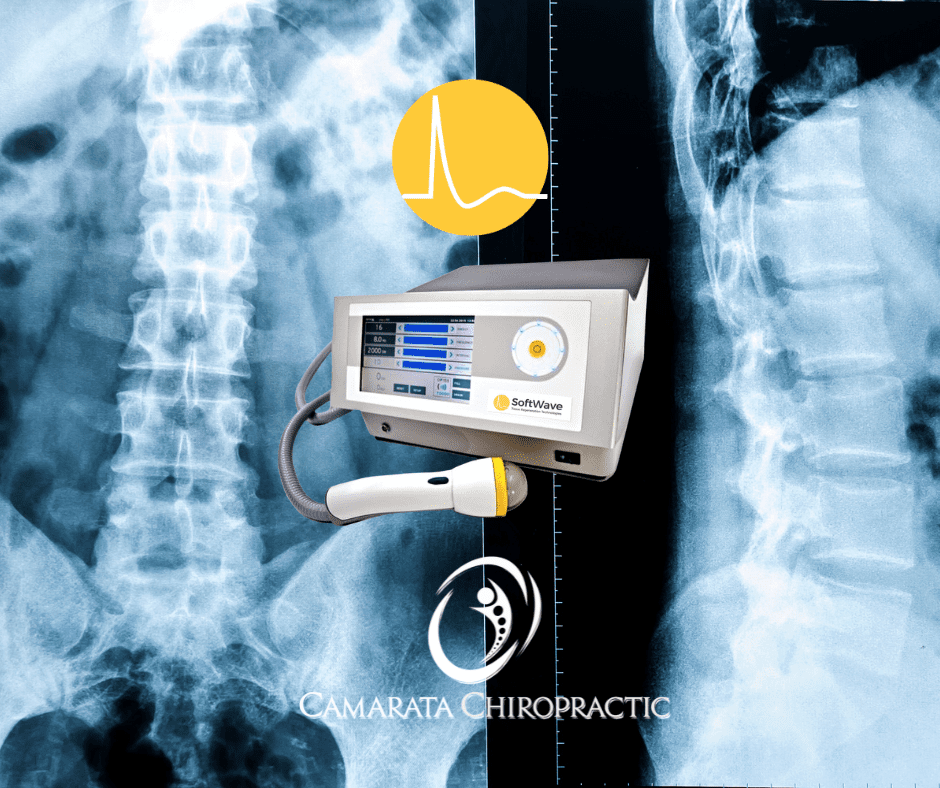
Getting an MRI report that mentions “degenerative disc disease” or “disc desiccation” can feel alarming, even devastating. For many people in the Rochester area, that report marks a turning point where they start wondering whether surgery is inevitable or whether they’re facing a life of chronic pain. The reality is far more nuanced, and often far more hopeful, than those two or three words on a radiology printout suggest.
Degenerative disc disease is not actually a disease in the classic sense. It is a description of age-related changes to the intervertebral discs, the cushioning structures that sit between the bones of your spine. These changes are remarkably common. Studies consistently show that a large percentage of people in their 40s, 50s, and beyond have some degree of disc degeneration visible on imaging, yet many of them have no significant pain at all. The disc findings on your MRI may be present, but they are rarely the whole story when it comes to what is generating your pain.
At Camarata Chiropractic & Wellness, we work with patients every day who come in carrying that MRI report and a lot of fear. What we find, more often than not, is that a thoughtful conservative approach combining chiropractic care with advanced therapies like SoftWave Tissue Regeneration Therapy can meaningfully reduce pain and restore function, without jumping straight to injections or surgery.
What Actually Happens to a Degenerating Disc
Your intervertebral discs are made up of a tough outer ring (the annulus fibrosus) and a gel-like center (the nucleus pulposus). Over time, with age and cumulative loading, the disc loses some of its water content and height. It may develop small tears or bulge outward slightly. This is a normal part of the aging process for many people.
What the MRI cannot always tell you is which tissue is actually causing your pain on a given day. The disc itself has limited nerve supply, especially in its inner layers. But the structures surrounding the disc are richly innervated and highly reactive:
- Facet joints (the small joints at the back of each vertebra) often bear more load when a disc loses height, becoming irritated and inflamed
- Paraspinal muscles and ligaments tighten and brace around an unstable or painful segment, contributing to stiffness and aching
- Nerve roots that exit the spine near a degenerated disc can become sensitized even without a frank herniation
- Fibrotic adhesions can develop in surrounding soft tissue, limiting motion and perpetuating a pain cycle
This is why two people with nearly identical MRI findings can have completely different pain experiences. The disc changes set the stage, but the surrounding soft tissue is usually running the show.
Why Disc Changes Are Not a Life Sentence
One of the most important things we tell patients at our North Chili clinic is this: a degenerative disc does not automatically mean progressive, worsening pain. Many patients find that their symptoms are episodic, with flare-ups triggered by specific activities or prolonged postures, and that periods of relative comfort are entirely achievable.
Pain science research over the past two decades has consistently reinforced that structural findings on imaging correlate poorly with pain levels. Restoring motion, calming the irritated surrounding tissue, and interrupting the chronic inflammatory cycle are often far more effective levers than the imaging report would suggest.
How Chiropractic Care Fits In
When a spinal segment becomes painful, the body’s natural response is to guard it: muscles tighten, movement decreases, and the joints at that level gradually lose their normal range of motion. This guarding response is protective in the short term, but when it persists for weeks or months, it compounds the problem. Reduced motion means reduced nutrient exchange into the disc and surrounding structures, and joints that don’t move tend to stay inflamed.
Chiropractic adjustments and manual therapy are designed to restore that motion. By gently mobilizing restricted spinal segments, we help reduce muscle guarding, improve joint mechanics, and take some of the abnormal load off the irritated structures around a degenerated disc. This is not about “putting the disc back” (that is not how it works), but about restoring the functional environment the spine needs to calm down and move better.
We tailor the approach carefully for each patient. Someone with significant disc changes may receive gentler, low-force techniques rather than high-velocity adjustments, depending on their presentation and comfort level.
What Our Rochester Patients Are Saying
Real reviews from real SoftWave patients at Camarata Chiropractic & Wellness
Where SoftWave Tissue Regeneration Therapy Comes In
Chiropractic care addresses motion and joint mechanics, but the irritated soft tissue surrounding a degenerated disc often needs its own targeted approach. This is where SoftWave TRT has become a meaningful part of our care plans for degenerative disc patients.
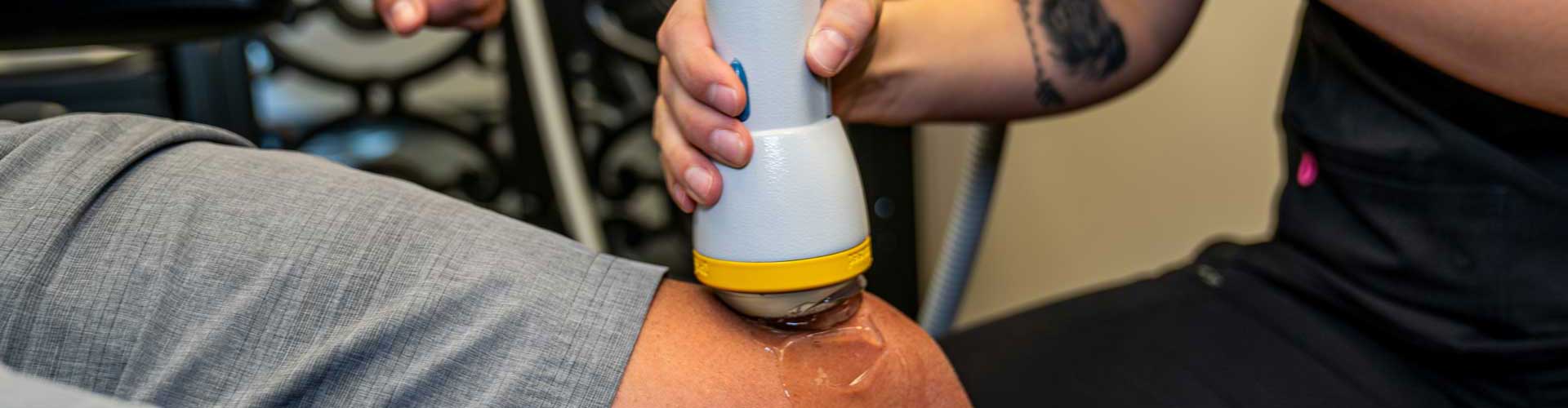
SoftWave uses a broad-focused electrohydraulic shockwave to deliver a regenerative mechanical signal deep into tissue. The mechanism is mechanotransduction: the acoustic waves stimulate cells at a biological level, triggering responses that include:
- Activation of resident stem cells in the treated area
- Promotion of angiogenesis (new blood vessel formation) to improve local circulation
- Collagen remodeling and breakdown of fibrotic adhesions that limit movement
- Modulation of the local inflammatory environment
That last point deserves emphasis. SoftWave doesn’t suppress inflammation the way a steroid injection does. It modulates it, nudging a chronic, dysfunctional inflammatory state into a more productive, repair-oriented one. For someone whose paraspinal muscles, facet joint capsules, and ligaments have been chronically inflamed and fibrotic around a degenerated disc, this distinction matters enormously.
To be clear about what SoftWave is not doing: it is not regrowing disc material or reversing the structural changes visible on an MRI. What it can do is address the irritated, fibrotic, inflamed tissue surrounding that disc, which is often the primary driver of day-to-day pain and stiffness. Many patients report meaningful reductions in pain, improved mobility, and longer windows between flare-ups after a course of SoftWave treatments.
You can read through what Rochester-area patients have experienced at our SoftWave TRT reviews page.
Is This Approach Right for You?
Not every degenerative disc patient is an identical candidate for the same plan, and we don’t treat everyone the same way. The patients who tend to do well with this conservative combination approach generally share some common features:
- Pain that is chronic or episodic rather than acute and severe
- Stiffness and aching in the low back or neck, with or without mild radiating symptoms
- No significant neurological deficits (severe weakness, loss of bowel or bladder control would need a different workup first)
- Willingness to engage with a course of care rather than looking for a single-session fix
- A desire to exhaust conservative options before considering injections or surgery
If you’ve recently received a diagnosis of degenerative disc disease and you’re not sure where to start, book a SoftWave consultation with our team. We’ll review your history and imaging, talk through your symptoms, and build a realistic picture of what conservative care may be able to accomplish for you.
What a Typical Care Plan Looks Like
For patients we see at our North Chili location serving the greater Rochester area, a degenerative disc care plan typically unfolds in phases:
- Initial phase: Reducing acute pain and muscle guarding through chiropractic care, targeted soft tissue work, and early SoftWave sessions to begin modulating the local inflammatory environment
- Restoration phase: Rebuilding range of motion, addressing postural and movement habits that load the spine poorly, and continuing SoftWave to support tissue remodeling
- Maintenance and prevention: Teaching patients how to manage their spines long-term, with periodic check-ins and the option to return for SoftWave if flare-ups emerge
The timeline varies. Some patients feel meaningful improvement within a handful of visits; others with more chronic presentations need a longer runway. We set realistic expectations from the start.
Conservative First: A Reasonable Starting Point
Spinal surgery and injections absolutely have a role in certain clinical scenarios. But for the large majority of patients with degenerative disc disease who are not experiencing severe neurological compromise, those options are most appropriately considered after a genuine trial of conservative care has been given a fair chance.
The risk profile of surgery is real. Recovery is significant. And because the surrounding soft tissue is so often the primary pain generator, even surgical intervention on the disc itself does not always resolve the chronic pain pattern that has built up around it. Starting with the most conservative, lowest-risk approach first is simply sound reasoning, and it is what the clinical guidelines for spinal care consistently recommend.
You can explore more about what care at our practice looks like and what the healing experience involves, and you are also welcome to read testimonials from patients who have walked this same path before you.
The Bottom Line on Degenerative Disc Disease
An MRI that shows disc degeneration is not a verdict. It is one piece of information, and often not the most important piece when it comes to understanding your pain and mapping a path forward. The muscles, ligaments, facet joints, and nerves surrounding a degenerated disc have tremendous capacity to calm down and function better when given the right environment and the right stimulus. Chiropractic care to restore motion, combined with SoftWave to address the irritated surrounding tissue and modulate chronic inflammation, offers a drug-free, non-surgical path that many patients find genuinely changes their daily quality of life.
Ready to Get Started?
If you’re dealing with chronic pain in Rochester, Chili, Churchville, Spencerport, Gates, Greece, Hilton, Rush, Henrietta, Scottsville, Caledonia, LeRoy, Brighton, or anywhere in the greater Rochester area, we’d love to help you find a path that works with your body, not against it.
Book your consultation here and let’s build a plan around what your tissue actually needs.
Get a Hold of Us
Ready to upgrade your health from the inside out?
At Camarata Chiropractic & Wellness, we focus on identifying the root cause of dysfunction and optimizing your body’s performance through SoftWave Therapy, Red Light Therapy, chiropractic care, recovery strategies, and lifestyle guidance.
Address: 3237 Union St, North Chili, NY 14514
Phone: 585-617-4145
Email: info@camaratachiropractic.com
Website: https://www.camaratachiropractic.com
Facebook: https://www.facebook.com/camaratachiropractic
Instagram: https://www.instagram.com/camarata_chiro/
Schedule Your New Patient Special Here!
Learn about our newest offering and the powers of red light therapy at RedLightRochester.com.
‹ Back




 3237 Union St,