

Blog & Resources
Volleyball Season and Jumper's Knee: SoftWave for Patellar Tendinitis in Rochester Athletes

Volleyball Season Is Here: Keeping Rochester Athletes Jumping Without Knee Pain
Late summer in Rochester means volleyball. High school teams across Monroe County are starting preseason practices, club players are gearing up for fall tournaments, college athletes are heading back to campus, and adult rec leagues keep the sand courts busy at Ontario Beach Park. It is a fast, explosive sport, and all that jumping comes with a common cost: pain just below the kneecap that gets worse with every approach, block, and landing.
That pain is often patellar tendinitis, better known as jumper's knee. At Camarata Chiropractic & Wellness in North Chili, Dr. Sam Camarata works with volleyball players of all ages who want to stay on the court without their knees holding them back. Here is what jumper's knee is, why volleyball players are so prone to it, why it lingers, and how SoftWave Tissue Regeneration Technology (TRT) may help the tendon heal.
What Is Jumper's Knee?
The patellar tendon connects the bottom of your kneecap (patella) to the top of your shinbone (tibia). It is the final link that lets your quadriceps straighten your knee. Every time you jump, the tendon helps produce explosive force, and every time you land, it helps absorb that force.
Patellar tendinopathy develops when the tendon is loaded repeatedly without enough recovery, usually right at the lower edge of the kneecap. Early on there may be some irritation and inflammation, but in long-standing cases the fibers become disorganized and weaker. That is why many clinicians prefer the term tendinopathy, which describes a tissue struggling to repair itself rather than simply inflamed.
Why Volleyball Players Are at Risk
Volleyball is one of the most jump-heavy sports there is. A single match can include dozens of maximal jumps for hitters and blockers, plus countless smaller hops and lunges. Several factors stack up:
- High jump volume: Attacking, blocking, and jump serving all demand explosive takeoffs.
- Hard landings: Landing stiff-legged or with the knees caving inward increases tendon load.
- Indoor floors: Gym floors absorb far less than sand, so the tendon takes more.
- Busy schedules: School teams, club practices, and weekend tournaments leave little rest.
- Sudden training spikes: Going from a quiet summer into two-a-day preseason practices is a classic trigger.
- Strength and mobility gaps: Tight quadriceps, stiff ankles, and weak hips shift more stress onto the knee.
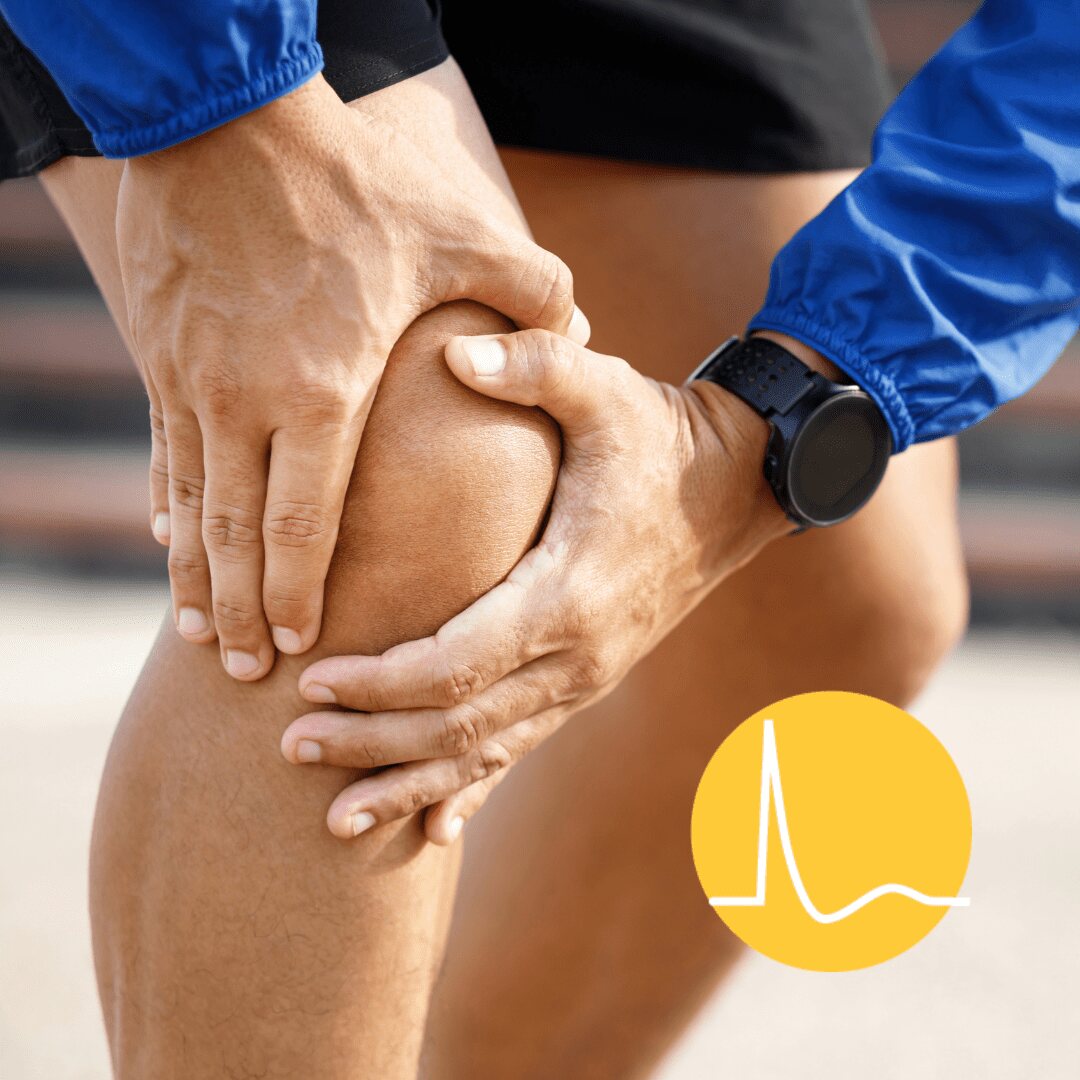
Players often notice tenderness just below the kneecap, pain at the start of practice that eases with warm-up and returns afterward, pain with jumping, squatting, or stairs, and morning stiffness. In later stages it can limit jump height or hurt even at rest.
Why Patellar Tendinitis Hangs On
Tendons are built for strength, not speed of healing. Their limited blood supply means repair happens slowly, so when a player keeps practicing on an irritated tendon, damage accumulates faster than the body can fix it. Even when athletes rest, the tendon often feels better without actually getting stronger. As soon as jump volume ramps back up, the pain returns.
Conventional Treatment Options
- Load management: Reducing jump volume is usually the first step.
- Ice and anti-inflammatories: May reduce pain temporarily but do not rebuild tendon tissue.
- Patellar straps: May help some athletes feel more comfortable during play.
- Progressive strengthening: Isometric and slow, heavy loading exercises are a core part of recovery.
- Injections and surgery: Steroid injections into the patellar tendon are generally avoided, and surgery is rarely needed.
Strengthening is essential, but it is hard to progress when the tendon hurts. That is where SoftWave can play a supporting role.
What Our Rochester Patients Are Saying
Real reviews from real SoftWave patients at Camarata Chiropractic & Wellness
How SoftWave Helps the Patellar Tendon
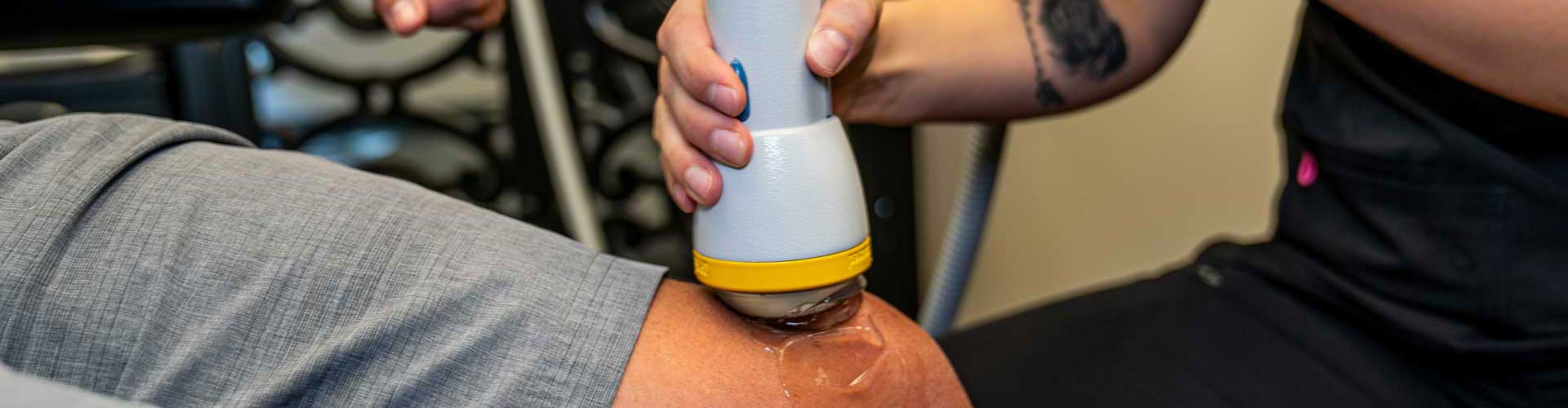
SoftWave TRT uses electrohydraulic technology. A spark generated in water creates an acoustic wave, and a patented parabolic reflector shapes it into a broad-focused field. SoftWave is the only broad-focused shockwave, which sets it apart from radial pressure wave (RPW) devices and from electromagnetic and piezoelectric focused devices. The broad field is intended to reach the full patellar tendon and surrounding tissue at therapeutic depth in each session.
If knee pain is cutting into your jump or your playing time, book a SoftWave evaluation with Dr. Sam Camarata and get a plan built around your season.
In simple terms, SoftWave is designed to:
- Activate resident stem cells in the tendon and surrounding tissue.
- Increase circulation by promoting new blood vessels through VEGF and eNOS signaling.
- Support rebuilding of organized tendon tissue through markers like PCNA and BMP, which are involved in collagen production.
- Modulate inflammation through toll-like receptors, helping the tendon move out of a stuck, irritated state.
- Clear senescent cells that no longer contribute to healthy tissue.
SoftWave is FDA-cleared for activation of connective tissue, temporary increase in blood flow, and temporary relief of minor muscle and joint pain. For an athlete, these effects can support the strengthening work that makes a tendon more resilient.
What to Expect at Camarata Chiropractic & Wellness
Your first visit covers your position, training schedule, and how the pain behaves. Pain below the kneecap can also come from the fat pad, the joint behind the kneecap, or a growth plate issue in younger athletes, so Dr. Sam will confirm the source and assess hip strength, ankle mobility, and how you land.
- Sessions take about 10 to 15 minutes.
- No needles, no drugs, and no downtime, so athletes can often keep practicing with smart modifications.
- Treatment is usually a series over several weeks, with healing designed to continue afterward.
Dr. Sam typically combines SoftWave with guidance on jump volume, progressive tendon strengthening, landing mechanics, and chiropractic care when restricted motion is adding stress to the knee. Some athletes also use our Trifecta Red Light bed as a complementary recovery option during heavy tournament stretches. Want to hear from other patients? Check out our SoftWave TRT reviews page.
Red Flags: When to Get Checked Right Away
Seek prompt care for a sudden pop below the kneecap with an inability to straighten the knee, a kneecap that sits higher than usual, significant swelling or locking after a landing, repeated giving way, a hot, red knee or fever, or, in young athletes, a painful bump below the kneecap that does not settle with rest. Dr. Sam will refer you for imaging or to a specialist whenever the exam suggests something beyond tendon irritation.
Ready to Get Back to Jumping Without Knee Pain?
Whether you play for your high school, a Rochester club team, or a summer sand league, you deserve to play without dreading every landing. Let Dr. Sam Camarata help your knees keep up with your game.
Book your SoftWave consultation here
Learn more: SoftWave Therapy for Knee Pain in Rochester, NY
Get a Hold of Us
Ready to get to the root of your pain instead of just managing it?
At Camarata Chiropractic & Wellness, we focus on identifying the root cause of dysfunction and helping your body heal through SoftWave Therapy, Red Light Therapy, chiropractic care, recovery strategies, and lifestyle guidance.
Address: 3237 Union St, North Chili, NY 14514
Phone: 585-617-4145
Email: info@camaratachiropractic.com
Website: https://www.camaratachiropractic.com
Facebook: https://www.facebook.com/camaratachiropractic
Instagram: https://www.instagram.com/camarata_chiro/
Schedule Your SoftWave Therapy Visit Here!
Learn about our newest offering and the powers of red light therapy at RedLightRochester.com.
‹ Back

 3237 Union St,