
Blog & Resources
Summer Running and Race Training in Rochester, NY: SoftWave and Red Light for Faster Recovery
Summer arrives in Rochester and the running community comes alive. The trails at Mendon Ponds, the roads through Chili and Churchville, and the weekend 5K and 10K race calendars fill up fast. For many runners, the warm months are also when training intensity picks up in a big way, especially for those with a fall marathon or half-marathon circled on the calendar. More miles mean more progress, but they also mean more stress on the body, and that stress has a way of finding your weakest link.
Overuse injuries do not announce themselves dramatically. They creep in as tightness after a long run, a dull ache on the outside of the knee, or a heel that protests the first few steps each morning. Pushed too long, those signals become injuries that sideline you entirely. The good news is that there are ways to support your body through heavy training so recovery keeps pace with the miles. At Camarata Chiropractic & Wellness, we work with Rochester-area runners using a combination of SoftWave Tissue Regeneration Therapy and full-body Trifecta Red Light Therapy to address both the injuries that slow you down and the recovery deficit that lets them develop in the first place.
Understanding why summer runners get hurt, and what actually fixes the tissue rather than masking the pain, is the first step toward a season where you cross finish lines instead of spending race weekends on the couch.
The Most Common Overuse Injuries Runners Face
High mileage does not hurt runners uniformly. Load tends to concentrate in predictable places, and the injuries that result follow familiar patterns.
- Runner’s knee (patellofemoral pain): Aching around or behind the kneecap, often worst on downhills or after sitting. The cartilage and surrounding soft tissue are absorbing repetitive stress without adequate recovery time.
- IT band syndrome: Sharp or burning pain on the outer knee or lower thigh. The iliotibial band, a thick connective tissue band running from the hip to the shin, becomes tight and inflamed where it crosses the knee.
- Shin splints (medial tibial stress syndrome): Tenderness along the inner shin, a warning sign that the bone and surrounding connective tissue are under cumulative stress.
- Achilles tendinopathy: Stiffness and pain at the back of the heel or lower calf, especially in the morning. Tendon tissue that is being loaded faster than it can regenerate starts to break down structurally.
- Plantar fasciitis: That familiar stabbing pain in the heel or arch on the first steps of the day. The plantar fascia is being pulled repeatedly without time to fully repair.
- Hip flexor tightness and strain: Higher mileage and faster paces demand more from the hip flexors, and when they are not recovering between sessions, they become chronically tight and prone to strain.
What nearly all of these injuries share is a disruption in the normal tissue repair cycle. The tissue is being stressed faster than the body can regenerate it, and in many cases a low-grade chronic inflammatory state develops that actually impairs healing rather than promoting it.
Why Pushing Through Backfires
Runners are, by nature, reluctant to rest. The instinct is to tape it up, take an ibuprofen, and keep going. The problem is that anti-inflammatory approaches and simply continuing to train on damaged tissue do not fix the underlying structural problem. They quiet the signal without addressing the source. Tendon tissue with micro-tears, fascia with fibrotic adhesions, and cartilage under chronic stress need a genuine repair stimulus, not suppression.
Pushing through also tends to create compensation patterns. A runner protecting a sore Achilles begins to alter their gait subtly, which loads the knee and hip in new ways. One injury becomes two. By the time fall race season arrives, the compounding effect of training on unresolved tissue damage can set a runner back months rather than weeks.
How SoftWave Targets the Injured Tissue at the Source
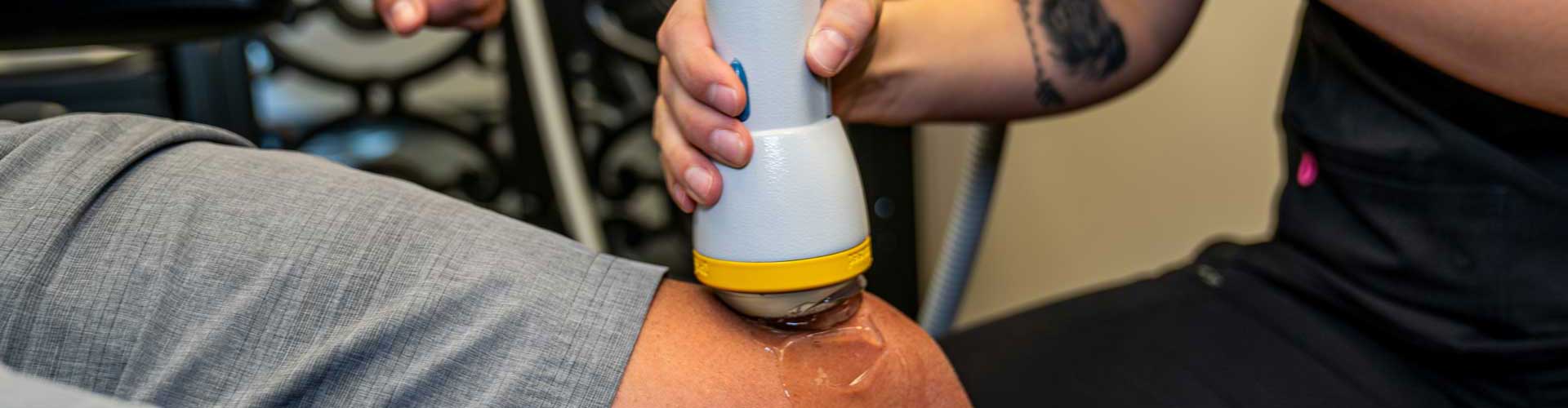
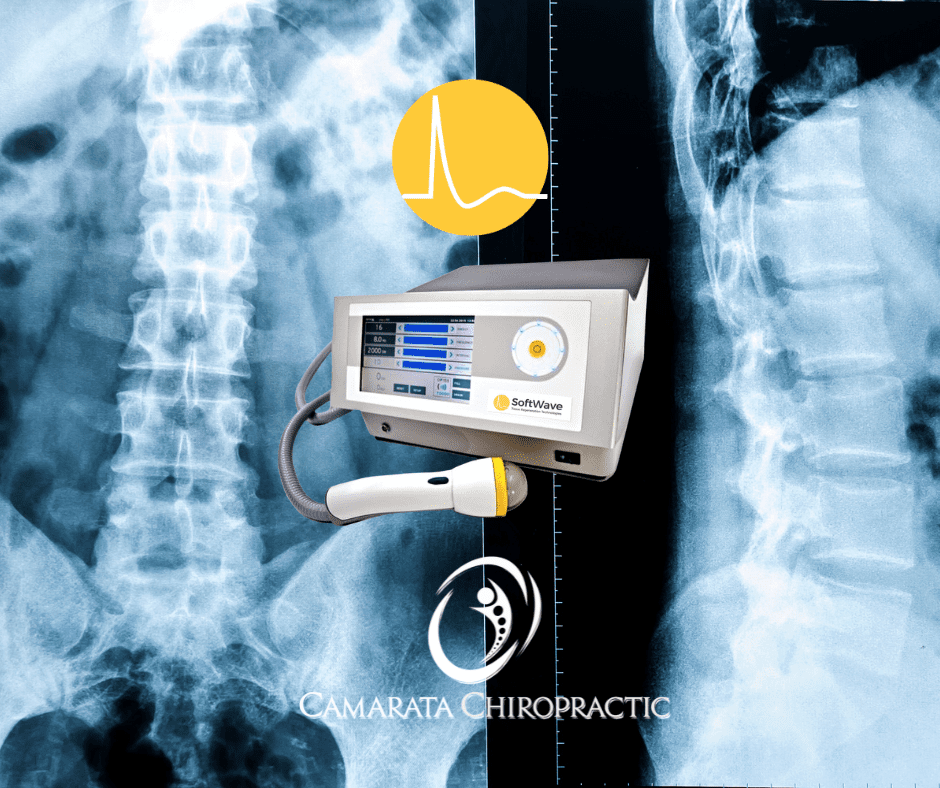
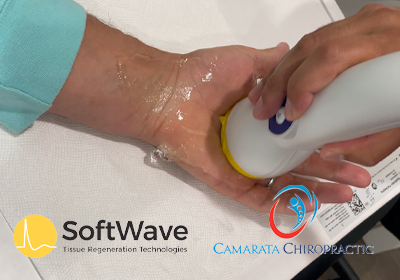
SoftWave Tissue Regeneration Therapy is a non-surgical, drug-free technology that delivers electrohydraulic shockwave energy into the affected tissue. The acoustic waves create a mechanical signal that the body interprets as a regenerative prompt rather than damage. This triggers several interconnected processes:
- Resident stem cell activation: SoftWave is designed to recruit the body’s own repair cells to the site of injury.
- Angiogenesis: New blood vessel formation improves circulation to tissue that was previously under-supplied, which is particularly important in tendons and fascia where blood supply is naturally limited.
- Collagen remodeling: Damaged and disorganized collagen fibers in tendons, ligaments, and fascia are prompted to remodel into stronger, better-organized tissue.
- Breaking up fibrotic adhesions: Scar tissue and adhesions that have formed in chronically injured areas are disrupted, restoring mobility and reducing pain.
- Inflammation modulation: SoftWave does not suppress inflammation the way a steroid does. It modulates it, nudging the inflammatory response from a chronic, dysfunctional state into a productive, repair-oriented state.
For runners dealing with IT band issues, Achilles tendinopathy, plantar fasciitis, or runner’s knee, this means treatment is working at the level of the tissue pathology rather than simply numbing the symptom. Many patients report noticeable reduction in pain and improved function after a series of sessions, and importantly, the repair process continues between visits.
If you’re dealing with a nagging running injury or want to stay ahead of one as your mileage climbs, book a SoftWave consultation at Camarata Chiropractic & Wellness and find out whether it’s the right fit for your situation.
What Our Rochester Patients Are Saying
Real reviews from real SoftWave patients at Camarata Chiropractic & Wellness
Trifecta Red Light: Supporting Full-Body Recovery Between Sessions
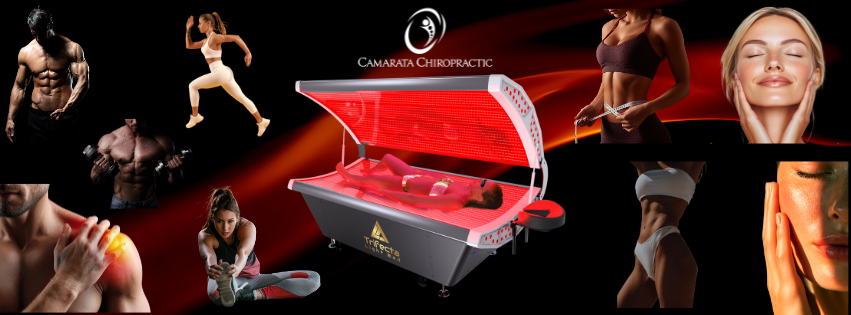
Where SoftWave works precisely on a specific site of injury, full-body Trifecta Red Light Therapy operates at a systemic level. Red light therapy (photobiomodulation) uses specific wavelengths of light to stimulate mitochondria, the energy-producing structures inside cells. The result is increased ATP production, which means more cellular energy available for repair processes throughout the entire body.
For runners, the practical effects of regular red light therapy sessions may include:
- Reduced muscle soreness after hard training sessions
- Faster clearance of exercise-related fatigue
- Support for tissue repair across multiple areas simultaneously
- Improved sleep quality, which is when most recovery actually happens
- Reduced systemic inflammation that can accumulate with heavy training loads
The full-body format of the Trifecta system matters for runners specifically because high mileage creates stress in multiple places at once. It is not just the knee or the heel. The entire kinetic chain, from feet through calves, hamstrings, glutes, and lower back, is working hard and accumulating fatigue. A session of full-body red light addresses all of that at once, complementing the targeted work SoftWave does on the specific injury site.
The SoftWave Plus Red Light Stack: Why the Combination Works
These two therapies address different layers of the recovery challenge, and that is exactly why they work well together. SoftWave provides a targeted regenerative signal to the damaged tissue. Red light supports the cellular energy and systemic environment that makes repair possible. One is a scalpel; the other is a foundation.
A runner with Achilles tendinopathy, for example, benefits from SoftWave addressing the tendon directly while red light sessions support overall recovery between training days. The result is a body that is not just treating the injury but maintaining the conditions for ongoing tissue health throughout a demanding training season. You can read about how this kind of approach has helped patients at the testimonials page on our site.
Practical Tips for Rochester Runners Training Through Summer
Technology works best alongside smart training habits. A few principles that support injury-free mileage buildup:
- Respect the ten percent rule: Do not increase weekly mileage by more than roughly ten percent week over week. Most overuse injuries develop when volume spikes too quickly.
- Build easy days in: Every hard workout or long run needs to be balanced with genuinely easy days. Easy means easy, not moderately hard.
- Address tightness early: A tight calf or achy IT band that lingers more than a few days is worth addressing proactively, not running through.
- Prioritize sleep: Human growth hormone and most tissue repair happen during sleep. Cutting sleep to fit in training is counterproductive during heavy mileage cycles.
- Vary surfaces when possible: Rochester offers a mix of road, trail, and track. Mixing surfaces reduces repetitive stress on the same tissues.
- Strength work for runners: Hip and glute strength in particular reduces load on the knee and IT band. Even two short sessions per week makes a measurable difference.
Who Benefits Most from This Approach
The SoftWave and Red Light combination is well suited for several types of runners:
- Runners with a specific overuse injury (Achilles, plantar, IT band, patellofemoral) who want to address it without cortisone shots or extended rest
- Runners ramping up mileage for a fall race and looking to stay ahead of breakdown
- Runners who have been managing a “manageable” chronic issue for months and want to actually resolve it
- Masters runners whose recovery times have slowed and who want support keeping pace with training demands
- Runners returning from a previous injury and building back carefully
You can learn more about what patients have experienced with these treatments at the SoftWave TRT reviews page, and get a fuller picture of how the practice approaches healing at the Experience Healing section of the site.
What a Recovery Plan Looks Like
There is no single protocol that fits every runner, because injuries and training demands vary. In general, a runner working with our team might expect an initial evaluation to identify the specific tissue involved and the stage of the injury, followed by a series of SoftWave sessions targeting that area. Red light therapy sessions can be incorporated regularly throughout the training week as a recovery support tool. Chiropractic care to address any alignment or mobility factors that contributed to the injury is often part of the picture as well.
The goal is not just getting through this race season. It is building the tissue resilience to keep running well for years to come.
Ready to Get Started?
If you’re dealing with chronic pain in Rochester, Chili, Churchville, Spencerport, Gates, Greece, Hilton, Rush, Henrietta, Scottsville, Caledonia, LeRoy, Brighton, or anywhere in the greater Rochester area, we’d love to help you find a path that works with your body, not against it.
Book your consultation here and let’s build a plan around what your tissue actually needs.
Get a Hold of Us
Ready to upgrade your health from the inside out?
At Camarata Chiropractic & Wellness, we focus on identifying the root cause of dysfunction and optimizing your body’s performance through SoftWave Therapy, Red Light Therapy, chiropractic care, recovery strategies, and lifestyle guidance.
Address: 3237 Union St, North Chili, NY 14514
Phone: 585-617-4145
Email: info@camaratachiropractic.com
Website: https://www.camaratachiropractic.com
Facebook: https://www.facebook.com/camaratachiropractic
Instagram: https://www.instagram.com/camarata_chiro/
Schedule Your New Patient Special Here!
Learn about our newest offering and the powers of red light therapy at RedLightRochester.com.
‹ Back

 3237 Union St,