
Blog & Resources
SoftWave vs Radial Shockwave (RPW): Why Broad-Focused Technology Is Different
Not All Shockwave Is the Same: What Rochester Patients Should Know
As shockwave therapy has grown more popular, more clinics around Rochester and Western New York now advertise it. That is good news for patients looking for non-surgical options, but it also creates confusion. Two clinics can both say "shockwave" while using completely different technology, with different physics, different depth, and a very different experience on the table.
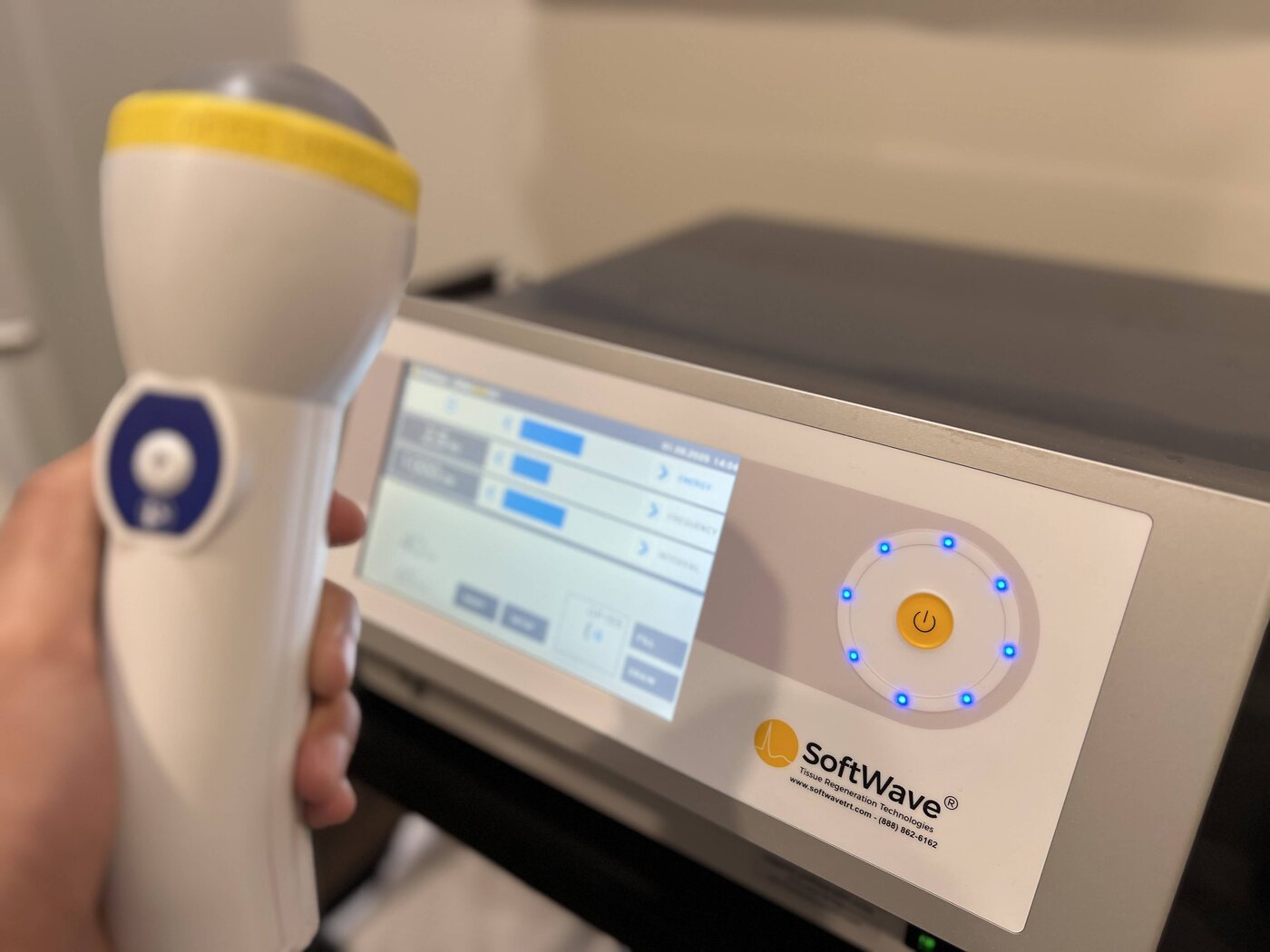
At Camarata Chiropractic & Wellness in North Chili, Dr. Sam Camarata chose SoftWave Tissue Regeneration Technology (TRT) for a specific reason: it is the only broad-focused shockwave. This article explains, in plain language, how SoftWave differs from radial pressure wave (RPW) devices, which are the most common type of "shockwave" in offices today, so you can make an informed choice.
The Four Main Types of Shockwave Technology
Acoustic wave devices used in musculoskeletal care generally fall into four groups:
- Radial pressure wave (RPW): Often called radial shockwave. Compressed air or a magnetic coil fires a small projectile against the back of the applicator tip, which transfers a pressure pulse into the skin.
- Electromagnetic focused: A coil and membrane generate a wave that is focused into a narrow point.
- Piezoelectric focused: Many small crystals are arranged to fire together and converge on a small focal zone.
- Electrohydraulic: A high-voltage spark in water creates an acoustic wave at its source. This is the original method used in medical shockwave, and it is the method SoftWave uses.
SoftWave takes electrohydraulic generation and pairs it with a patented parabolic reflector that shapes the wave into a broad-focused field. That combination is what makes it unique.
How Radial Pressure Wave Devices Work
Radial devices are sometimes described as "ballistic." The projectile strikes the applicator, and the energy radiates outward from the tip in a spreading pattern, like ripples from a stone dropped in a pond. The strongest energy is right at the skin surface, and it dissipates quickly as it travels deeper.
Technically, radial devices produce pressure waves rather than true shockwaves, because the wave does not have the very steep, rapid pressure rise that defines a shockwave. That does not mean RPW is useless. It can be helpful for superficial muscle tension and some trigger points, and many people find it feels like a strong, percussive massage. But for deeper tendons, ligaments, and joint structures, the energy that actually arrives may be limited.
What Patients Often Notice With Radial
- A loud, rapid tapping sensation
- More surface discomfort, since that is where the energy is concentrated
- Treatment focused on a small area around the tip
- Many sessions to cover a larger region
How Traditional Focused Shockwave Differs
Electromagnetic and piezoelectric devices produce true shockwaves and can reach deeper than radial. Their limitation is the shape of the energy. They concentrate it into a small focal point. That is useful for very precise targets, but it means the provider has to know exactly where the problem is and move the applicator constantly to cover an injured area. Higher energy at a small point can also be more uncomfortable.
What Makes SoftWave Broad-Focused
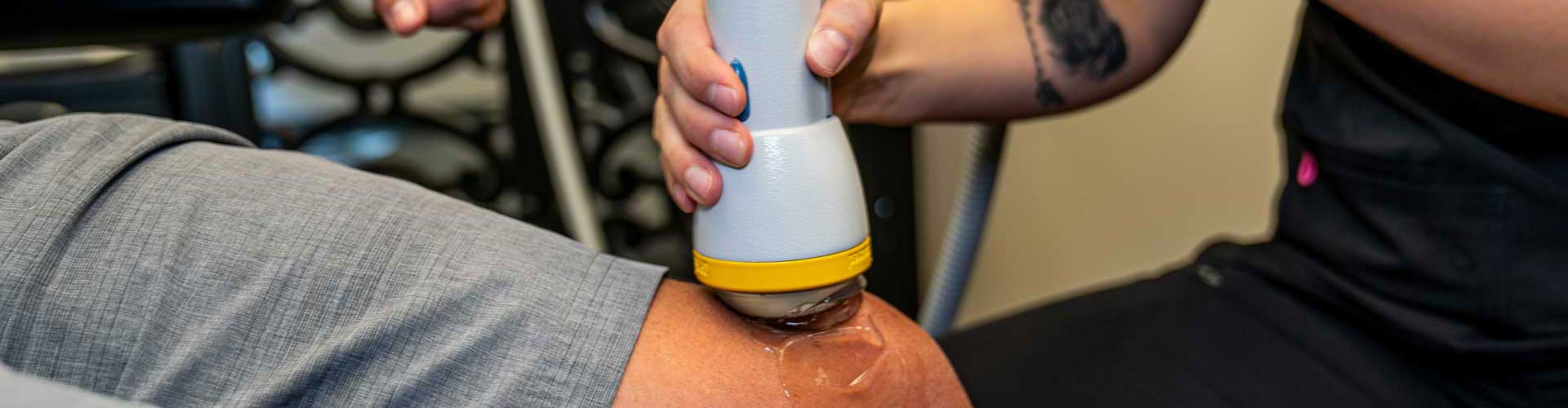
SoftWave's parabolic reflector does something different. Instead of converging the wave into a tiny point, it produces a broad-focused field: the energy travels in a parallel, wide path that reaches deep tissue while treating a much larger zone at once. In plain terms, you get the depth of focused shockwave with the coverage that radial devices try to offer, without the energy fading near the surface.
Why does that matter? Injuries are rarely the size of a pencil tip. A painful knee may involve the tendon, the joint capsule, and the surrounding muscle. A sore heel involves the fascia attachment and the tissue around it. A broad field can reach the whole area of dysfunction, including tissue that may not be the obvious source of pain but still contributes to the problem.
What Our Rochester Patients Are Saying
Real reviews from real SoftWave patients at Camarata Chiropractic & Wellness
How SoftWave Helps the Body Heal
The goal of SoftWave is not to mechanically "break up" tissue. It is designed to trigger the body's own repair biology. In plain language, SoftWave is designed to:
- Activate resident stem cells already present in your tissue.
- Support angiogenesis, the growth of new blood vessels, through VEGF and eNOS signaling, which improves blood flow to areas that heal slowly.
- Stimulate proliferation and collagen through markers such as PCNA and BMP, helping rebuild tendon, ligament, and connective tissue.
- Modulate inflammation, including regulating toll-like receptors, so the tissue moves out of a stalled, irritated state.
- Clear senescent cells, the worn-out cells that can hold healing back.
Curious which approach makes sense for your injury? Book a SoftWave consultation with Dr. Sam and we will explain exactly what we would treat and why.
SoftWave is FDA-cleared for activation of connective tissue, temporary increase in blood flow, temporary relief of minor muscle and joint pain, chronic diabetic foot ulcers, and acute second-degree burns. Clearance applies to the device and those uses, not to any specific orthopedic diagnosis, but it reflects the biological effects described above.
Side by Side: What It Feels Like
Patients who have tried radial devices elsewhere often comment on how different SoftWave feels. Because the energy is not concentrated at the skin, the sensation tends to be a deep thumping rather than sharp surface tapping. Many patients report the treatment is tolerable, and Dr. Sam adjusts the intensity throughout the session based on your feedback.
- Session length: About 10 to 15 minutes.
- No needles, drugs, or downtime: Most people go right back to work or their day.
- Series of treatments: Typically a series over several weeks, depending on the condition.
- Continued healing: Because SoftWave is designed to start a biological process, improvement may continue for weeks after the final session.
At our office, SoftWave is often combined with chiropractic care to improve how joints and the spine move, and some patients add the Trifecta full-body Red Light Therapy bed for general recovery support. You can read local patients' experiences on our SoftWave reviews page.
Questions to Ask Any Clinic Offering Shockwave
- Is the device radial (pressure wave) or true focused shockwave?
- How deep does the energy reach, and how large is the treatment area?
- What is the device FDA-cleared for?
- Will the provider evaluate the whole area, including joints and posture, or just treat the sore spot?
Shockwave of any kind is not appropriate for everyone. Pregnancy, certain cancers in the treatment area, active infections, some bleeding disorders, and other conditions need to be discussed first. Sudden severe pain, numbness, weakness, or swelling after an injury should be checked by a physician before starting any therapy.
Ready to Experience the Difference?
If you have tried radial shockwave or other treatments and still are not where you want to be, we would be glad to show you what broad-focused technology can do.
Book your SoftWave consultation here
Get a Hold of Us
Ready to get to the root of your pain instead of just managing it?
At Camarata Chiropractic & Wellness, we focus on identifying the root cause of dysfunction and helping your body heal through SoftWave Therapy, Red Light Therapy, chiropractic care, recovery strategies, and lifestyle guidance.
Address: 3237 Union St, North Chili, NY 14514
Phone: 585-617-4145
Email: info@camaratachiropractic.com
Website: https://www.camaratachiropractic.com
Facebook: https://www.facebook.com/camaratachiropractic
Instagram: https://www.instagram.com/camarata_chiro/
Schedule Your SoftWave Therapy Visit Here!
Learn about our newest offering and the powers of red light therapy at RedLightRochester.com.
‹ Back



 3237 Union St,