
Blog & Resources
SoftWave vs Dry Needling: What Rochester Patients Should Know Before Choosing
SoftWave or Dry Needling? Rochester Patients Deserve a Clear Comparison
If you have been dealing with stubborn muscle or tendon pain in the Rochester area, chances are someone has suggested dry needling. It has become a popular option in physical therapy and sports medicine offices. At the same time, more people are hearing about SoftWave Tissue Regeneration Technology from friends, coworkers, and teammates. Both are drug-free and both target pain at the tissue level, so it is natural to wonder how they compare.
At Camarata Chiropractic & Wellness in North Chili, Dr. Sam Camarata gets this question often. The honest answer is that these are very different tools that work in different ways and suit different problems. This article explains what each one does, where each shines, the tradeoffs, and how to decide what makes sense for you.
What Is Dry Needling?
Dry needling uses thin, solid filament needles inserted through the skin into muscle, usually into myofascial trigger points. Trigger points are tight, tender spots within a muscle that can cause local pain and sometimes refer pain to other areas, like a knot in the upper trapezius that sends an ache up into the head.
The "dry" part simply means nothing is injected. When the needle hits a trigger point, the muscle often produces a brief local twitch response, followed by a release of tension. Practitioners may leave needles in place briefly or move them in and out of the tissue.
How It Differs From Acupuncture
The needles look similar, but the frameworks differ. Acupuncture is rooted in traditional Chinese medicine and meridian points. Dry needling is based on Western anatomy and focuses on muscle trigger points and the nervous system's response to them.
What Patients Typically Experience
- A quick prick on insertion, then a deep ache or cramp-like twitch
- Muscle soreness afterward, often lasting a day or two
- Possible minor bruising or bleeding at needle sites
- Rare but more serious risks depending on location, such as needling near the chest wall
Dry needling is not for everyone. People with a strong fear of needles, bleeding disorders, those on blood thinners, or anyone with skin infections in the area may not be good candidates.
What Is SoftWave Therapy?
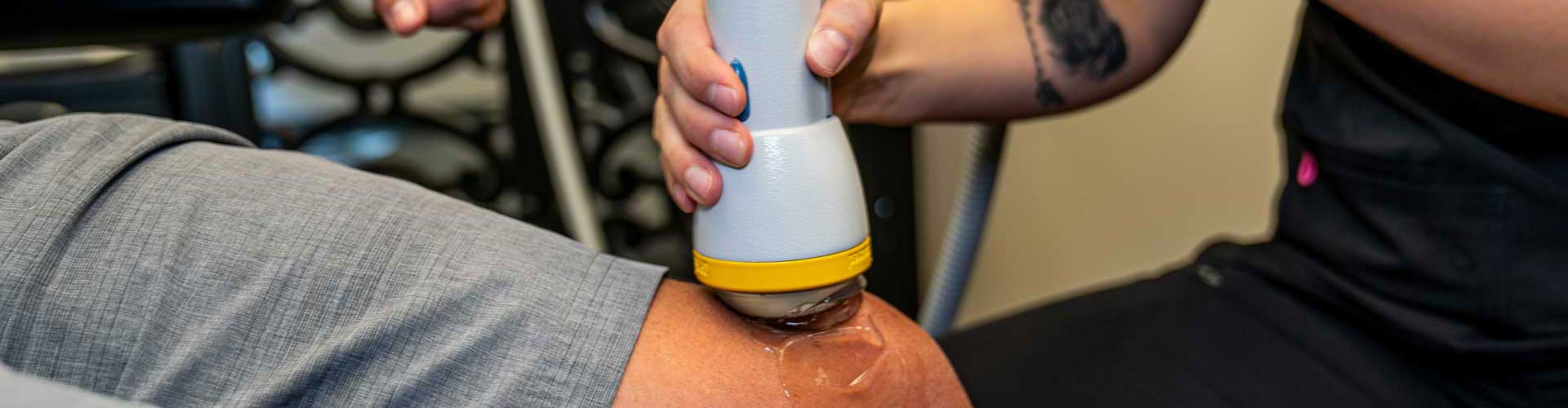
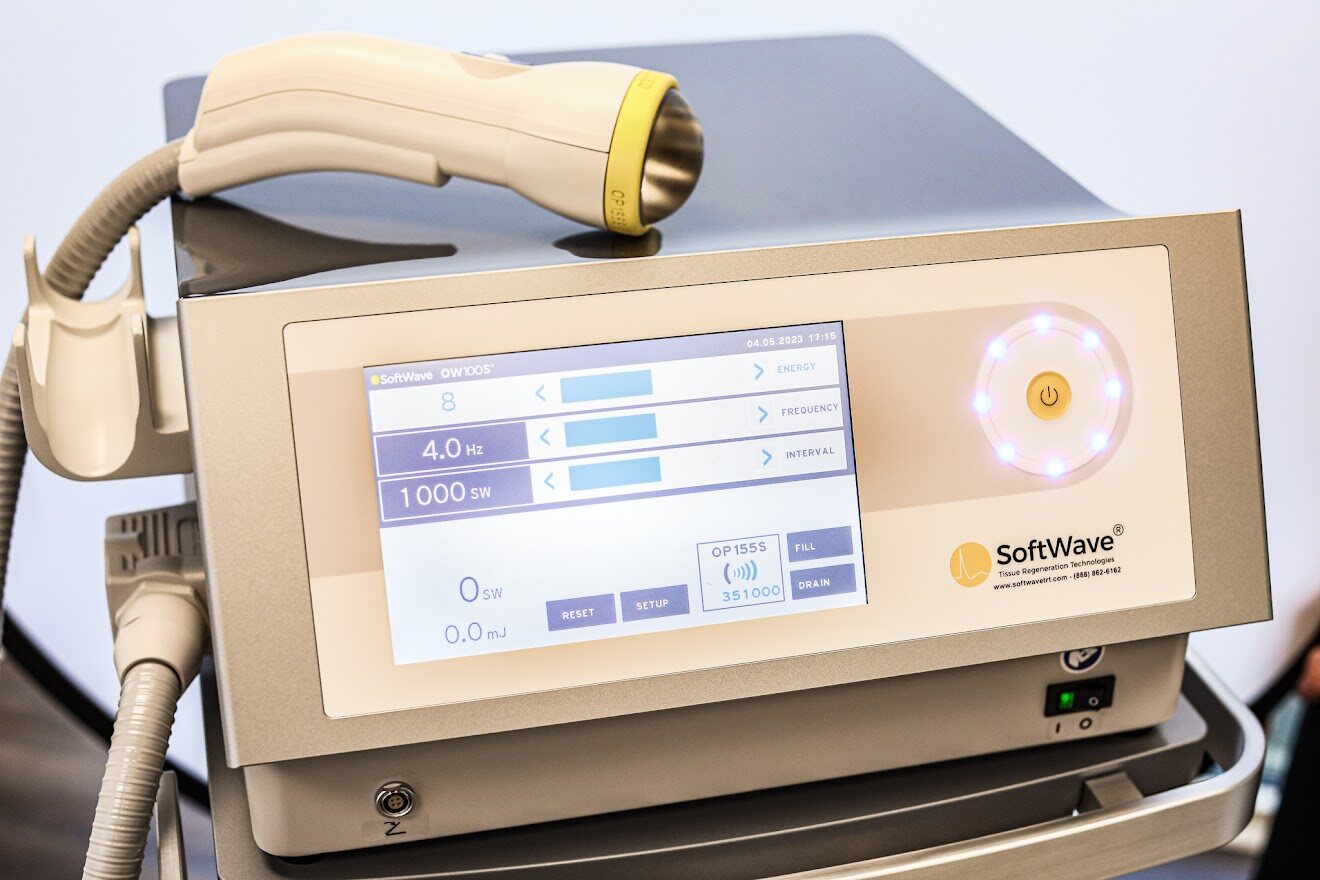
SoftWave is a non-invasive acoustic wave technology. It is electrohydraulic: a spark generates an acoustic wave, and a patented parabolic reflector shapes it into a broad-focused wave that travels through the skin into deeper tissue. SoftWave is the only broad-focused shockwave, which sets it apart from radial pressure wave devices that mainly affect the surface and from electromagnetic and piezoelectric devices that concentrate energy into a small focal point. The broad field allows a whole region to be treated, including tendons, ligaments, fascia, muscle, and the tissue around joints.
Nothing breaks the skin. There are no needles, no drugs, and no downtime. Sessions take about 10 to 15 minutes, and a typical plan involves a series of visits over several weeks.
What Our Rochester Patients Are Saying
Real reviews from real SoftWave patients at Camarata Chiropractic & Wellness
How They Work Differently
Dry Needling: Primarily a Muscle and Nervous System Tool
Dry needling is mainly aimed at muscle. The twitch response and the local micro-trauma it creates are thought to help reset overactive muscle fibers, change local chemistry, and calm the nervous system's pain signaling. For a tight, guarded muscle that keeps tensing up, it can provide meaningful short-term relief.
SoftWave: A Tissue Regeneration Signal
SoftWave's goal is to signal the body to repair tissue. In plain language, it is designed to:
- Activate resident stem cells already present in the treated area
- Support new blood vessel growth through VEGF and eNOS pathways, bringing circulation to tissues that tend to heal slowly
- Encourage tissue rebuilding through signals like PCNA and BMP, linked to cell proliferation and new collagen
- Modulate inflammation through toll-like receptor regulation, helping a stuck healing response move forward
- Clear senescent cells that no longer function well and can keep tissue irritated
SoftWave is FDA cleared for activation of connective tissue, temporary increase in blood flow, and temporary relief of minor muscle and joint pain. Because it works on connective tissue and circulation, it is often a good fit for tendon problems, ligament sprains, and joint-related pain, not just muscle tightness. The healing response it starts continues after the session ends.
If you are trying to figure out which approach suits your pain, schedule a SoftWave consultation with Dr. Sam and we will walk through your options together.
Side-by-Side: Key Differences
- Invasiveness: dry needling breaks the skin; SoftWave does not.
- Main target: dry needling focuses on muscle trigger points; SoftWave addresses a broader range, including tendons, ligaments, fascia, and tissue around joints.
- Coverage: needling treats specific points one at a time; SoftWave's broad-focused field treats an entire region.
- After the visit: post-needling soreness is common; most SoftWave patients go about their day normally.
- Goal: dry needling is mainly about releasing tension and calming pain signals; SoftWave is designed to stimulate the biology of repair.
Which One Is Right for You?
There is no one-size-fits-all answer, and they are not mutually exclusive. Some general guidance:
- Dry needling may be a reasonable choice when the main issue is a tight, knotted muscle with referred pain, you are comfortable with needles, and you mainly want to release tension.
- SoftWave may be the better fit when the problem involves a tendon, ligament, plantar fascia, or joint, when pain has lingered for months, when you want to avoid needles, or when you have tried hands-on and muscle-focused care without lasting change.
Many of the people who come to see us in North Chili have already tried dry needling for problems like Achilles pain, tennis elbow, or a nagging shoulder. They often tell us it loosened the area for a bit, but the pain came back because the underlying tissue was still unhealthy. That pattern is a big reason we focus on helping the tissue itself repair. You can hear about other patients' experiences on our SoftWave TRT reviews page.
When to See a Medical Provider First
Neither option should replace a medical workup if you have unexplained weight loss, fever, night pain that does not ease with rest, numbness or weakness that is getting worse, or pain after significant trauma. Those symptoms deserve proper diagnosis before any treatment.
What to Expect at Camarata Chiropractic & Wellness
Your first visit starts with a conversation and a hands-on exam. Dr. Sam wants to understand what tissue is involved and why it is not healing, not just where it hurts. From there, a plan may include SoftWave, chiropractic adjustments to improve movement and mechanics, and practical guidance on activity and recovery. For some patients, our Trifecta Red Light bed is an optional complementary way to support general recovery and circulation.
Ready to Get Past Pain Without Needles?
If you want an approach aimed at helping your body actually repair the problem tissue, SoftWave may be a great next step. Let's talk about your goals.
Book your SoftWave consultation here
Get a Hold of Us
Ready to get to the root of your pain instead of just managing it?
At Camarata Chiropractic & Wellness, we focus on identifying the root cause of dysfunction and helping your body heal through SoftWave Therapy, Red Light Therapy, chiropractic care, recovery strategies, and lifestyle guidance.
Address: 3237 Union St, North Chili, NY 14514
Phone: 585-617-4145
Email: info@camaratachiropractic.com
Website: https://www.camaratachiropractic.com
Facebook: https://www.facebook.com/camaratachiropractic
Instagram: https://www.instagram.com/camarata_chiro/
Schedule Your SoftWave Therapy Visit Here!
Learn about our newest offering and the powers of red light therapy at RedLightRochester.com.
‹ Back

 3237 Union St,