
Blog & Resources
SoftWave vs Cortisone Injections: Which One Actually Heals?
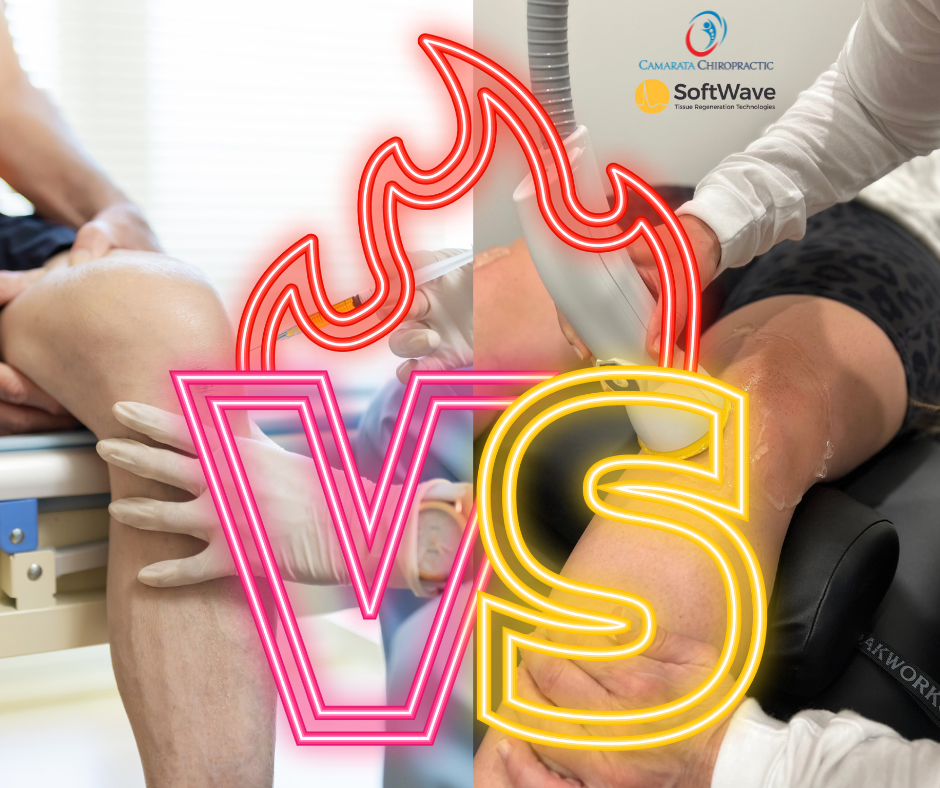
Cortisone shots are one of the most common interventions in modern orthopedic and primary care. Almost every patient we see for chronic pain has either had one, been offered one, or had one suggested as a “next step.” And almost every patient has the same set of questions: Will it work? Is it safe? What happens long-term?
At Camarata Chiropractic & Wellness in North Chili of Rochester, NY, we get asked all the time how SoftWave Tissue Regeneration Therapy compares to cortisone injections. The short answer: they’re aimed at completely different goals. The longer answer is worth understanding before you make decisions about your own care.
Here’s the head-to-head, in plain English.
What Cortisone Injections Actually Do
Cortisone is a powerful synthetic corticosteroid — an anti-inflammatory drug. When it’s injected into a joint, tendon sheath, or soft tissue, it dramatically reduces local inflammation. Less inflammation typically means less swelling, less irritation, and less pain.
For some conditions — bursitis flare-ups, an inflamed joint after an acute injury, an arthritic flare — that anti-inflammatory effect is genuinely useful in the short term. Pain drops. Function improves. Patients feel meaningfully better, often for weeks.
But cortisone is doing one specific job: suppressing inflammation. It is not repairing tissue. It is not regenerating cartilage, tendon, or fascia. It is not improving blood flow. It is not stimulating stem cells. It is not addressing why the inflammation was there in the first place.
The Long-Term Trade-Off
Here’s where the conversation gets honest. Cortisone has a well-documented long-term cost when used repeatedly in the same area:
- It weakens connective tissue. Repeated cortisone injections can degrade tendons, ligaments, and cartilage. There’s growing research showing accelerated cartilage loss in patients receiving repeated cortisone for knee osteoarthritis.
- It can interfere with healing. Cortisone suppresses the very inflammatory signaling the body uses to start the repair process. In chronic tendinopathy, multiple studies show worse long-term outcomes with cortisone injection compared with no treatment at all.
- It can increase rupture risk. Repeated injections at the same tendon insertion site — Achilles, plantar fascia, biceps — can raise the risk of rupture.
- It’s rarely a cure. Most patients who get one cortisone shot eventually need another, then another. The relief gets shorter each time.
None of this means cortisone is “bad.” It means cortisone is a powerful tool for short-term inflammation control — and a poor tool for long-term tissue health.
What SoftWave Therapy Actually Does
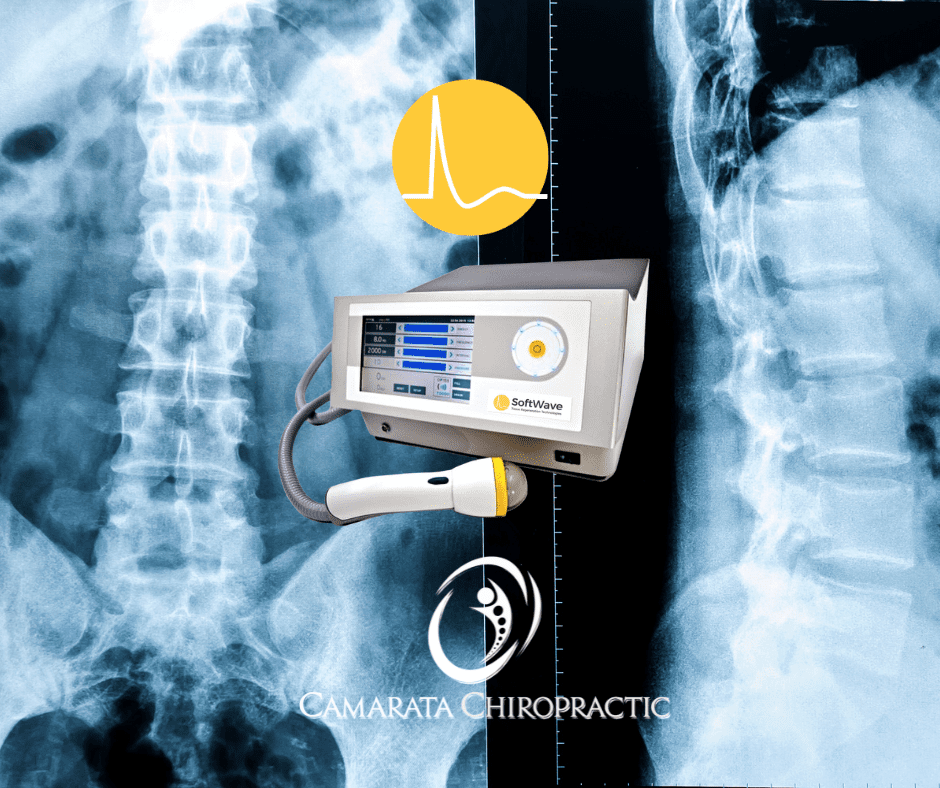
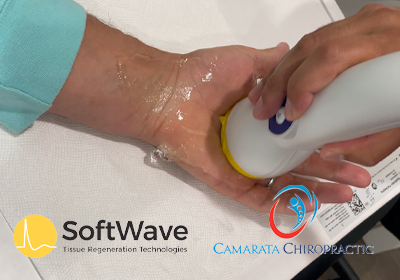
SoftWave Tissue Regeneration Therapy uses broad-focused electrohydraulic acoustic waves to deliver mechanical energy into damaged tissue. That signal triggers a regenerative cascade in the cells of the treated region:
- Activates resident stem cells, which migrate to damaged tissue and contribute to repair
- Stimulates new blood vessel growth (angiogenesis) in tissue with notoriously poor circulation
- Triggers collagen remodeling, replacing disorganized scar tissue with stronger, properly aligned tissue
- Reduces inflammation through the body’s natural anti-inflammatory pathways
- Breaks up fibrotic adhesions and scar tissue from old injuries or chronic dysfunction
The goal is fundamentally different. Cortisone is trying to shut down inflammation. SoftWave is trying to activate repair. One numbs. The other rebuilds.
Side-by-Side Comparison
Here’s a simple way to look at it:
Cortisone Injection
- Mechanism: anti-inflammatory drug
- Goal: short-term symptom relief
- Tissue effect: suppresses inflammation, may weaken tissue with repeated use
- Healing effect: none — doesn’t regenerate tissue
- Repeat use: limited; risks accumulate
- Recovery: minimal downtime
- Best for: acute, time-limited inflammatory flare-ups
SoftWave Therapy
- Mechanism: regenerative electrohydraulic acoustic waves through mechanotransduction
- Goal: tissue repair and remodeling
- Tissue effect: stimulates blood flow via neoangiogenesis, stem cell activation and migration, tissue repair and remodeling
- Healing effect: addresses underlying tissue dysfunction
- Repeat use: can be used as a treatment series and ongoing maintenance
- Recovery: no downtime, no medication
- Best for: tendinitis, arthritis, plantar fasciitis and foot pain, achilles tendon pain, nerve pain, neck pain, shoulder pain from rotator cuff and labrum injury, knee pain from meniscus tears, ligament sprains, ACL recovery, arthritis in the knees, hip pain, sciatica, back pain, disc herniations, and many other tissue, joint, tendon, ligament, disc and nerve conditions
When Cortisone Still Has a Role
We’re not going to tell you cortisone is never appropriate. There are real situations where a single, well-targeted cortisone injection is a reasonable tool: an acute inflammatory flare, a major event you can’t afford to miss, a condition where short-term symptom control creates a window to do other rehabilitative work.
The problem isn’t the existence of cortisone. The problem is when it becomes a default, repeated solution for chronic tissue dysfunction — because the underlying tissue keeps degrading, while the perceived “fix” is just the steroid masking the pain.
What This Looks Like in Real Care
The patients we see at our North Chili office most often fall into one of two camps:
- They’ve already had cortisone, sometimes multiple times. The relief got shorter. The pain came back. They want a different path.
- They’ve been offered cortisone but haven’t taken it. They sense it’s a short-term answer to a longer-term problem and want to know what else exists.
For both groups, SoftWave is usually a fit because it addresses the actual tissue dysfunction. It’s drug-free. It doesn’t weaken tissue. And it leaves all other options on the table for later if they’re ever needed.
You can read our patient testimonials and SoftWave reviews to hear directly from Rochester patients who’ve walked this same path.
So Which Should You Choose?
The right answer depends on what you actually need. If you have a true acute inflammatory flare and need a short-term knockdown of pain, cortisone may have a role. If you have a chronic tissue problem — tendinopathy, plantar fasciitis, sciatica, knee or hip arthritis, frozen shoulder, neuropathy — and the goal is to actually repair the tissue rather than mask it, SoftWave is built for that conversation.
The Experience Healing page walks through the broader picture of how regenerative care fits in.
Want to Talk Through Your Case?
If you’ve been weighing a cortisone shot — or you’ve already had one and you’re looking for a different path — we’d love to walk through your case with you.
Book your SoftWave consultation here and let’s figure out what your tissue actually needs.
Get a Hold of Us
Ready to upgrade your health from the inside out?
At Camarata Chiropractic & Wellness, we focus on identifying the root cause of dysfunction and optimizing your body’s performance through SoftWave Therapy, Red Light Therapy, chiropractic care, recovery strategies, and lifestyle guidance.
Address: 3237 Union St, North Chili, NY 14514
Phone: 585-617-4145
Email: info@camaratachiropractic.com
Website: https://www.camaratachiropractic.com
Facebook: https://www.facebook.com/camaratachiropractic
Instagram: https://www.instagram.com/camarata_chiro/
Schedule Your $99 New Patient Special Here! Choose SoftWave Therapy!
‹ Back



 3237 Union St,