
Blog & Resources
Sciatica Pain Relief in Rochester, NY: How SoftWave Therapy Targets the Nerve at the Source
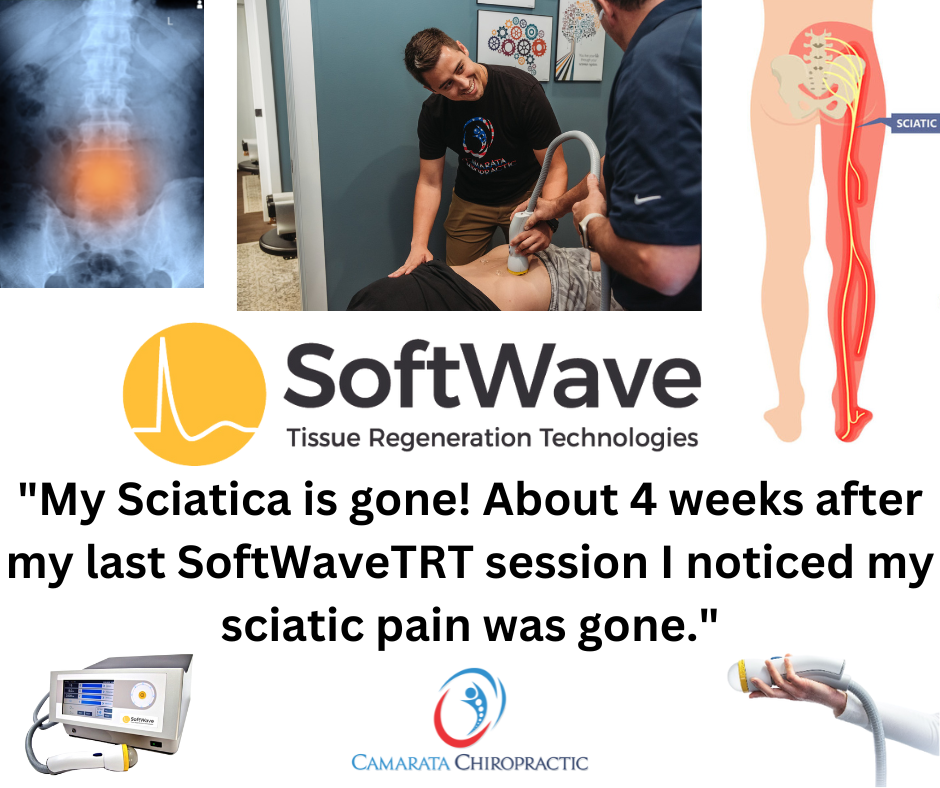
Sciatica isn’t just “a back problem.” It’s a sharp, burning, or electric pain that travels from the low back through the buttock and down the leg — sometimes all the way to the foot — and it can hijack your ability to sit, stand, sleep, drive, or work.
If you’ve been dealing with sciatica in Rochester, NY, you’ve probably already tried the usual list: rest, ice, heat, stretching, ibuprofen, muscle relaxers, maybe physical therapy or a steroid injection. Some of those things can take the edge off temporarily — but they don’t fix what’s actually causing the nerve to fire in the first place.
At Camarata Chiropractic & Wellness in North Chili of Rochester, NY, we take a different approach. We use SoftWave Tissue Regeneration Therapy as the centerpiece of a non-drug, non-injection, non-surgical sciatica protocol that is helping patients walk, work, and sleep again — often after years of frustration.
Here’s how it works, and why it’s different.
What Sciatica Actually Is
The sciatic nerve is the largest nerve in your body. It starts in the lumbar spine, runs through the deep glute muscles, and travels down the back of the leg. When that nerve gets irritated, compressed, or inflamed anywhere along the way, the symptoms can show up in multiple places at once.
Common symptoms of sciatica include:
- Sharp or burning pain down one leg
- Tingling, “pins and needles,” or numbness in the leg or foot
- Weakness when standing, walking, or climbing stairs
- Pain that gets worse with prolonged sitting
- Pain that disrupts sleep or wakes you at night
Sciatica can be triggered by a herniated or bulging disc, spinal stenosis, degenerative disc disease, piriformis syndrome, prior injury, or chronic inflammation in the surrounding tissue. In most cases, more than one of those is in play at the same time.
Why Traditional Sciatica Treatments Fall Short
The standard medical approach to sciatica usually moves through a familiar sequence: muscle relaxers, anti-inflammatories, steroid injections, and eventually surgery if the symptoms don’t resolve.
The problem is that most of those interventions are aimed at suppressing the symptom — numbing the pain or shutting down the inflammation — rather than addressing the underlying tissue damage and nerve irritation.
Pain medication doesn’t repair a disc. Steroid injections can temporarily quiet inflammation, but they don’t restore healthy tissue, and repeated injections can actually weaken tendons, ligaments, and joint structures over time. Surgery is sometimes necessary, but it’s a last resort — and it doesn’t guarantee the leg pain will go away.
What’s missing from that conventional ladder is a step that helps the body actually regenerate the tissue that’s irritating the nerve. That’s where SoftWave comes in.
How SoftWave Therapy Helps Sciatica
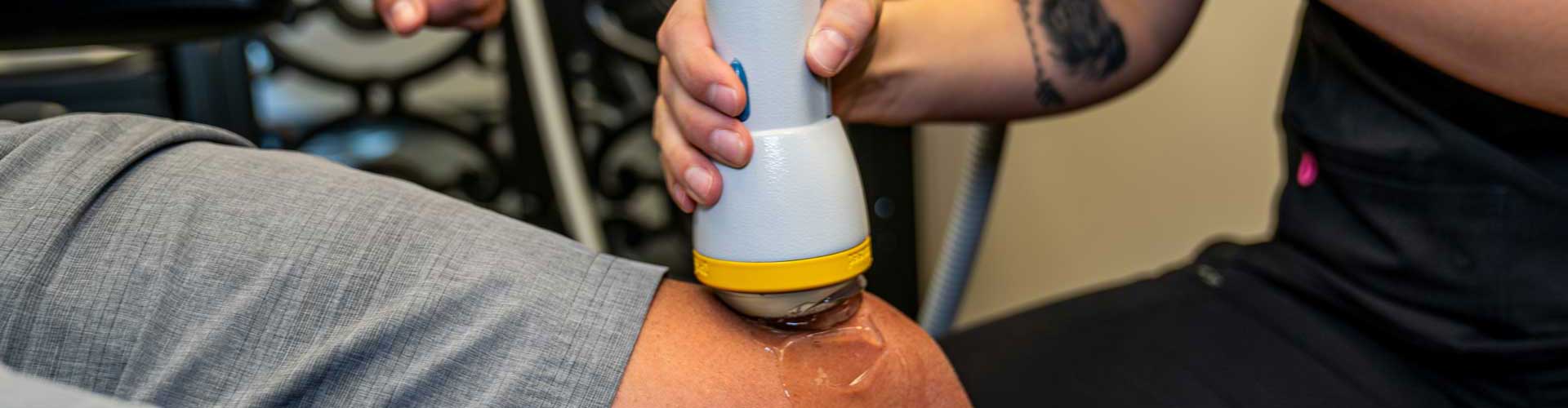
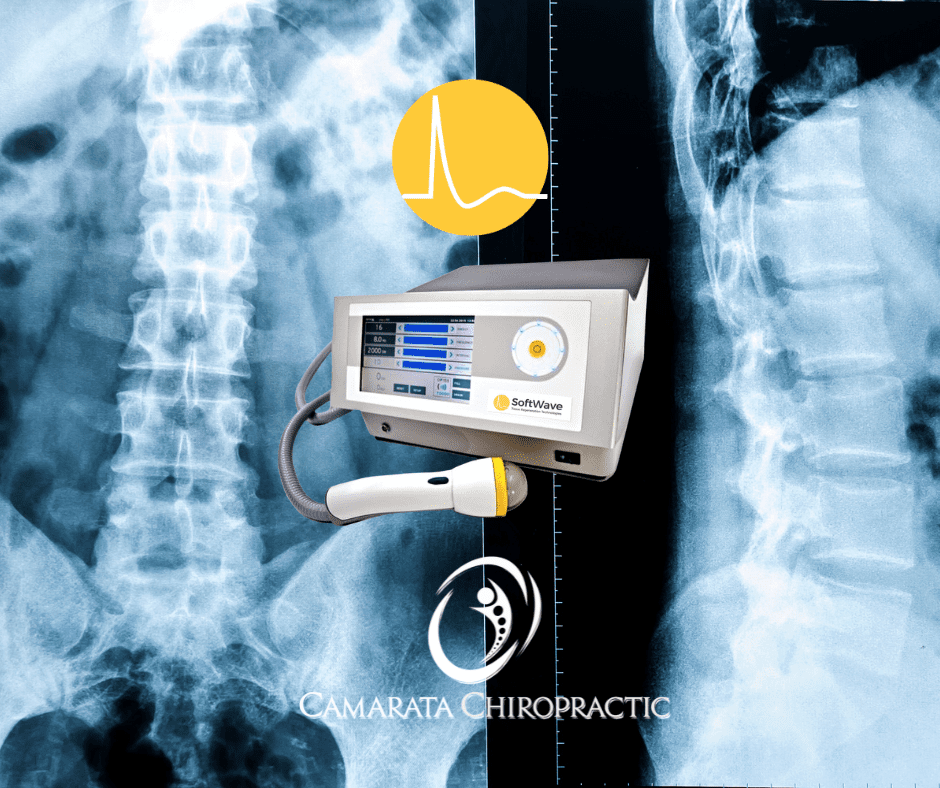
SoftWave Tissue Regeneration Therapy uses broad-focused electrohydraulic acoustic waves to deliver mechanical energy deep into tissue. Unlike a laser or a TENS unit, SoftWave isn’t simply masking pain or stimulating nerves at the surface. It’s sending a biological signal to the cells in the affected area.
That signal triggers several things at once:
- Increased blood flow to the lumbar spine, glutes, and surrounding soft tissue
- Reduced inflammation through the body’s natural anti-inflammatory pathways
- Activation of resident stem cells in the treated region, which migrate to damaged tissue and contribute to repair
- Stimulation of new blood vessel growth (angiogenesis), which improves long-term tissue health
- Breakdown of scar tissue and adhesions that can be tethering or irritating the nerve
Translation: SoftWave doesn’t just quiet the pain. It tells the tissue around the sciatic nerve to heal — the disc, the muscle, the fascia, and the inflammation that’s squeezing or chemically irritating the nerve in the first place.
What a SoftWave Sciatica Session Looks Like
If you come in for a sciatica consultation at our North Chili office, the first visit is about understanding your case — not handing you a generic protocol. We talk about how the pain started, what makes it worse, what’s already been tried, and what your day-to-day actually looks like.
From there, a typical SoftWave session for sciatica involves:
- Treatment along the lumbar spine, sacroiliac joint, and deep glute musculature (especially the piriformis region)
- Treatment down the path of the sciatic nerve as needed, depending on where your symptoms are radiating
- About 15–20 minutes of hands-on application
- No anesthesia, no needles, no downtime — you walk in and walk out
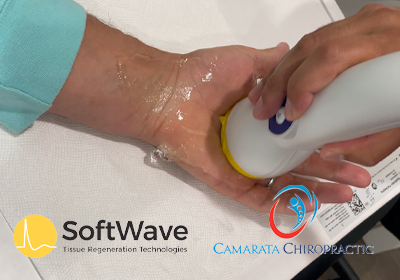
Most patients describe the sensation as a firm, rapid tapping. It’s not painful. Many people feel a noticeable shift — reduced tension, less leg pain, easier movement — within the first few sessions.
How Many Sessions Do Most Sciatica Patients Need?
Sciatica is rarely a one-and-done situation. Tissue healing takes time, and the longer the nerve has been irritated, the more sessions are usually needed to retrain the area to behave normally again.
For most sciatica cases, we recommend a treatment series so the body has consistent regenerative input over several weeks. Some patients feel meaningful relief after just two or three sessions; others have layered, long-standing issues and need a longer runway. We’ll walk you through exactly what your case looks like at the consultation — no guessing, no upselling.
You can read about real SoftWave patient outcomes here, and browse written and video testimonials from our patients to see how others in Rochester have responded to care.
Why Patients in Rochester Are Choosing SoftWave for Sciatica
The patients we see for sciatica usually share a few things in common. They’re tired of being on pain medication. They don’t want another steroid injection. They’re not ready for surgery, or they’ve been told they’re “not bad enough” for it — even though their daily life says otherwise. They want to feel like themselves again.
SoftWave fits that gap. It’s non-invasive, drug-free, and aimed at actually repairing tissue rather than just dulling the signal. And because it works with your body’s healing systems, the results tend to last when the underlying tissue is given the chance to recover.
If you want to understand the bigger picture of how this therapy works, the Experience Healing page walks through the technology in more detail.
Ready to Get Out of Sciatica Pain?
If you’ve been dealing with sciatica in Rochester, Chili, Churchville, Spencerport, Gates, Greece, Hilton, Rush, Henrietta, Scottsville, Caledonia, LeRoy, Brighton, or anywhere in the greater Rochester area — and you’re ready to try something that’s actually designed to heal the tissue, not just mask the pain — we’d love to help.
Book your SoftWave Discovery Day here and let’s build a plan that finally moves you forward.
Get a Hold of Us
Ready to upgrade your health from the inside out?
At Camarata Chiropractic & Wellness, we focus on identifying the root cause of dysfunction and optimizing your body’s performance through SoftWave Therapy, Red Light Therapy, chiropractic care, recovery strategies, and lifestyle guidance.
Address: 3237 Union St, North Chili, NY 14514
Phone: 585-617-4145
Email: info@camaratachiropractic.com
Website: https://www.camaratachiropractic.com
Facebook: https://www.facebook.com/camaratachiropractic
Instagram: https://www.instagram.com/camarata_chiro/
Schedule Your $99 New Patient Special Here! Choose SoftWave Therapy!
‹ Back



 3237 Union St,