
Blog & Resources
Frozen Shoulder Treatment in Rochester, NY: How SoftWave Therapy Helps Adhesive Capsulitis Without Surgery
If you’ve ever tried to put on a jacket, reach into the back seat, fasten a bra, or grab something off a high shelf and felt your shoulder lock up like it hit a wall — you may be dealing with frozen shoulder. And anyone who’s lived with it can tell you: it’s not just pain. It’s the loss of range, the loss of sleep, and the slow erosion of being able to do normal things.
At Camarata Chiropractic & Wellness in North Chili of Rochester, NY, we’ve helped patients in every stage of frozen shoulder — from early-onset stiffness to long-standing cases that have already been through multiple cortisone injections and physical therapy rounds. Our centerpiece for those cases is SoftWave Tissue Regeneration Therapy, and the reason it works for frozen shoulder is rooted in exactly what frozen shoulder is.
What Frozen Shoulder Actually Is
Frozen shoulder — clinically known as adhesive capsulitis — is a condition where the connective tissue capsule around the shoulder joint becomes thickened, inflamed, and stiff. Adhesions form. The capsule literally tightens around the joint like shrink wrap.
It tends to progress through three phases:
- Freezing phase — pain ramps up, range of motion starts to decrease
- Frozen phase — pain may ease somewhat, but stiffness becomes severe
- Thawing phase — range slowly returns, but often incompletely
Left untreated, frozen shoulder can last 12 to 36 months. Some patients never fully recover their original range. Common triggers include rotator cuff injury, post-surgical immobilization, diabetes, thyroid disorders, and prolonged disuse after a fall or fracture.
Why Standard Treatments Often Disappoint
The conventional plan for frozen shoulder usually starts with anti-inflammatories, then physical therapy, then cortisone injections, and in stubborn cases, manipulation under anesthesia or arthroscopic capsular release surgery.
The problem is that frozen shoulder is fundamentally a tissue problem — thickened capsule, fibrotic adhesions, restricted blood flow. Anti-inflammatories can’t reverse fibrosis. Stretching alone often just provokes the inflamed capsule into tightening more. Cortisone may temporarily reduce inflammation, but it can also weaken connective tissue, and repeated injections accelerate that.
What frozen shoulder needs is a treatment that breaks up adhesions, restores blood flow to the capsule, and signals the tissue to remodel — not just numb the pain while the capsule keeps tightening underneath.
How SoftWave Therapy Helps Frozen Shoulder
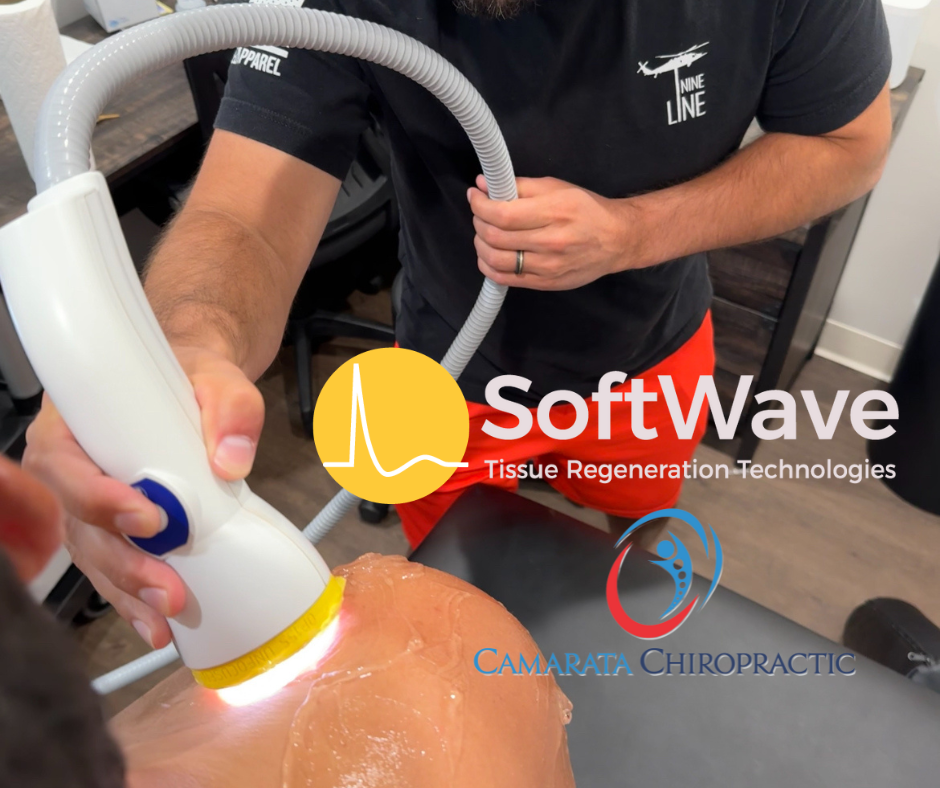
SoftWave delivers broad-focused shockwave energy deep into the shoulder capsule and surrounding rotator cuff tissue. That mechanical signal does several things at once:
- Disrupts fibrotic adhesions — the literal scar tissue and thickening that’s locking the joint
- Stimulates new blood vessel growth in a tissue layer that has notoriously poor circulation
- Activates resident stem cells in the joint and surrounding muscle, which migrate to damaged tissue and contribute to repair
- Reduces inflammation through the body’s natural pathways — without weakening tissue the way steroids can
- Restores cellular signaling in tissue that has gone metabolically “stagnant”
The combination is exactly what an adhesive capsule needs: mechanical disruption of the adhesions, plus the biological infrastructure to remodel into healthier tissue.
What a SoftWave Frozen Shoulder Session Looks Like
Frozen shoulder is highly individual. Two patients in the “frozen” phase can present completely differently depending on which structures are most involved. So our first job at the consultation is to map exactly where you’re restricted, which motions are most painful, and what tissue is driving it.
A typical SoftWave session for frozen shoulder involves:
- Treatment over the anterior, lateral, and posterior shoulder capsule
- Treatment along the rotator cuff insertions and the surrounding scapular musculature
- Targeted work on the most restricted positions, depending on your case
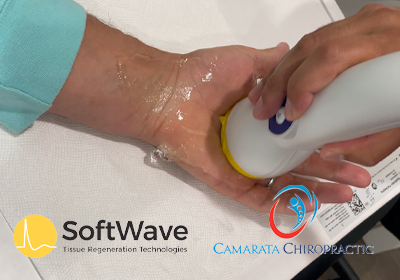
- About 15 minutes of hands-on application
- No injections, no anesthesia, no downtime
Many patients notice modest range-of-motion improvements within the first few sessions, and progressive gains over a longer treatment series.
How Many Sessions Does Frozen Shoulder Usually Take?
Frozen shoulder is one of the slower-responding conditions we treat — not because SoftWave doesn’t help, but because the tissue itself takes time to remodel. The capsule didn’t thicken in a week, and it doesn’t un-thicken in a week either.
We typically recommend a multi-session series so the joint has consistent regenerative input over several weeks. Patients earlier in the freezing phase tend to respond faster than those who’ve been frozen for a year or more — but every case is workable. We’ll walk you through realistic expectations at the consultation.
For real outcomes from Rochester patients, you can read our patient testimonials and SoftWave reviews.
How SoftWave Pairs With Other Care for Frozen Shoulder
Frozen shoulder rarely responds to a single tool used in isolation. The most effective protocols combine treatments that work on different parts of the problem. In our practice, we often pair SoftWave with:
- Gentle, progressive range-of-motion work — carefully dosed so it nudges the capsule without provoking it
- Chiropractic care for the shoulder, scapula, and thoracic spine, which often carry compensatory dysfunction
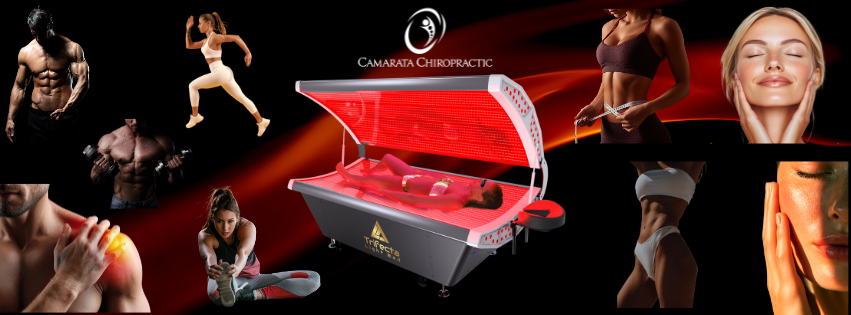
- Trifecta Red Light Bed sessions for full-body inflammation and recovery support, particularly for patients whose frozen shoulder is tied to systemic factors like diabetes or thyroid issues
- At-home stretches and self-care strategies tailored to your phase — what helps in the freezing phase is different from what helps in the thawing phase
The point is to address the capsule, the joint mechanics, the cellular environment, and the daily movement habits all in coordination — rather than just hammering at one variable and hoping it’s the right one.
Why Rochester Patients Are Choosing SoftWave for Frozen Shoulder
Most of the frozen-shoulder patients we see have already done the rounds — physical therapy, NSAIDs, one or more cortisone injections, maybe a referral to discuss surgical capsular release. They’re looking for something between “wait it out” and “put me under anesthesia.”
SoftWave fits that gap. It’s non-invasive, drug-free, and works directly on the fibrotic tissue and capsular thickening that are the root of the problem. It pairs well with gentle range-of-motion work and chiropractic care, both of which we offer in-house.
If you want a deeper look at how SoftWave works across all conditions we treat, the Experience Healing page walks through the technology and the philosophy behind it.
Ready to Get Your Shoulder Back?
If you’ve been dealing with frozen shoulder in Rochester, Chili, Churchville, Spencerport, Gates, Greece, Hilton, Rush, Henrietta, Scottsville, Caledonia, LeRoy, Brighton, or anywhere in the greater Rochester area — and you’re tired of waiting it out — let’s talk.
Book your SoftWave Discovery Day here and let’s build a plan to get range, function, and sleep back on your side.
Get a Hold of Us
Ready to upgrade your health from the inside out?
At Camarata Chiropractic & Wellness, we focus on identifying the root cause of dysfunction and optimizing your body’s performance through SoftWave Therapy, Red Light Therapy, chiropractic care, recovery strategies, and lifestyle guidance.
Address: 3237 Union St, North Chili, NY 14514
Phone: 585-617-4145
Email: info@camaratachiropractic.com
Website: https://www.camaratachiropractic.com
Facebook: https://www.facebook.com/camaratachiropractic
Instagram: https://www.instagram.com/camarata_chiro/
Schedule Your $99 New Patient Special Here! Choose SoftWave Therapy!
‹ Back


 3237 Union St,