
Blog & Resources
SoftWave vs Cold Laser Therapy: What's the Difference, and Which One Heals Tissue?
Once patients start exploring non-surgical options for chronic pain, they almost always run into two technologies: SoftWave Tissue Regeneration Therapy and cold laser therapy (also called low-level laser therapy, or LLLT). On the surface they sound similar — both are non-invasive, both are drug-free, both promise to help with pain and inflammation. But under the hood, they’re completely different tools doing completely different jobs.
At Camarata Chiropractic & Wellness in North Chili of Rochester, NY, this is one of the most common questions we get during a consultation: What’s the difference, and which one actually heals tissue?
Here’s the head-to-head, in plain English.
What Cold Laser Therapy Actually Is
Cold laser therapy uses low-power laser light — specific wavelengths of red and near-infrared — applied to the surface of the body. The mechanism is called photobiomodulation. Light at these wavelengths interacts with the mitochondria inside your cells and supports:
- ATP production (cellular energy)
- Mitochondrial efficiency
- Inflammation modulation
- Recovery metabolism
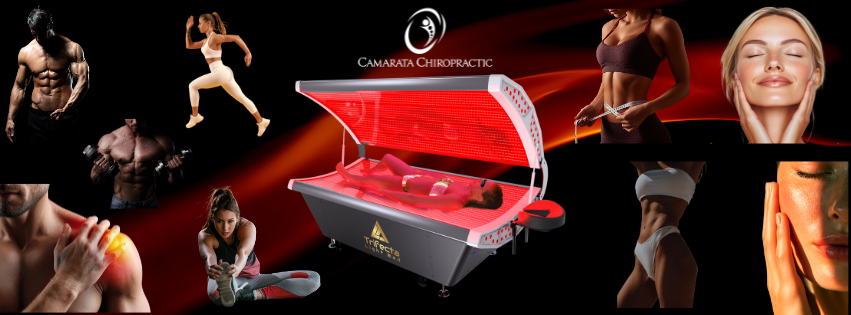
It’s a real, useful technology. It can help with surface-level inflammation, soft tissue healing, and overall recovery support. We use red light therapy in our office too — via the full-body Trifecta Red Light Bed — for exactly these reasons.
But cold laser has clear limitations:
- Limited depth of penetration. Most clinical lasers reach only a few millimeters to a couple of centimeters into tissue. Deeper structures — joint capsules, deep tendons, lumbar spine — receive significantly less direct dose.
- It’s primarily a metabolic tool, not a mechanical one. Cold laser doesn’t physically disrupt scar tissue, fibrotic adhesions, or thickened connective tissue.
- It doesn’t produce a regenerative cascade in the same way. Cold laser supports cellular energy. SoftWave actually triggers stem cell activation, angiogenesis, and tissue remodeling.
What SoftWave Therapy Actually Is
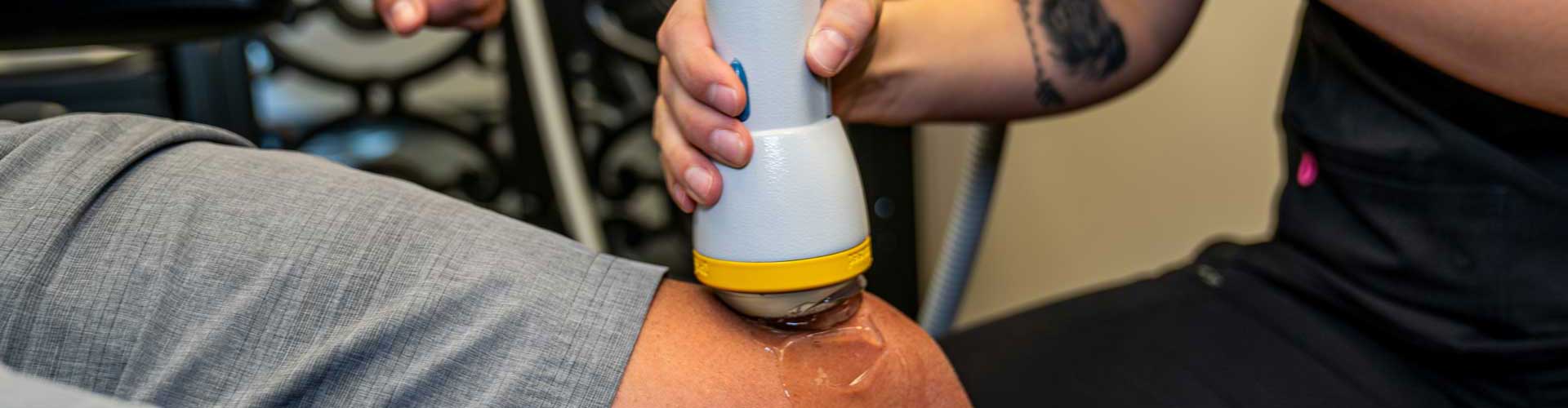
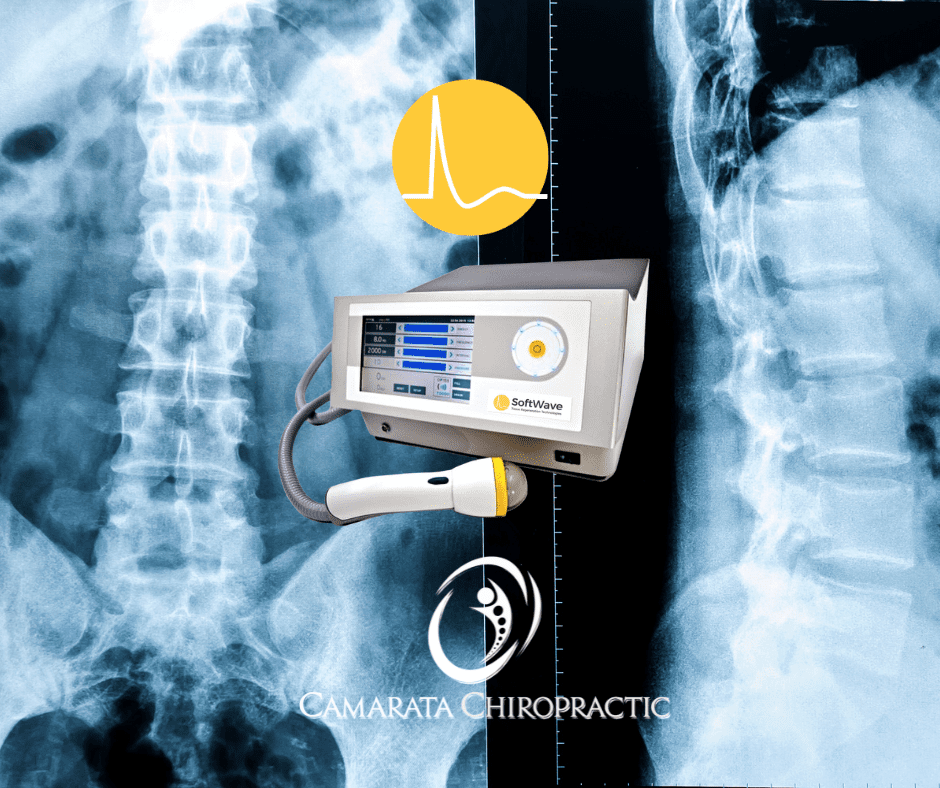
SoftWave is a regenerative shockwave therapy — a different category of treatment entirely. It uses broad-focused electrohydraulic shockwaves to deliver mechanical energy deep into tissue. That mechanical signal triggers a regenerative biological cascade:
- Activation of resident stem cells, which migrate to damaged tissue and contribute to repair
- Angiogenesis — the formation of new blood vessels in tissue with poor circulation
- Collagen remodeling — replacing disorganized scar tissue with stronger, properly aligned fibers
- Reduction of inflammation through the body’s natural pathways
- Mechanical disruption of fibrotic adhesions in chronically dysfunctional tissue
- Deeper penetration than cold laser — SoftWave can reach joint capsules, deep tendons, lumbar musculature, and other structures cold laser can’t effectively dose
The mechanism is mechanical, not photometric. The signal is regenerative, not just metabolic. The depth is significantly greater. And the goal is structural tissue change, not just cellular energy support.
Side-by-Side Comparison
Cold Laser Therapy
- Mechanism: photobiomodulation (light)
- Energy form: photonic
- Depth of effect: shallow to moderate (millimeters to a couple of centimeters)
- Primary effect: cellular energy support, metabolic modulation
- Tissue remodeling: limited
- Stem cell activation: not a primary mechanism
- Best for: surface inflammation, light recovery support, supplementing other care
SoftWave Therapy
- Mechanism: broad-focused electrohydraulic shockwave
- Energy form: mechanical
- Depth of effect: deep (joint capsule, deep tendons, lumbar spine, hip joint)
- Primary effect: regenerative cascade, tissue remodeling
- Tissue remodeling: significant — angiogenesis, stem cell activation, collagen reorganization
- Stem cell activation: yes, a primary mechanism
- Best for: chronic tendinopathy, plantar fasciitis, sciatica, knee/hip arthritis, frozen shoulder, neuropathy, scar tissue, deep joint and connective tissue dysfunction
So Why Do We Use Both?
This is the part most patients don’t expect to hear: cold laser and red light therapy aren’t our adversaries. We use red light therapy in our own office every day — the Trifecta Red Light Bed delivers full-body photobiomodulation at therapeutic doses, and it’s a great complement to SoftWave for many patients.
But complement is the right word. Cold laser and red light therapy support healing. SoftWave drives tissue remodeling. They’re different roles.
If a patient has surface-level inflammation, mild soft tissue irritation, or wants global recovery support, photobiomodulation alone can do a lot. But if a patient has chronic tendinopathy, joint capsule fibrosis, deep arthritic changes, sciatica, or long-standing scar tissue, photobiomodulation alone usually isn’t enough — the tissue needs the deeper, mechanical, regenerative signal that SoftWave provides.
What This Looks Like in Real Cases
Here are a few common patient stories that show the difference:
- A patient with chronic plantar fasciitis who’s done six weeks of cold laser at another clinic without lasting improvement. SoftWave addresses the deeper fibrotic fascia and adds angiogenesis to a poorly perfused tissue — usually with progress that cold laser alone couldn’t produce.
- A patient with hip arthritis who’s gotten temporary relief from low-level laser. SoftWave reaches the deep joint capsule and surrounding rotators in a way that surface-level light therapy cannot.
- A patient who wants both — targeted SoftWave on the affected tissue, plus full-body Red Light Bed sessions for global recovery support. This is one of the most common protocols we run, and the combination is more powerful than either tool alone.
How to Decide What’s Right for You
If you’ve already tried cold laser without lasting improvement, that doesn’t mean light-based therapy is “bad” — it usually just means the tool wasn’t suited to the depth or type of tissue dysfunction you’re dealing with. SoftWave may be the missing piece.
If you’re early in your exploration of non-surgical options for chronic pain, the right starting point is usually a real consultation: actual hands-on assessment, an honest read on what your tissue needs, and a treatment plan built around your case rather than a one-size-fits-all protocol.
You can read our patient testimonials and SoftWave reviews to see how Rochester patients have responded to care. The Experience Healing page covers the broader picture of how SoftWave and red light therapy fit together.
Ready to Talk Through Your Case?
If you’re weighing SoftWave vs. cold laser for chronic pain in Rochester, Chili, Churchville, Spencerport, Gates, Greece, Hilton, Rush, Henrietta, Scottsville, Caledonia, LeRoy, Brighton, or anywhere in the greater Rochester area, we’d love to help you sort it out.
Book your consultation here and let’s build a plan that matches what your tissue actually needs.
Get a Hold of Us
Ready to upgrade your health from the inside out?
At Camarata Chiropractic & Wellness, we focus on identifying the root cause of dysfunction and optimizing your body’s performance through SoftWave Therapy, Red Light Therapy, chiropractic care, recovery strategies, and lifestyle guidance.
Address: 3237 Union St, North Chili, NY 14514
Phone: 585-617-4145
Email: info@camaratachiropractic.com
Website: https://www.camaratachiropractic.com
Facebook: https://www.facebook.com/camaratachiropractic
Instagram: https://www.instagram.com/camarata_chiro/
Schedule Your $99 New Patient Special Here! Choose SoftWave Therapy!
‹ Back

 3237 Union St,