

Blog & Resources
SI Joint and Sacroiliac Pain in Rochester, NY: The Overlooked Cause of Stubborn Low Back Pain
If you’ve been told your low back pain is a disc problem or sciatica, but treatments aimed at the disc haven’t helped, there’s a good chance the real culprit is somewhere else entirely. The sacroiliac (SI) joint sits at the base of your spine where it meets your pelvis, and when it stops moving the way it should, it can produce pain that fools nearly everyone, including patients, primary care doctors, and even specialists. In the Rochester, NY area, this is one of the most frequently missed sources of persistent low back and buttock pain that we see at Camarata Chiropractic & Wellness.
The SI joint problem is easy to overlook because its symptoms overlap so closely with disc issues and nerve pain. Many patients spend months or years chasing the wrong diagnosis before someone looks carefully at the pelvis and realizes the joint itself is the issue. Understanding what the SI joint does, why it becomes irritated, and what actually helps it recover can save a great deal of time and frustration.
This post is focused specifically on SI joint dysfunction. If your pain is more centrally located, shoots down the leg past the knee, or came on after an imaging study confirmed a herniated disc, those situations involve different mechanisms and are addressed in a separate discussion. What follows is for the person with nagging, one-sided low back pain that seems to live in the dimple of the back, the upper buttock, or the hip, and gets worse in very specific, predictable situations.
What the SI Joint Actually Does
Most people think of the pelvis as a rigid, fixed structure. It is actually made up of several bones joined at two SI joints (one on each side) and the pubic symphysis in front. The SI joints are large, relatively flat joints surrounded by some of the strongest ligaments in the body. They are not designed for large ranges of motion. They move in very small amounts, a few degrees at most, but that small movement is essential for absorbing the forces that travel up through your legs when you walk, run, climb stairs, or shift your weight.
The joint is reinforced by thick posterior and interosseous ligaments, and it relies on coordinated muscle tension from the glutes, piriformis, multifidus, and pelvic floor to stay stable. When any part of that system is strained, injured, or simply out of balance, the joint can become either hypomobile (stuck, not moving enough) or hypermobile (moving too much because the ligaments are lax). Both states are painful. Both can produce inflammation in the surrounding soft tissue and ligaments that does not resolve on its own.
Why SI Joint Pain Gets Mistaken for Sciatica and Disc Problems
The SI joint and its surrounding ligaments share nerve supply with structures that also refer pain into the buttock, hip, and upper thigh. This is called referred pain, and it does not follow a neat dermatomal pattern. A person with SI dysfunction may describe:
- A deep ache in one side of the low back, right at or just above the beltline
- Pain in the upper buttock on one side, sometimes mistaken for a tight hip
- Groin or hip pain that seems to shift location
- Pain that travels into the back of the thigh but rarely below the knee
That last point is important. True sciatica from a disc herniation typically radiates past the knee, often into the calf or foot, and follows a specific nerve root pattern. SI joint pain usually stays above the knee, though it can occasionally radiate further. The two conditions can coexist, but treating one when you actually have the other will produce disappointing results.
On imaging, the SI joint is notoriously hard to evaluate. A lumbar MRI may show age-related disc changes that are completely unrelated to the patient’s pain. A clinician who focuses on the disc findings without testing SI joint motion and provocation can easily pursue the wrong path for months.
The Specific Situations That Reveal SI Joint Dysfunction
One of the most useful diagnostic clues is the pattern of activities that provoke the pain. SI joint dysfunction tends to be aggravated in situations that load or rotate the pelvis on one side. Patients frequently report:
- Prolonged sitting, especially in low or soft chairs
- Standing up from a seated position, often requiring a push off the armrest
- Rolling over in bed, which involves one hip leading over the other
- Climbing stairs or stepping up onto a curb, particularly leading with the affected side
- Standing on one leg, even briefly
- Long drives, which combine sustained sitting with vibration
If this list sounds familiar, it is worth having the SI joint evaluated specifically. The good news is that a skilled chiropractor can assess it with hands-on provocation testing and movement analysis in a single visit.
The Role of the Surrounding Ligaments and Soft Tissue
Addressing SI joint dysfunction is not only about restoring movement to the joint itself. The posterior sacroiliac ligaments, sacrotuberous ligament, and surrounding muscle attachments become chronically irritated when the joint is dysfunctional for any length of time. Ligaments heal slowly because their blood supply is poor. Fibrotic changes can develop in the soft tissue around the joint, creating a cycle where restricted motion leads to tissue irritation, which leads to guarding and further restriction.
This is a critical point. Adjusting or mobilizing the joint can restore motion, but if the inflamed, fibrotic soft tissue is not addressed, the joint tends to return to its dysfunctional pattern. The ligaments remain irritated and lax, the muscles continue to guard, and the pain keeps coming back. Lasting improvement requires addressing both the mechanical problem and the tissue environment around it.
What Our Rochester Patients Are Saying
Real reviews from real SoftWave patients at Camarata Chiropractic & Wellness
How Chiropractic Care and SoftWave Work Together for SI Joint Recovery
At Camarata Chiropractic & Wellness, the approach to SI joint dysfunction combines two complementary tools. Chiropractic care is used to restore proper joint mechanics, reduce the neurological guarding around the joint, and improve the coordinated muscle activation that keeps the pelvis stable. Specific sacroiliac adjustments and mobilizations are quite different from standard lumbar adjustments and require precise evaluation of which direction the joint has shifted and how it needs to be restored.
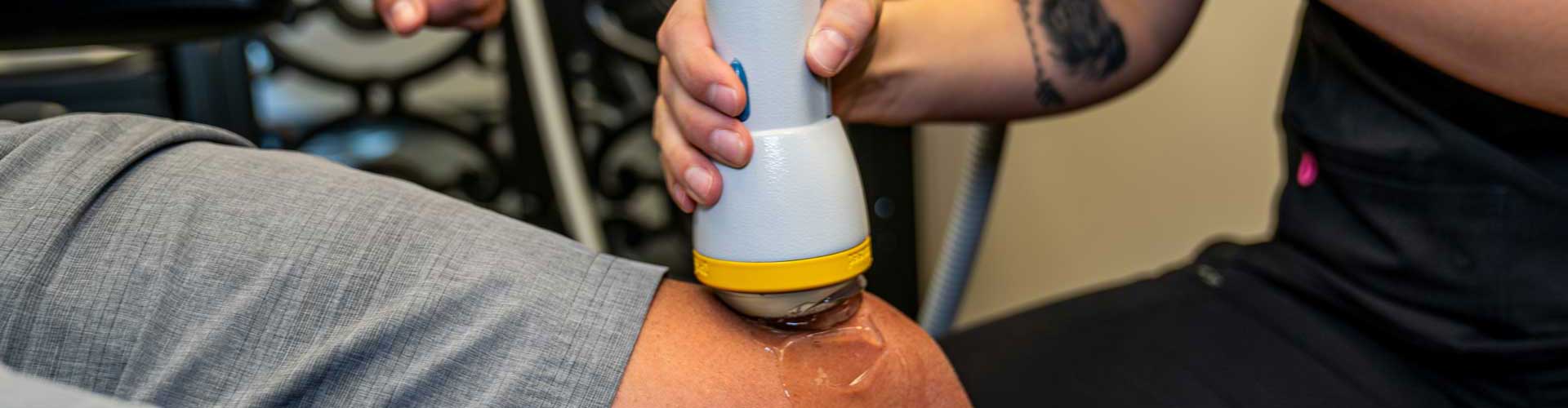
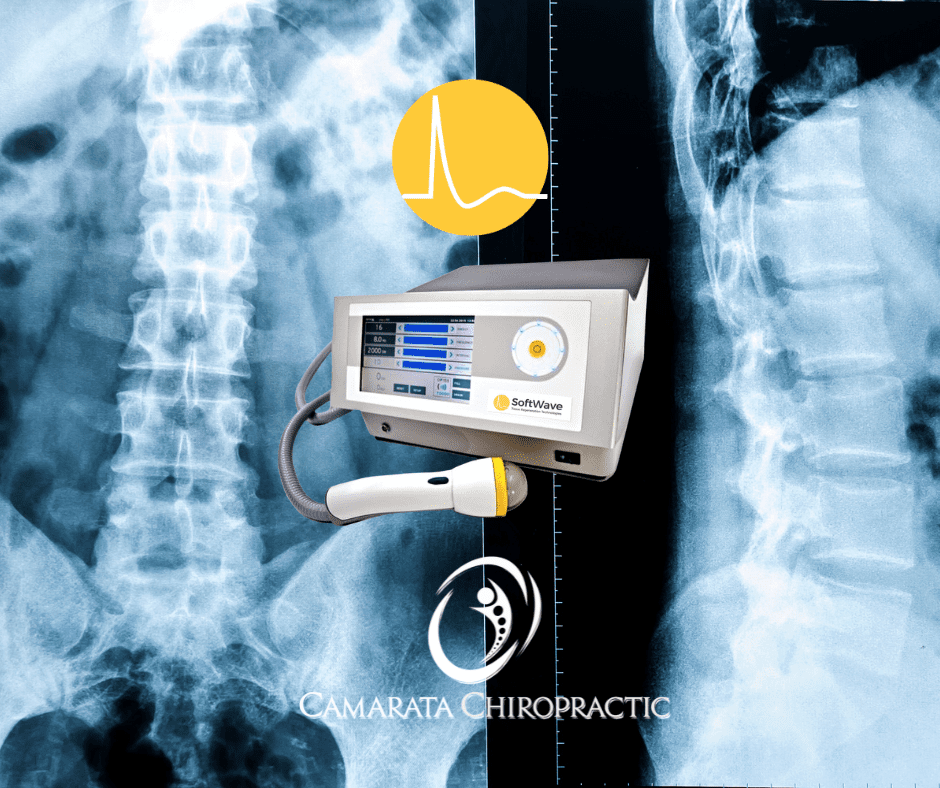
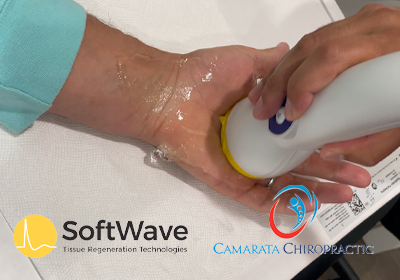
SoftWave Tissue Regeneration Therapy addresses the soft tissue side of the equation. SoftWave uses electrohydraulic technology to deliver a broad-focused acoustic wave into the tissue. This mechanical signal does several things relevant to SI joint recovery:
- It activates resident stem cells in the treated tissue, stimulating the body’s own repair processes
- It promotes angiogenesis, the formation of new blood vessels, which improves circulation to ligament tissue that has very limited natural blood supply
- It helps break down fibrotic adhesions that have formed in chronically irritated tissue
- It modulates the local inflammatory environment rather than simply suppressing it, shifting the tissue from a chronic, stuck state toward active healing
Applied to the posterior SI joint region, the sacrotuberous ligament, and the surrounding musculature, SoftWave can reduce the deep tenderness, accelerate tissue repair in the ligaments, and help the joint hold its corrected position after chiropractic care. Many patients who have struggled with recurring SI dysfunction report that adding SoftWave to their care plan changed the trajectory, allowing improvements to last rather than fading within days of an adjustment.
If you’ve been dealing with one-sided low back or buttock pain and want to find out whether the SI joint is involved, book a SoftWave consultation at our North Chili office. The evaluation is hands-on and gives you clear answers quickly.
Who Is a Good Candidate for This Approach
SI joint dysfunction can affect a wide range of people. Common presentations include:
- Postpartum women: Relaxin released during pregnancy loosens the SI ligaments, and the joint often does not fully restabilize after delivery. This can persist for months or longer.
- People who sit for long periods at work: Sustained asymmetric sitting loads one SI joint more than the other and can cause gradual dysfunction over time.
- Athletes and active individuals: Sports that involve repetitive one-sided loading (running, rowing, tennis, golf) can strain the SI joint, especially after a slip, fall, or sudden twisting movement.
- People who have had prior lumbar spine surgery: Changes in spinal mechanics after fusion or disc surgery can transfer stress to the SI joint, a phenomenon well recognized in spine literature.
- Anyone with a leg-length discrepancy: Even a small functional or structural difference in leg length changes how the pelvis is loaded and can gradually destabilize the SI joint.
You can read about what patients have experienced with combined chiropractic and SoftWave care, including those who came in after exhausting other options. Many had been told the problem was a disc or that nothing structural was wrong. Getting the right diagnosis is the first step.
What to Expect in Care
The first visit involves a thorough assessment of SI joint mechanics, ruling out red flags, and identifying contributing factors like muscle imbalances or hip mobility restrictions. SoftWave treatment is applied to the affected side and surrounding structures. Most people notice a change in how the area feels within the first few sessions, though the tissue remodeling effects of SoftWave continue to develop over several weeks after treatment.
The number of visits varies. Acute SI dysfunction that has been present for only a few weeks typically responds faster than a problem that has been building for a year or more. Between sessions, simple movement guidance helps patients avoid positions that repeatedly stress the joint while it is healing. The goal is not just pain relief during the treatment period. It is restoring the tissue quality and joint mechanics that allow you to sit, stand, roll over, and climb stairs without bracing for discomfort every time.
A Commonly Missed Problem With Straightforward Solutions
The SI joint is not exotic or complicated, but it does require someone who is specifically looking for it. For many people in the Rochester area who have lived with one-sided low back and buttock pain through rounds of medication, physical therapy, or injections aimed at the lumbar spine, having the SI joint properly evaluated for the first time is a turning point. The combination of hands-on chiropractic care to restore joint motion and SoftWave to repair the surrounding soft tissue addresses the problem at both levels, giving the body what it needs to move out of the pain cycle. You can learn more about the full range of regenerative options available at our practice by visiting our experience healing page, or explore SoftWave patient reviews from people who came in with similar concerns.
Ready to Get Started?
If you’re dealing with chronic pain in Rochester, Chili, Churchville, Spencerport, Gates, Greece, Hilton, Rush, Henrietta, Scottsville, Caledonia, LeRoy, Brighton, or anywhere in the greater Rochester area, we’d love to help you find a path that works with your body, not against it.
Book your consultation here and let’s build a plan around what your tissue actually needs.
Get a Hold of Us
Ready to upgrade your health from the inside out?
At Camarata Chiropractic & Wellness, we focus on identifying the root cause of dysfunction and optimizing your body’s performance through SoftWave Therapy, Red Light Therapy, chiropractic care, recovery strategies, and lifestyle guidance.
Address: 3237 Union St, North Chili, NY 14514
Phone: 585-617-4145
Email: info@camaratachiropractic.com
Website: https://www.camaratachiropractic.com
Facebook: https://www.facebook.com/camaratachiropractic
Instagram: https://www.instagram.com/camarata_chiro/
Schedule Your New Patient Special Here!
Learn about our newest offering and the powers of red light therapy at RedLightRochester.com.
‹ Back



 3237 Union St,