
Blog & Resources
Rotator Cuff and Shoulder Tendinopathy in Rochester, NY: A Non-Surgical SoftWave Approach
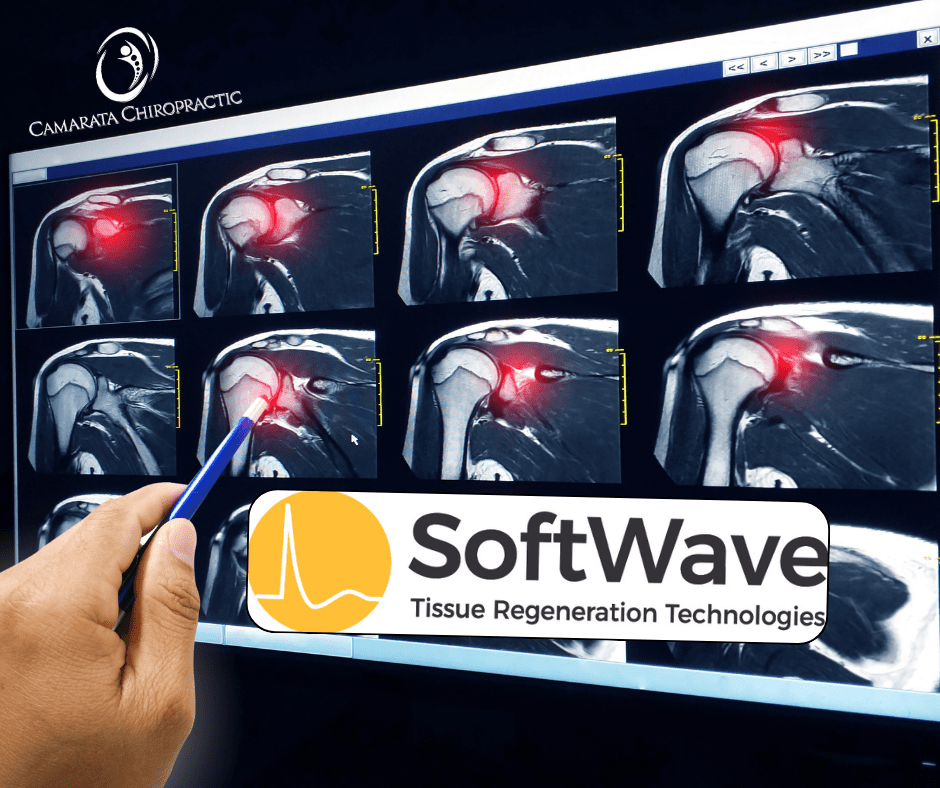
Shoulder pain that flares up when you reach for a cabinet, throw a ball, or simply try to sleep on your side is one of the most disruptive complaints we see at Camarata Chiropractic & Wellness. For many Rochester-area adults, that pain traces back to the rotator cuff, the group of four muscles and their tendons that stabilize the shoulder joint and power nearly every overhead and rotating movement your arm makes. When those tendons become irritated, thickened, or partially torn, the result is a condition broadly called rotator cuff tendinopathy, and it has a frustrating reputation for lingering long after the original aggravation.
The conventional response, rest, anti-inflammatories, maybe a cortisone injection, often buys temporary relief but does not address what is keeping the tendon from healing. SoftWave Tissue Regeneration Therapy takes a different approach. Rather than masking symptoms, it works at the cellular level to stimulate the repair processes tendons need but struggle to activate on their own. If you have been dealing with persistent shoulder pain and want to understand why it hangs on and what can be done about it, this post is for you.
It is also worth noting upfront that this discussion focuses on tendinopathy, impingement syndrome, and partial-thickness tendon irritation, not full-thickness rotator cuff tears that have already been evaluated for surgical repair. If imaging has confirmed a complete tear and your orthopedic surgeon has recommended surgery, that conversation belongs with your surgical team. For the much larger group of people dealing with chronic tendon pain that has not crossed that threshold, a non-surgical regenerative path is absolutely worth exploring.
What Is Rotator Cuff Tendinopathy?
The rotator cuff is made up of four muscles (supraspinatus, infraspinatus, teres minor, and subscapularis) and their corresponding tendons, which attach the upper arm bone to the shoulder socket. The supraspinatus is the most commonly affected tendon, running through a narrow channel beneath the acromion bone at the top of the shoulder.
Tendinopathy is a broad term covering a spectrum of tendon changes:
- Reactive tendinopathy: early-stage irritation and swelling in response to sudden overload
- Tendon disrepair: failed healing attempts, with disorganized collagen and increased blood vessel ingrowth
- Degenerative tendinopathy: accumulated breakdown with regions of cell death and structural compromise
- Impingement syndrome: the tendon being repeatedly pinched between the humeral head and the acromion during overhead movements
- Partial-thickness tears: fraying or splitting within the tendon substance that does not extend all the way through
Many people have more than one of these going on simultaneously, which is part of why shoulder pain can be so multi-layered and stubborn.
Why the Rotator Cuff Heals So Poorly on Its Own
Tendons in general are poorly vascularized compared to muscle tissue. They receive far less blood supply, which means fewer oxygen and nutrient deliveries, fewer circulating repair cells, and slower waste removal. The supraspinatus tendon has a notoriously under-perfused zone near its insertion point on the humerus, sometimes called the “critical zone.” This is precisely where most rotator cuff pathology begins, and it is precisely where healing stalls.
When a tendon is chronically loaded without adequate recovery or blood flow, the body attempts repair but often produces disorganized collagen (type III rather than the strong load-bearing type I), weak scar-like tissue, and sometimes painful nerve ingrowth into areas that should not have nerve endings. This is why a rotator cuff that felt “almost better” after a few weeks of rest can flare right back up the moment you return to activity.
Why Rest and Cortisone Fall Short
Rest reduces load on the tendon and can quiet acute irritation. It does not build new collagen, restore vascular supply, or retrain the tissue to handle functional demands again. When you return to the activity that aggravated it, the underlying structural deficits are still there.
Cortisone injections work by suppressing the inflammatory response, which can meaningfully reduce pain and allow rehab to progress. The problem is that chronic tendinopathy is already a low-inflammation condition in many cases: the tissue has passed through the acute inflammatory phase and is stuck in a disrepair state. Repeatedly suppressing what little reparative biology remains can actually weaken tendon tissue over time. Research has noted this tradeoff for years, yet cortisone remains a go-to partly because the short-term pain relief is real and compelling.
Neither approach is inherently wrong as part of a broader plan, but neither one drives the cellular-level repair that a damaged tendon actually needs to recover durably.
What Our Rochester Patients Are Saying
Real reviews from real SoftWave patients at Camarata Chiropractic & Wellness
How SoftWave Addresses the Root Cause
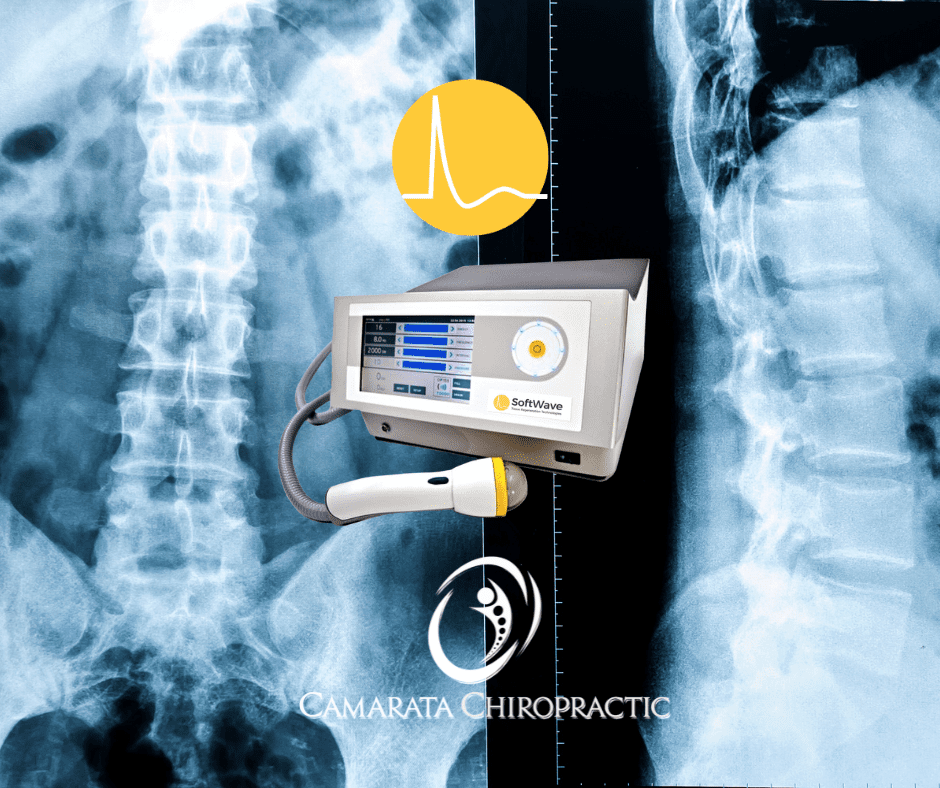
SoftWave Tissue Regeneration Therapy delivers electrohydraulic shockwaves in a broad, unfocused pattern that penetrates deeply into the shoulder without surgery or needles. The mechanical signal it delivers triggers a cascade of biological responses that are particularly well-matched to what rotator cuff tendons are missing.
Angiogenesis: Rebuilding Blood Supply
SoftWave stimulates the release of vascular endothelial growth factor (VEGF) and other angiogenic signals, prompting the body to grow new blood vessels into tendon tissue. For the notoriously under-perfused critical zone of the supraspinatus, this is meaningful. More blood supply means more oxygen, more nutrients, more repair cells reaching the area, and better clearance of metabolic waste.
Collagen Remodeling
The mechanical signal from SoftWave activates resident tenocytes (tendon cells) and influences the type and organization of collagen being produced. The goal is to shift the tissue away from disorganized scar-like collagen toward more structurally sound, load-bearing fibers. This is the kind of remodeling that makes a tendon actually stronger rather than just quieter.
Stem Cell Activation
SoftWave activates resident stem cells within and around the tendon, mobilizing the body’s own regenerative resources rather than introducing anything external. These cells can differentiate into tenocytes and contribute to tissue repair in ways that passive rest or anti-inflammatory approaches simply do not reach.
Inflammation Modulation
SoftWave doesn’t suppress inflammation the way a steroid does. It modulates it, nudging the inflammatory environment from a chronic, dysfunctional state into a productive, repair-oriented one. This distinction matters: you want some inflammatory signaling to drive healing. You just need it to be functional rather than stuck.
If you are ready to explore whether SoftWave is a fit for your shoulder, the first step is a consultation where we evaluate your presentation and discuss realistic goals. You can book a SoftWave consultation online to get started.
How SoftWave Fits With Shoulder Rehabilitation
SoftWave is not a replacement for physical therapy or corrective exercise. It is a catalyst. By improving tissue quality, blood supply, and cellular activity in the tendon, SoftWave creates a more favorable environment for rehab to actually take hold. Many patients find that exercises they could not tolerate before become more manageable after a series of SoftWave sessions, because the tendon’s capacity to handle load is improving underneath.
At Camarata Chiropractic & Wellness, we often pair SoftWave with chiropractic care to address any biomechanical contributors: thoracic spine mobility restrictions, scapular mechanics, or postural patterns that may be loading the shoulder unevenly. Treating the tendon in isolation while ignoring the movement context that strained it tends to produce incomplete results.
What to Expect During SoftWave Treatment for the Shoulder
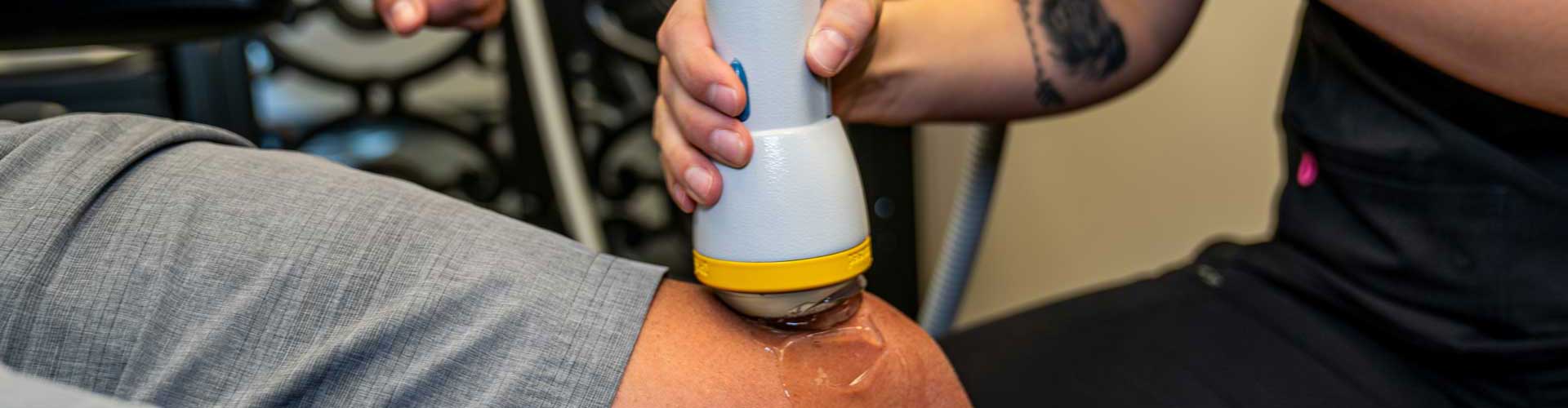
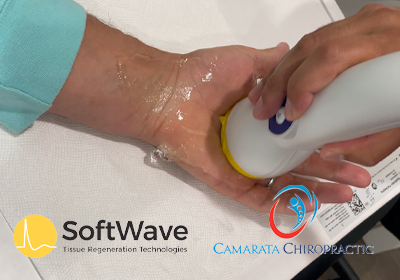
SoftWave sessions for the shoulder are performed with the patient seated or lying comfortably. Ultrasound gel is applied to the skin, and the handheld SoftWave applicator is moved over the shoulder region in a scanning pattern. The treatment is non-invasive: no injections, no incisions, no anesthesia required.
Most people notice a deep, achy sensation during treatment that is generally well-tolerated. Some experience a reduction in pain and improved range of motion within the first one to three sessions; others notice progress more gradually. A typical course of care involves multiple sessions spaced over several weeks, with the exact plan tailored to the severity of the tendinopathy, how long it has been present, and how the individual responds.
You can read about the experiences of patients who have gone through this process at our SoftWave TRT reviews page to get a realistic sense of what others have reported.
Who Is a Good Candidate?
SoftWave for rotator cuff tendinopathy tends to be a good fit for adults who:
- Have been dealing with shoulder pain for weeks or months that has not fully resolved with rest, physical therapy, or cortisone injections
- Have imaging (ultrasound or MRI) showing tendinopathy, impingement, or partial-thickness changes rather than a full-thickness tear requiring surgery
- Want to avoid or delay a surgical procedure
- Have a physically active lifestyle or occupation in the Rochester area and need functional recovery, not just symptom management
- Are willing to pair SoftWave with appropriate rehab work
SoftWave is generally not the right first step for acute traumatic injuries in the first 48 to 72 hours, or for complete rotator cuff tears where the structural situation requires surgical intervention. A proper evaluation helps clarify which category applies to you.
Candidacy Evaluation and Next Steps
The first appointment at Camarata Chiropractic & Wellness begins with a thorough history and physical examination of the shoulder. We review any existing imaging, assess range of motion, strength, and provocative movements, and discuss how your shoulder affects your daily life, whether that’s reaching a high shelf, lifting grandchildren, or sleeping through the night without waking up on the affected side.
From there, we develop an individualized treatment plan that may include SoftWave, chiropractic care, and guidance on activity modification during recovery. The goal is always to give the tissue the conditions it needs to repair itself durably, not to mask pain while the underlying problem continues.
You can learn more about the range of conditions we address and the experience of working with our team at our experience healing page, and hear directly from patients who have been through it at our testimonials page. If your shoulder has been holding you back long enough, a regenerative conversation may be exactly the next step.
Ready to Get Started?
If you’re dealing with chronic pain in Rochester, Chili, Churchville, Spencerport, Gates, Greece, Hilton, Rush, Henrietta, Scottsville, Caledonia, LeRoy, Brighton, or anywhere in the greater Rochester area, we’d love to help you find a path that works with your body, not against it.
Book your consultation here and let’s build a plan around what your tissue actually needs.
Get a Hold of Us
Ready to upgrade your health from the inside out?
At Camarata Chiropractic & Wellness, we focus on identifying the root cause of dysfunction and optimizing your body’s performance through SoftWave Therapy, Red Light Therapy, chiropractic care, recovery strategies, and lifestyle guidance.
Address: 3237 Union St, North Chili, NY 14514
Phone: 585-617-4145
Email: info@camaratachiropractic.com
Website: https://www.camaratachiropractic.com
Facebook: https://www.facebook.com/camaratachiropractic
Instagram: https://www.instagram.com/camarata_chiro/
Schedule Your New Patient Special Here!
Learn about our newest offering and the powers of red light therapy at RedLightRochester.com.
‹ Back

 3237 Union St,