

Blog & Resources
Quadriceps Tendinitis and Pain Above the Kneecap: How SoftWave Helps the Tendon Heal
Pain Just Above the Kneecap? Quadriceps Tendinitis Care for Rochester, NY
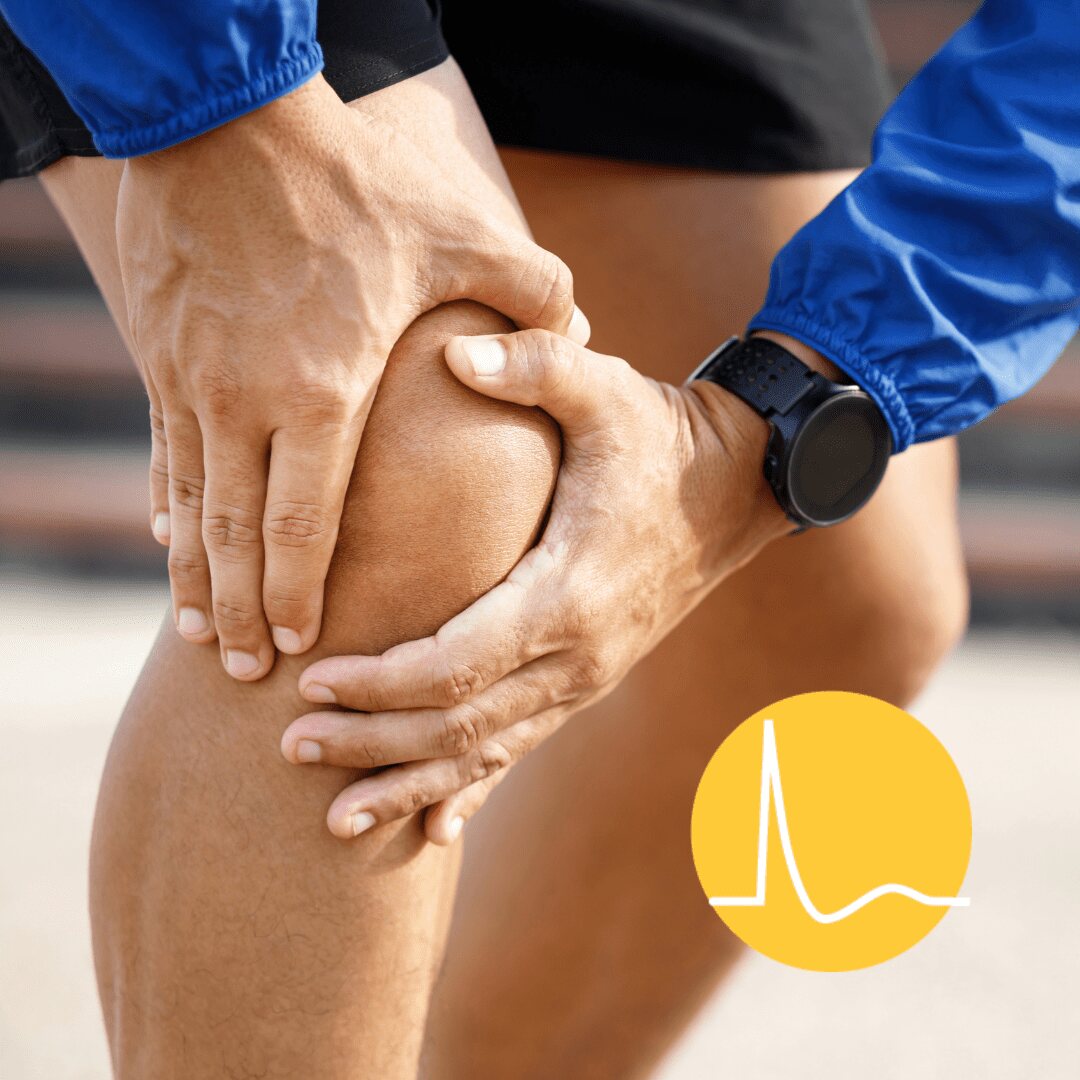
Most people have heard of jumper's knee, the pain just below the kneecap. Fewer have heard of its upstairs neighbor: quadriceps tendinitis, which causes pain right at the top edge of the kneecap. It often shows up when you climb the stairs, squat to pick something up, get out of a low car seat, or push through the last mile of a run along the Genesee Riverway Trail. It can be stubborn, and it is often mistaken for general "knee pain" or arthritis.
At Camarata Chiropractic & Wellness in North Chili, Dr. Sam Camarata helps Rochester-area patients sort out exactly where their knee pain is coming from and build a plan to fix it. For many people with quadriceps tendon pain, that plan includes SoftWave Tissue Regeneration Technology (TRT), a non-invasive approach designed to help the tendon itself heal.
Anatomy: What the Quadriceps Tendon Does
Your quadriceps is the group of four muscles on the front of your thigh: the rectus femoris, vastus lateralis, vastus medialis, and vastus intermedius. They merge into a single thick tendon that attaches to the top of the kneecap (patella). From there, the patellar tendon continues down to the shinbone.
This system works like a pulley. Every time you straighten your knee, stand up, climb a step, or slow yourself down going downhill, the quadriceps tendon transmits enormous force across the front of the knee. Slowing down, called eccentric loading, is especially demanding. Walking down stairs, landing from a jump, or descending a trail at Letchworth all ask the tendon to absorb force while it lengthens.
Who Gets It, and How It Feels
We commonly see quadriceps tendon pain in:
- Court athletes: Basketball, volleyball, and pickleball players who repeatedly land and change direction.
- Runners: Especially those doing downhill running or ramping up mileage quickly.
- Lifters: Heavy squats, lunges, and box jumps put a lot of load through the tendon.
- Cyclists: A saddle set too low increases stress on the front of the knee.
- Workers who squat and kneel, and middle-aged and older adults, whose tendons naturally become less resilient.
It usually develops gradually. Typical signs include tenderness at the top of the kneecap, pain going down stairs or squatting, stiffness after sitting or first thing in the morning, pain that eases as you warm up and returns afterward, and mild swelling just above the kneecap.
Why the Tendon Has Trouble Healing
The quadriceps tendon is incredibly strong, but like most tendons it has a modest blood supply. When it is repeatedly overloaded without enough recovery, microscopic damage builds up in the fibers. Over time the tissue can shift into a degenerative pattern called tendinopathy: the collagen becomes disorganized, the tendon may thicken, and it loses some of its ability to handle load.
That explains the frustrating pattern. A few days off may help, but the moment you go back to stairs, squats, or running, the pain returns, because the tendon has not rebuilt its strength. Long Rochester winters do not help. Many people go from months of reduced activity to suddenly hitting the gym or the trails in spring, and the tendon is not ready. Weak hips and glutes, tight quadriceps and hip flexors, and stiff ankles can keep the tendon under extra strain.
What Our Rochester Patients Are Saying
Real reviews from real SoftWave patients at Camarata Chiropractic & Wellness
Conventional Options and Their Limits
- Load management: Reducing aggravating activities without stopping all movement.
- Ice and anti-inflammatories: May reduce pain temporarily, but do not rebuild tendon tissue.
- Progressive strengthening: Very important for long-term recovery.
- Steroid injections: Approached with caution around major weight-bearing tendons because of concerns about weakening the tissue.
- Surgery: Usually reserved for partial or complete tears.
Exercise is key, but it is hard to make progress when the tendon hurts with every rep. That is where a therapy designed to support tissue repair can be a helpful partner.
How SoftWave Helps the Quadriceps Tendon Heal
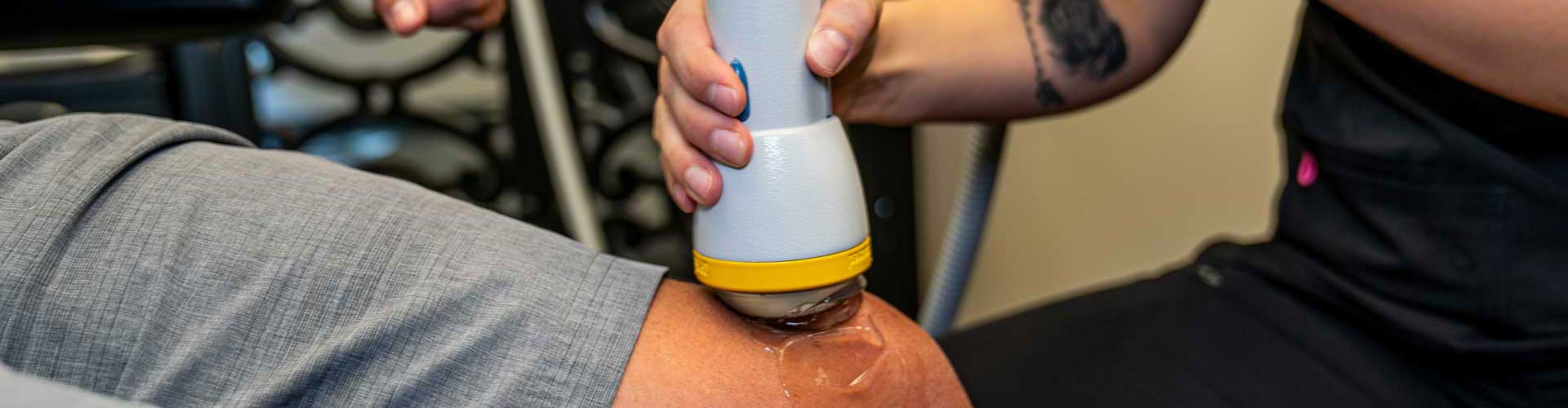
SoftWave TRT is built on electrohydraulic technology. A spark generated in water inside the applicator creates an acoustic wave, and a patented parabolic reflector shapes it into a broad-focused field. SoftWave is the only broad-focused shockwave, which sets it apart from radial pressure wave (RPW) devices and from electromagnetic and piezoelectric systems. The broad-focused design is intended to cover the whole tendon and surrounding tissue at therapeutic depth, rather than a pinpoint area.
If climbing stairs or squatting has become a daily reminder of your knee, book a SoftWave consultation with Dr. Sam Camarata to find out if this approach fits your situation.
In plain language, SoftWave is designed to:
- Activate resident stem cells already in the tissue and signal them to get to work.
- Promote new blood vessels through VEGF and eNOS, which are involved in angiogenesis.
- Support rebuilding through proliferation markers like PCNA and BMP, which are involved in new collagen formation.
- Regulate inflammation through toll-like receptors, shifting lingering irritation into an organized healing response.
- Clear senescent cells that slow healing.
SoftWave is FDA-cleared for activation of connective tissue, temporary increase in blood flow, and temporary relief of minor muscle and joint pain.
What to Expect During Your Care
Your first visit includes a detailed history and hands-on exam. Pain above the kneecap can also come from the joint behind the kneecap, a bursa, or even the hip, so Dr. Sam will pinpoint the source and check how you squat and move.
- Sessions typically take about 10 to 15 minutes.
- No needles, no drugs, and no downtime.
- Most patients complete a series of sessions over several weeks, and the healing response is designed to continue after the last one.
Dr. Sam usually pairs SoftWave with a smart loading plan, including progressive quadriceps strengthening and hip and glute work, plus chiropractic care when restricted movement elsewhere is overloading the knee. Some patients also use our Trifecta Red Light bed as a complementary option to support recovery between sessions. Curious what others have experienced? Visit our SoftWave TRT reviews page.
Red Flags: When to Get Checked Right Away
Seek prompt care for a sudden pop above the kneecap with an inability to straighten the leg, a visible dent just above the kneecap, major swelling or bruising after an injury, a hot, red knee or fever, or repeated locking or giving way. These can signal a tendon rupture, joint injury, or infection, and Dr. Sam will refer you for imaging or to a specialist when appropriate.
Ready to Take the Stairs Without Thinking About It?
Quadriceps tendon pain does not have to be something you work around forever. Let Dr. Sam Camarata and our team help you get to the root of the problem and support your knee's natural healing.
Book your SoftWave consultation here
Learn more: SoftWave Therapy for Knee Pain in Rochester, NY
Get a Hold of Us
Ready to get to the root of your pain instead of just managing it?
At Camarata Chiropractic & Wellness, we focus on identifying the root cause of dysfunction and helping your body heal through SoftWave Therapy, Red Light Therapy, chiropractic care, recovery strategies, and lifestyle guidance.
Address: 3237 Union St, North Chili, NY 14514
Phone: 585-617-4145
Email: info@camaratachiropractic.com
Website: https://www.camaratachiropractic.com
Facebook: https://www.facebook.com/camaratachiropractic
Instagram: https://www.instagram.com/camarata_chiro/
Schedule Your SoftWave Therapy Visit Here!
Learn about our newest offering and the powers of red light therapy at RedLightRochester.com.
‹ Back

 3237 Union St,