
Blog & Resources
Kayaking and Paddleboarding Season in Rochester: SoftWave for Shoulder, Wrist, and Back Strain
Paddling Season in Rochester Is Here. Is Your Body Ready for It?
Few things beat a calm summer morning on Irondequoit Bay, a slow paddle down the Genesee, or a lap along the Erie Canal in Pittsford. Rochester has become a genuine paddling town, and every summer more people pull kayaks and paddleboards off garage walls and head for Braddock Bay, Canandaigua, and Conesus Lake. The catch: paddling is repetitive and upper-body driven, and many people go from zero to two-hour outings in one weekend.
At Camarata Chiropractic & Wellness in North Chili, Dr. Sam Camarata sees a predictable wave of paddling strains each July: sore shoulders, aching wrists and forearms, and low backs that stiffen up after an afternoon in a kayak seat or on a board. Most of these are overuse injuries in tendons and soft tissue, and they often respond well to a plan that combines better mechanics with SoftWave Tissue Regeneration Technology (TRT) to support the tissue's own repair.
The Three Areas Paddlers Strain Most
The shoulder
Every paddle stroke asks the rotator cuff to stabilize the arm while the larger muscles pull. Problems start when paddlers "arm" the stroke instead of rotating through the torso. The shoulder then does work the core and back should be doing, especially when the top hand pushes high above the head or the bottom arm reaches far forward. Common results include rotator cuff tendinopathy, irritation of the biceps tendon at the front of the shoulder, and achy upper trapezius and shoulder blade muscles.
The wrist and forearm
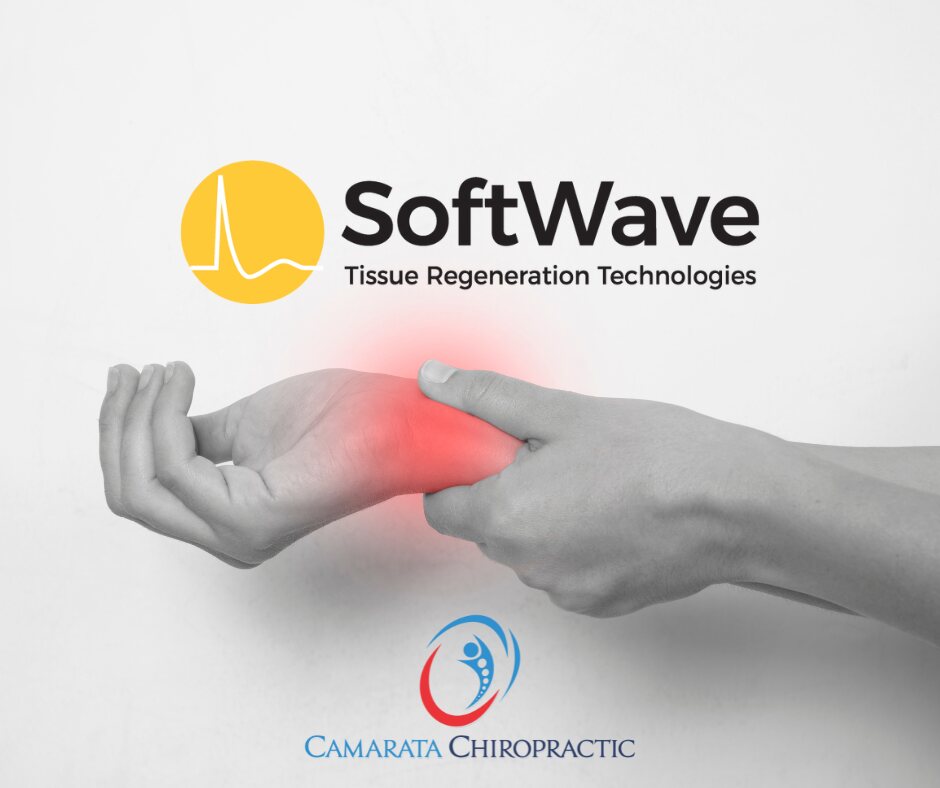
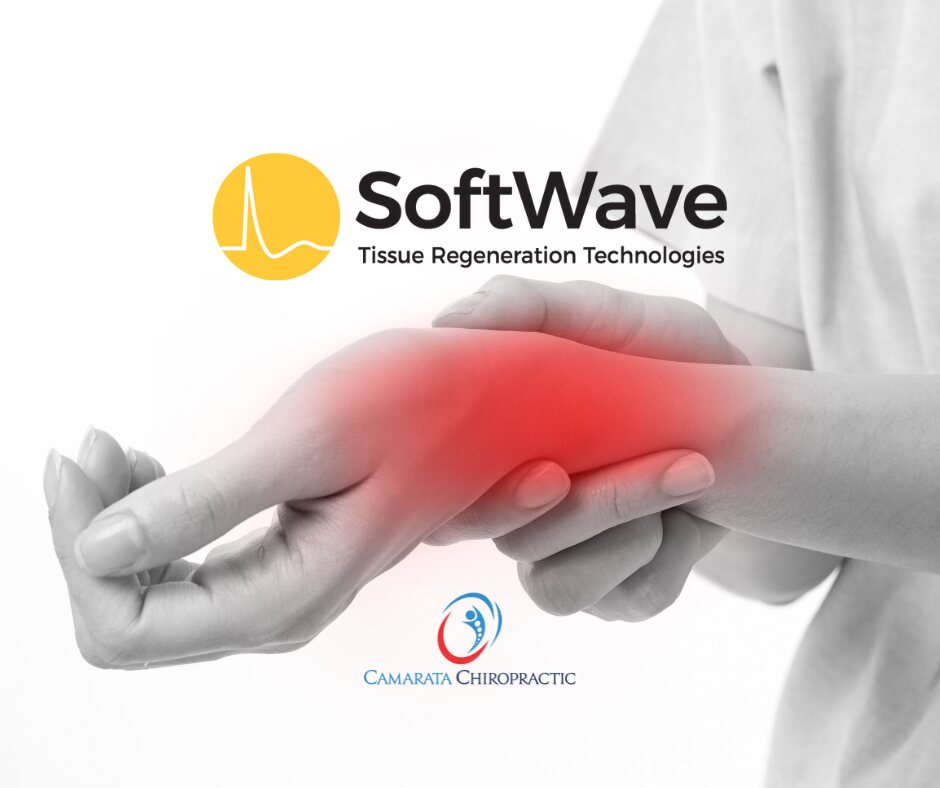
A tight grip on the shaft, hour after hour, loads the tendons that run along the thumb side of the wrist and the back of the forearm. Feathered kayak paddles, where the blades are offset, require the control hand to rotate and bend the wrist on every stroke. That repeated motion is a classic setup for:
- De Quervain's tenosynovitis, pain and swelling along the thumb side of the wrist
- Intersection syndrome, a squeaky, sore spot a few inches above the wrist on the back of the forearm
- Wrist extensor tendinitis, a cousin of tennis elbow that can travel up toward the elbow
The low back
Kayakers sit with legs extended, which pulls on tight hamstrings and tilts the pelvis backward, rounding the lower back for hours at a time. Paddleboarders face the opposite problem: standing and bending at the waist instead of the hips with each stroke. Add lifting a heavy boat off the car and carrying it down a rocky launch, and the muscles and joints of the low back take a beating.
Why Paddling Injuries Tend to Linger
Paddling strains build slowly, so many people keep going out and assume soreness is part of the sport. By the time pain sticks around between outings, the tendon has often moved from a short-term irritation to a longer-term tendinopathy, where collagen fibers become disorganized and the local blood supply is not keeping up with repair.
Wrist and shoulder tendons have relatively limited circulation. Rest may quiet pain for a week, but the tissue has not necessarily rebuilt, so the next long paddle brings it right back.
Conventional Options and Where They Fall Short
Typical care includes rest, ice, bracing, anti-inflammatory medication, physical therapy, and in some cases a corticosteroid injection. These have their place. A thumb spica brace can calm De Quervain's, and strengthening work is important for nearly every paddler. But braces and medications mainly manage symptoms, and repeated steroid injections near tendons are approached with caution. Many people end up in a frustrating loop: rest, feel better, paddle, hurt again.
The missing piece is often something that directly supports the healing biology of the tendon, so the tissue can tolerate paddling again rather than just feeling quieter while you sit out.
What Our Rochester Patients Are Saying
Real reviews from real SoftWave patients at Camarata Chiropractic & Wellness
How SoftWave Helps Paddling Injuries
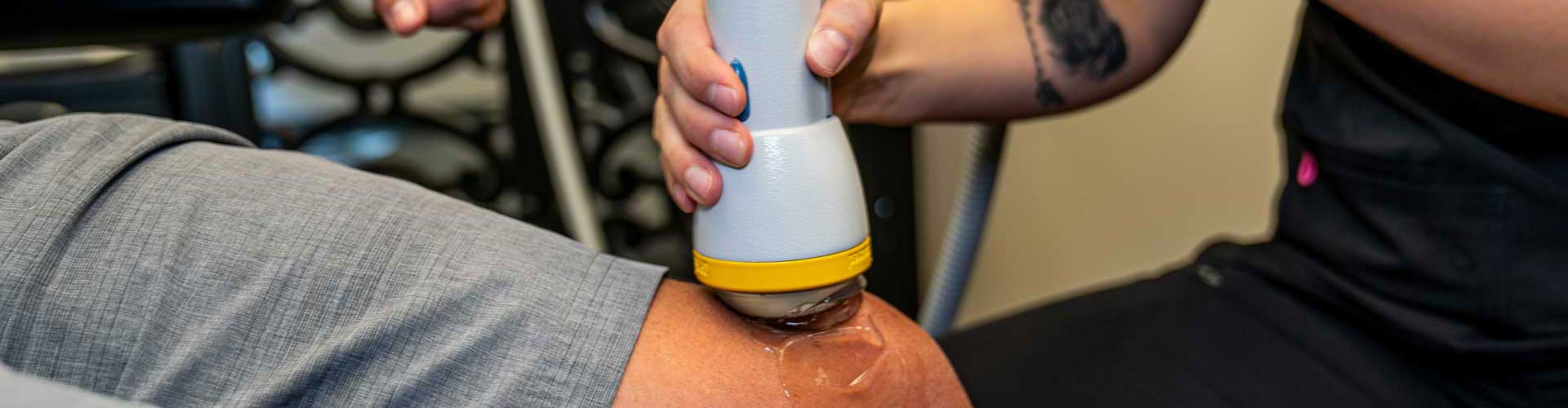
SoftWave TRT is an electrohydraulic technology. A small spark in water generates an acoustic wave, and a patented parabolic reflector shapes that energy into a broad-focused wave. It is the only broad-focused shockwave, which sets it apart from radial pressure wave devices (whose energy dissipates near the surface) and from electromagnetic or piezoelectric devices that concentrate energy at a narrow point. That broad field lets us treat the whole rotator cuff region, the forearm tendons, or a wide area of the low back in one session.
Here is what that acoustic energy is designed to do, in plain language:
- Wake up resident stem cells already in the tissue so repair can begin
- Support new blood vessel growth through VEGF and eNOS pathways, improving circulation to stubborn tendons
- Encourage tissue rebuilding, with proliferation markers like PCNA and BMP and new collagen production
- Calm and regulate inflammation, including regulation of toll-like receptors
- Help clear senescent cells that keep chronic tissue stuck
SoftWave is FDA-cleared for activation of connective tissue, temporary increase in blood flow, and temporary relief of minor muscle and joint pain, which matches what an overworked paddling tendon needs.
If a sore shoulder, wrist, or back is cutting your time on the water short, book a SoftWave consultation with Dr. Sam and we will find out what is really going on.
What Treatment Looks Like at Camarata Chiropractic & Wellness
Dr. Sam starts by asking about your paddling: kayak or SUP, how often, how long, and where it hurts. He will check shoulder and wrist mobility, grip and rotator cuff strength, hip and hamstring flexibility, and spinal motion.
SoftWave sessions take about 10 to 15 minutes. There are no needles, no medications, and no downtime, so you can usually keep paddling at a reduced level. Most plans involve a series of sessions over several weeks, and because SoftWave is designed to start a healing response, that process continues after each visit. Many patients report feeling a difference early in the series, though results vary from person to person. You can read what local patients say on our SoftWave reviews page.
Chiropractic care for the spine and pelvis often pairs well with SoftWave for paddlers with low back stiffness. Some patients also use our Trifecta Red Light bed after long weekends on the water as a complementary way to support circulation and general recovery.
Paddle Smarter This Summer
- Rotate, do not pull: drive the stroke from your torso and keep the top hand at or below eye level.
- Loosen your grip: hold the paddle with relaxed fingers and consider an unfeathered or lower-feather setting if your wrists ache.
- Sit tall: a small cushion under the hips or a slight knee bend in the kayak can ease low back strain.
- Hinge on a board: SUP paddlers should bend at the hips with soft knees.
- Build up gradually: start with shorter outings before that big Canandaigua day.
When to See a Doctor Right Away
Get prompt medical care if you have sudden shoulder weakness after a fall or capsize, a visible deformity, numbness or tingling in the hand, back pain with leg weakness or changes in bladder or bowel control, or swelling with redness and fever. SoftWave does not replace a proper medical evaluation when something more serious is going on.
Ready to Get Back on the Water?
Rochester summers are short, and you should be spending them on the bay, not icing your wrist. Let Dr. Sam help you build a plan to heal the tissue and paddle comfortably for the rest of the season.
Book your SoftWave consultation here
Learn more: SoftWave Therapy for Sports Injuries in Rochester, NY
Get a Hold of Us
Ready to get to the root of your pain instead of just managing it?
At Camarata Chiropractic & Wellness, we focus on identifying the root cause of dysfunction and helping your body heal through SoftWave Therapy, Red Light Therapy, chiropractic care, recovery strategies, and lifestyle guidance.
Address: 3237 Union St, North Chili, NY 14514
Phone: 585-617-4145
Email: info@camaratachiropractic.com
Website: https://www.camaratachiropractic.com
Facebook: https://www.facebook.com/camaratachiropractic
Instagram: https://www.instagram.com/camarata_chiro/
Schedule Your SoftWave Therapy Visit Here!
Learn about our newest offering and the powers of red light therapy at RedLightRochester.com.
‹ Back

 3237 Union St,