
Blog & Resources
Hip Bursitis and Lateral Hip Pain in Rochester, NY: Why SoftWave Beats Repeat Cortisone Shots
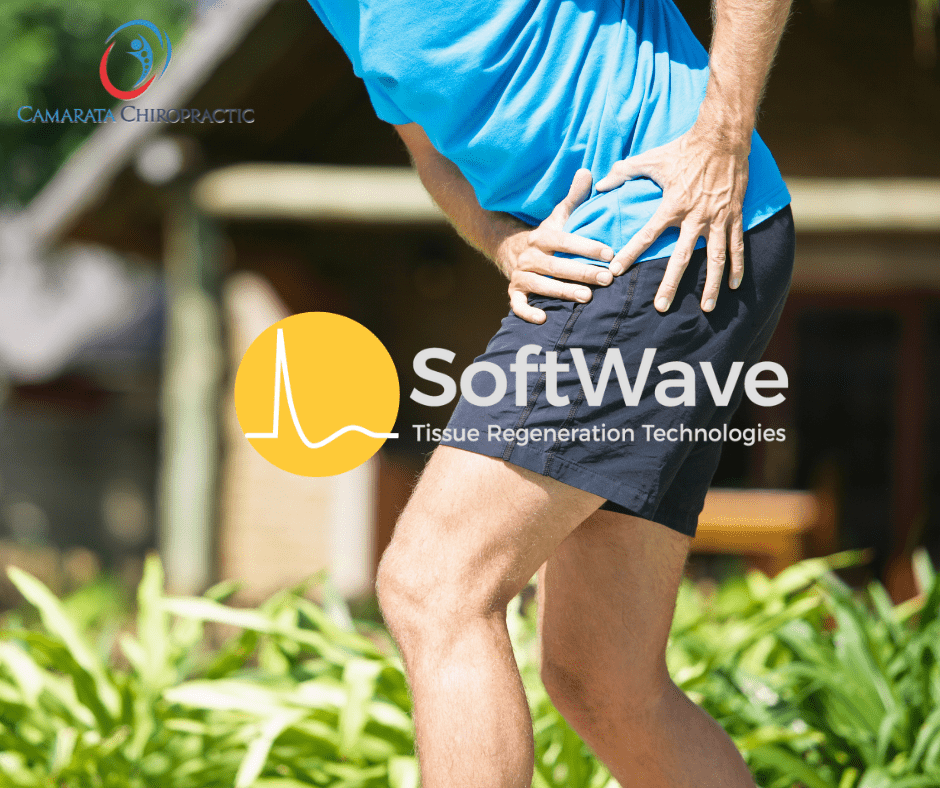
If you find yourself wincing every time you roll onto your side at night, gripping the railing on the way down the stairs, or cutting your walks short because of a nagging ache on the outside of your hip, you are not alone. Lateral hip pain is one of the most common complaints we see at Camarata Chiropractic & Wellness, and it has a frustrating habit of hanging around long after people expect it to be gone. For many Rochester-area residents, the pain has been there for months, sometimes years, stubbornly resisting rest, stretching, and round after round of cortisone shots.
The condition most often responsible is called greater trochanteric pain syndrome (GTPS), which is the clinical umbrella that covers trochanteric bursitis and, more commonly, gluteal tendinopathy. These are problems with the soft tissue on the outer side of your hip, not with the hip joint itself. That distinction matters enormously, because the treatment approach is completely different from what works for hip arthritis. Understanding what is actually happening in that tissue is the first step toward real, lasting relief.
SoftWave Tissue Regeneration Therapy offers a non-surgical, drug-free path that directly addresses the underlying tissue breakdown driving lateral hip pain. Rather than masking symptoms, SoftWave is designed to trigger the body’s own repair mechanisms at the cellular level. Here is what you need to know about why this matters and whether it might be the right fit for you.
What Is Actually Happening on the Outside of Your Hip
The greater trochanter is the bony prominence you can feel on the outer side of your hip. Three gluteal tendons (the gluteus medius, gluteus minimus, and gluteus maximus) attach there, along with a bursa, a small fluid-filled sac whose job is to reduce friction. When these tendons are overloaded, compressed, or subjected to repetitive stress, the tendon fibers begin to break down. The bursa can become irritated and inflamed in response.
Gluteal tendinopathy is now understood to be the primary driver in most cases of lateral hip pain. The tendon doesn’t simply get inflamed and then heal cleanly the way a bruise does. Instead, the normal collagen architecture gets disrupted, new disorganized scar-like tissue forms, and blood supply to the area remains poor. Tendons are notoriously slow healers because they receive relatively little blood flow to begin with. Without a strong, organized collagen structure, the tendon cannot handle load the way it should, and the cycle of pain and dysfunction continues.
Why the Pain Follows That Specific Pattern
The symptoms of GTPS are remarkably consistent, and recognizing the pattern can help distinguish it from hip joint problems or referred pain from the lower back:
- Pain localized to the outer hip, sometimes radiating partway down the outer thigh
- Significant discomfort when lying on the affected side at night
- Pain climbing or descending stairs
- Aching during prolonged walking, especially on uneven terrain
- Tenderness when pressing on the bony prominence of the outer hip
- Discomfort when crossing one leg over the other (which compresses and stretches the tendons)
Hip joint arthritis, by contrast, tends to produce groin pain, stiffness with getting out of a chair, and pain with rotation of the leg. If your pain is clearly on the outside of the hip with the pattern above, GTPS is a very likely culprit and the hip joint itself may be perfectly intact.
The Problem with Repeat Cortisone Injections
Cortisone injections are often the first treatment offered, and they are not without value in the short term. A well-placed injection can calm acute inflammation and give a window of reduced pain. The problem is what happens over time when injections are repeated every few months as the relief becomes shorter and shorter.
Corticosteroids work by suppressing the local inflammatory response. In the acute phase that can be helpful, but chronic tendinopathy is not simply an inflammation problem. The underlying issue is a structural breakdown of the tendon’s collagen. Cortisone does nothing to repair that disorganized tissue, and research has consistently shown that repeated injections into or around tendons can weaken the tendon over time. Collagen synthesis is disrupted, the tendon’s mechanical properties can be reduced, and the risk of further tearing may increase. Many patients find they need injections more frequently to get the same relief, and eventually even that diminishing relief stops coming altogether.
If you feel like you are on a cortisone treadmill and not getting anywhere, that experience is clinically recognized. The injections are not addressing what the tendon actually needs, which is a signal to rebuild.
How SoftWave Approaches Tendon Repair Differently
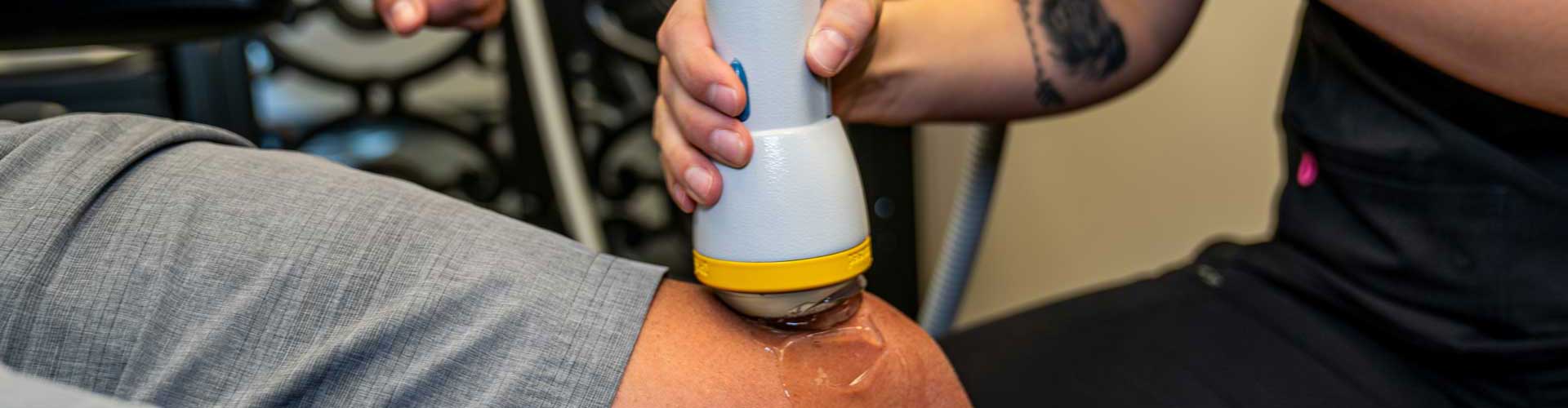
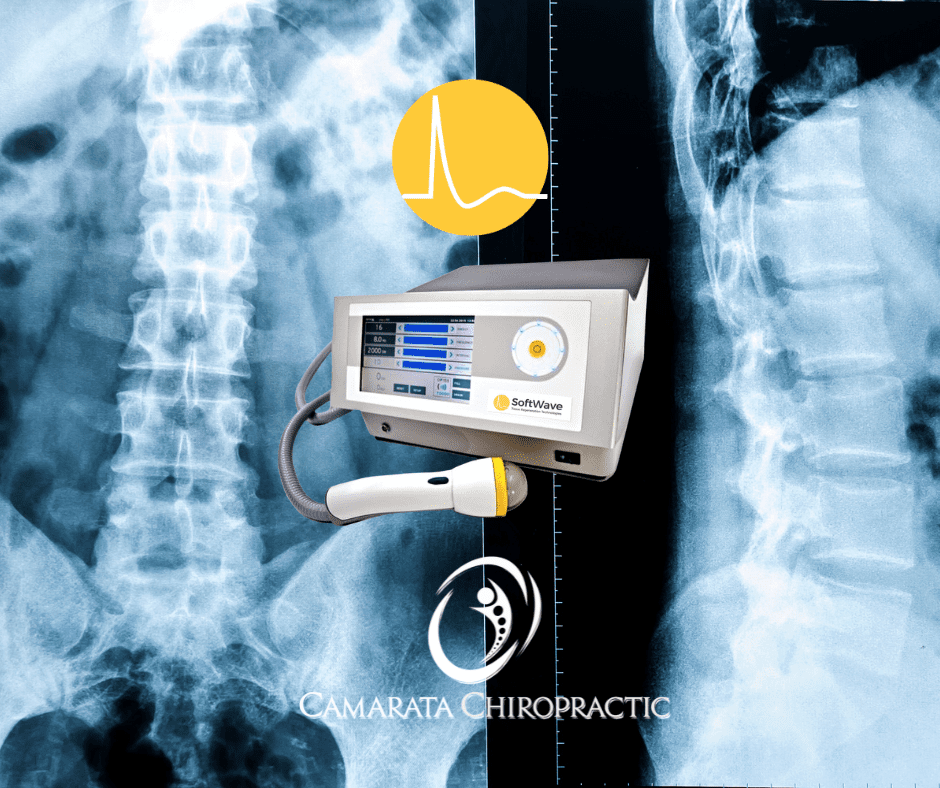
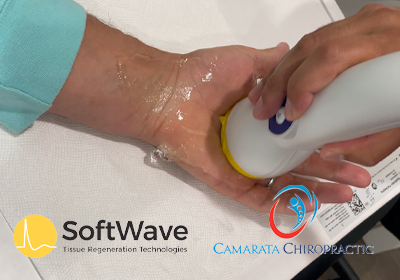
SoftWave Tissue Regeneration Therapy uses electrohydraulic extracorporeal shockwave technology to deliver broad-focused acoustic waves through the tissue. These waves produce a mechanical signal that the body interprets at the cellular level. The effects are regenerative rather than suppressive:
- Angiogenesis: SoftWave stimulates the formation of new blood vessels in the treated area. For tendons, which suffer from poor blood supply, this is fundamental. Better circulation means more oxygen, more nutrients, and more of the cellular building blocks needed for repair.
- Collagen remodeling: The acoustic waves activate fibroblasts, the cells responsible for producing collagen. Over time, this drives the reorganization of disorganized tendon tissue into stronger, more functional collagen architecture.
- Stem cell activation: SoftWave is designed to recruit and activate resident stem cells in the treated tissue, supporting regeneration from within.
- Inflammation modulation: Rather than suppressing the inflammatory process the way a steroid does, SoftWave modulates it, helping shift a chronic, dysfunctional inflammatory state into a productive repair-oriented one.
- Breaking up fibrotic tissue: Adhesions and scar-like deposits that have formed in the tendon over time can be disrupted, making room for healthier tissue to develop.
Many patients report noticeable improvement in pain and function after a series of sessions, with results that continue to develop over several weeks as the tissue continues to remodel. You can read through SoftWave TRT reviews from patients at our practice to get a sense of what people have experienced.
What Our Rochester Patients Are Saying
Real reviews from real SoftWave patients at Camarata Chiropractic & Wellness
Is This a Good Time to Explore SoftWave?
If you have been dealing with lateral hip pain for more than a few months, have had cortisone injections that are losing their effectiveness, and want to pursue a non-surgical approach, a SoftWave evaluation is worth considering. Book a SoftWave consultation at Camarata Chiropractic & Wellness and we can assess whether SoftWave is appropriate for your specific situation.
The Role of Chiropractic Care and Gait Support
Lateral hip pain rarely exists in a vacuum. Gluteal tendons are stressed when the load passing through them is uneven, excessive, or misdirected, and that often comes down to how the pelvis, lumbar spine, and lower extremity are functioning together. A hip that drops when you walk (Trendelenburg pattern), a pelvis that is tilted or rotated, or altered gait mechanics from an old ankle or knee injury can all place repetitive compressive and tensile stress on the gluteal tendons.
Chiropractic care addresses the structural and biomechanical contributors that make the tendons vulnerable in the first place. Adjustments to the sacroiliac joint, lumbar spine, and hip itself can reduce abnormal loading patterns. Gait coaching and targeted movement guidance help patients avoid positions and activities (like crossing the legs or sitting with hip adduction) that are known to compress the gluteal tendons against the greater trochanter and perpetuate symptoms.
Combining SoftWave with chiropractic support means we are both rebuilding the tissue and addressing why it was breaking down. That combination tends to produce more durable outcomes than either approach in isolation.
Who Tends to Respond Well to This Approach
Lateral hip pain from GTPS and gluteal tendinopathy can affect a wide range of people. Common candidates who may benefit from SoftWave and chiropractic care include:
- Adults over 40, particularly women during and after menopause, when tendon quality tends to decline
- Runners and walkers in the Rochester area dealing with overuse-related outer hip pain
- People whose work involves prolonged standing or repetitive stair climbing
- Patients who have had temporary relief from injections but are no longer responding well
- Anyone who wants to avoid surgery and is looking for a tissue-repair focused alternative
- Individuals who have been told their hip joint looks “fine” on imaging but still have significant outer hip pain
SoftWave is not a guaranteed cure, and results vary based on the severity and duration of the condition, overall tissue health, and how well contributing biomechanical factors can be addressed. However, for many patients it represents a meaningful step forward after months or years of frustrating symptom management.
What to Expect from the Process
An initial evaluation at our practice involves a thorough review of your history, a physical assessment of hip strength and mechanics, and a discussion of your prior treatments and imaging. SoftWave sessions are typically performed in a brief series spread over several weeks. The therapy is applied directly over the greater trochanter and surrounding soft tissue. Most patients tolerate it well, with some mild soreness in the treated area afterward that typically settles quickly.
Progress is tracked over time, and the treatment plan is adjusted based on how you are responding. You can learn more about what a visit looks like by visiting our experience healing page, or read what other patients have shared on our testimonials page. Lateral hip pain that has been present for a long time may take more sessions and more time to respond fully, so patience and consistency are part of the process.
A Different Kind of Answer for Stubborn Lateral Hip Pain
Greater trochanteric pain syndrome is one of those conditions that tends to get underestimated. It is not a hip replacement situation, so it often gets handed back to the patient with a recommendation to “keep doing the injections” or “try physical therapy.” But when the underlying tendon tissue is not healing and the biomechanical load is not being corrected, conservative measures without a regenerative component often fall short.
SoftWave Tissue Regeneration Therapy, combined with chiropractic care at Camarata Chiropractic & Wellness in North Chili, offers people throughout the Rochester region a path that is designed to actually repair the tissue rather than simply manage the pain. If the outside of your hip has been running your life long enough, it may be time to try an approach that works at the level where the problem actually lives.
Ready to Get Started?
If you’re dealing with chronic pain in Rochester, Chili, Churchville, Spencerport, Gates, Greece, Hilton, Rush, Henrietta, Scottsville, Caledonia, LeRoy, Brighton, or anywhere in the greater Rochester area, we’d love to help you find a path that works with your body, not against it.
Book your consultation here and let’s build a plan around what your tissue actually needs.
Get a Hold of Us
Ready to upgrade your health from the inside out?
At Camarata Chiropractic & Wellness, we focus on identifying the root cause of dysfunction and optimizing your body’s performance through SoftWave Therapy, Red Light Therapy, chiropractic care, recovery strategies, and lifestyle guidance.
Address: 3237 Union St, North Chili, NY 14514
Phone: 585-617-4145
Email: info@camaratachiropractic.com
Website: https://www.camaratachiropractic.com
Facebook: https://www.facebook.com/camaratachiropractic
Instagram: https://www.instagram.com/camarata_chiro/
Schedule Your New Patient Special Here!
Learn about our newest offering and the powers of red light therapy at RedLightRochester.com.
‹ Back



 3237 Union St,