
Blog & Resources
Groin Strains and Adductor Pain in Rochester Athletes: Getting Back to Full Speed with SoftWave
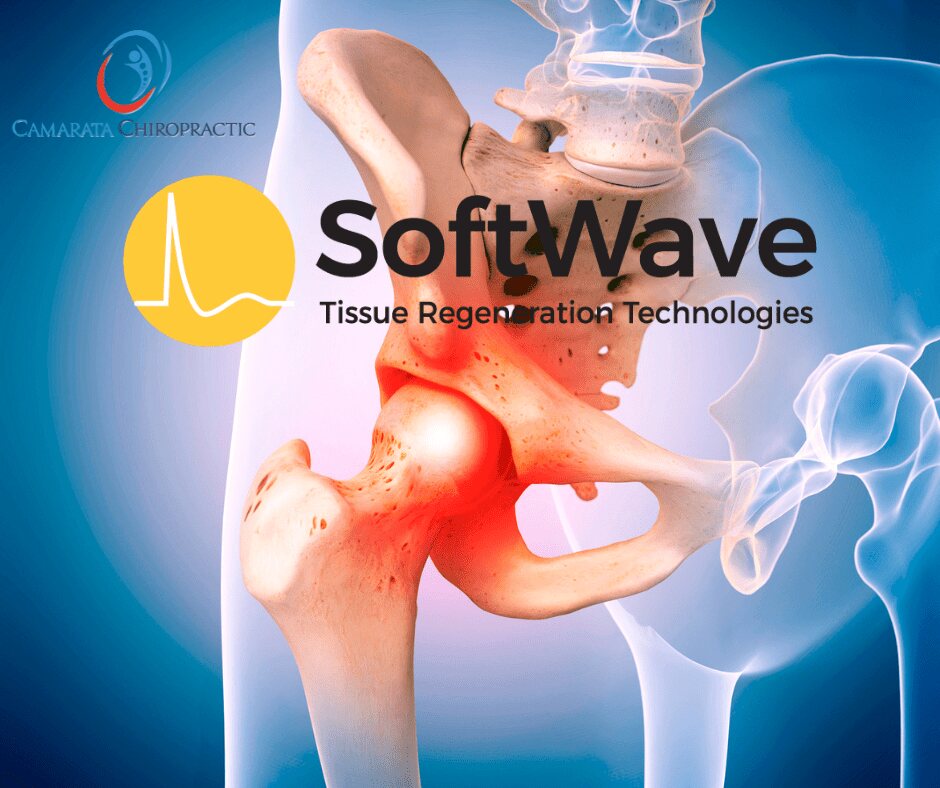
Groin Pain That Won't Let You Sprint? Rochester Athletes, Let's Talk About Your Adductors
A groin strain has a way of hanging around. You tweak it on a breakaway in a men's league hockey game in Henrietta, or on a hard cut during a fall soccer match in Webster, and at first it seems minor. It feels fine walking around, then grabs again the first time you push off at full speed. Before long you are a month in, playing at 70 percent and wondering why something so small refuses to heal.
At Camarata Chiropractic & Wellness in North Chili, Dr. Sam Camarata works with a lot of Rochester athletes who are stuck in exactly that cycle. In this article we will walk through what is actually injured in a groin strain, why the adductors are so prone to lingering problems, what conventional care offers, and how SoftWave Tissue Regeneration Technology may help you get back to full speed instead of just getting by.
What Is Actually Hurt: The Adductor Group
The "groin" muscles are mainly the adductors, a group of muscles on the inner thigh that pull your leg toward the midline. They include the adductor longus, adductor brevis, adductor magnus, pectineus, and gracilis. Most of them originate on the pubic bone and run down to the inside of the femur.
The adductor longus is the one most often strained. It has a relatively narrow tendon attaching to the front of the pubic bone, and injuries tend to happen either where the muscle blends into that tendon or right at the bony attachment. Tendon tissue near bone has a modest blood supply, so it tends to heal more slowly than the muscle belly.
How Groin Strains Happen
- Explosive change of direction: cutting, pivoting, and lateral shuffles in soccer, lacrosse, basketball, and football.
- Skating mechanics: the wide push-off stride in hockey loads the adductors as they lengthen, which is a classic setup for a strain.
- Kicking: the swing of a hard kick stretches the adductors and then asks them to contract forcefully.
Why Groin Strains Linger and Keep Coming Back
Groin strains have a reputation for recurring, and there are a few reasons why.
- Returning too early: the area may feel fine in daily life long before the tissue can handle sprinting, skating, or kicking.
- Disorganized scar tissue: a strain heals by laying down new collagen. If that collagen is laid down in a haphazard way without the right loading, the repaired area may be weaker and less elastic than the original tissue.
- Strength imbalances: when the adductors are weak relative to the hip abductors and core, they tend to get overloaded during quick movements.
- Stiff hips: limited hip rotation and pelvic mechanics put extra stress on the adductor attachment at the pubic bone.
- No off-season: Western NY athletes often jump from fall sports straight into indoor winter leagues.
Not Every Groin Pain Is a Simple Strain
Pain in the groin can come from several structures, and part of a good evaluation is sorting them out. Conditions that can mimic or overlap with an adductor strain include athletic pubalgia (often called a sports hernia), osteitis pubis, hip labral tears, hip impingement, inguinal hernias, and stress fractures of the hip or pelvis.
Red Flags That Need Medical Attention
- A visible bulge in the groin or lower abdomen, especially one that increases with coughing
- Deep hip pain that worsens with weight bearing, or pain at night or at rest (this can signal a stress fracture)
- Large bruising with a palpable gap in the muscle, or a "pop" followed by major weakness
- Fever, testicular pain or swelling, or urinary symptoms
If any of these apply, see a medical provider promptly. SoftWave is not a substitute for medical diagnosis, and we will refer out when something does not add up.
What Our Rochester Patients Are Saying
Real reviews from real SoftWave patients at Camarata Chiropractic & Wellness
Conventional Options and Their Limits
Most groin strains are managed with relative rest, ice in the early phase, anti-inflammatory medication, and a progressive strengthening program. Good rehab, including exercises like Copenhagen planks, is essential.
The limitation is that rehab works on loading the tissue, but it cannot directly speed up the biology of repair. Anti-inflammatory medication may ease discomfort but does not rebuild tendon. Cortisone injections may quiet pain short term, but repeat injections into tendon are approached with caution. For athletes who have done the exercises and still feel that grab at top speed, there is often a gap between "not injured anymore" and "actually healed."
How SoftWave Helps: The Science in Plain Language
SoftWave is an electrohydraulic technology. A spark generates an acoustic wave, and a patented parabolic reflector shapes it into a broad-focused wave that travels into the tissue. That makes it different from radial pressure wave devices, which mostly affect the surface, and from electromagnetic or piezoelectric devices, which concentrate energy into a small point. SoftWave is the only broad-focused shockwave, so it can treat a wider area at therapeutic depth, which is useful for an adductor tendon that runs from the pubic bone deep into the inner thigh.
If you are tired of guessing whether your groin is ready for the next game, schedule a SoftWave consultation with Dr. Sam and we will take a close look at what is going on.
Once SoftWave energy reaches the tissue, research on this technology describes several biological responses:
- Resident stem cell activation: the wave is designed to signal the body's own repair cells to become active in the injured area.
- New blood vessel formation: through pathways involving VEGF and eNOS, SoftWave may support angiogenesis, bringing more circulation to slow-healing tendon near bone.
- Collagen and tissue rebuilding: signals such as PCNA and BMP are associated with cell proliferation and new collagen production.
- Inflammation modulation: rather than shutting inflammation off, SoftWave helps regulate it, partly through toll-like receptor signaling, so the healing response stays productive.
- Clearing out old, worn-out cells: senescent cell clearance may help make room for healthier tissue.
SoftWave also has FDA clearance for activation of connective tissue, a temporary increase in blood flow, and temporary relief of minor muscle and joint pain, which lines up well with what a stubborn adductor strain needs.
What to Expect at Camarata Chiropractic & Wellness
Your first visit starts with a conversation about how the injury happened and what you are trying to get back to. Dr. Sam will assess the hip, pelvis, and lower back as well as the adductors themselves, because a stiff hip or pelvic imbalance is often part of the story.
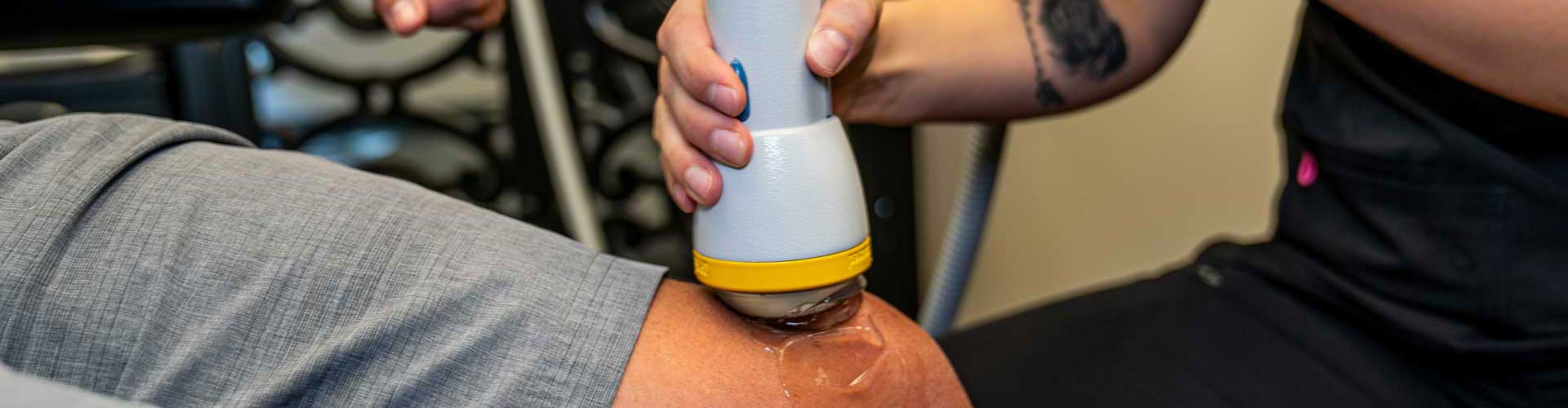
SoftWave sessions are non-invasive, with no needles, no drugs, and no downtime. Treatment takes about 10 to 15 minutes, and most athletes describe the sensation as a strong tapping. A typical plan involves a series of sessions over several weeks, and because the treatment kicks off a biological process, healing continues between and after visits. Many patients report feeling more confident pushing off as the series progresses.
SoftWave works best alongside smart rehab, not instead of it. We will talk through a gradual return to sprinting, cutting, or skating, and chiropractic care may be used to improve hip and pelvic mechanics so the adductors are not doing extra work. Some athletes also add sessions in our Trifecta Red Light bed as a complementary way to support general recovery and circulation during a busy season.
Curious what other patients have experienced? You can read SoftWave TRT reviews from our patients before your visit.
Ready to Get Back to Full Speed?
You deserve to play without that nagging pull in your groin. Let's find out whether SoftWave is a good fit for your recovery.
Book your SoftWave consultation here
Learn more: SoftWave Therapy for Hip Pain in Rochester, NY
Get a Hold of Us
Ready to get to the root of your pain instead of just managing it?
At Camarata Chiropractic & Wellness, we focus on identifying the root cause of dysfunction and helping your body heal through SoftWave Therapy, Red Light Therapy, chiropractic care, recovery strategies, and lifestyle guidance.
Address: 3237 Union St, North Chili, NY 14514
Phone: 585-617-4145
Email: info@camaratachiropractic.com
Website: https://www.camaratachiropractic.com
Facebook: https://www.facebook.com/camaratachiropractic
Instagram: https://www.instagram.com/camarata_chiro/
Schedule Your SoftWave Therapy Visit Here!
Learn about our newest offering and the powers of red light therapy at RedLightRochester.com.
‹ Back


 3237 Union St,