

Blog & Resources
Gardening and Yard Work Season in Rochester, NY: Beat the Back, Knee, and Shoulder Pain Before It Sets In

Late spring in Rochester has a way of pulling everyone outdoors all at once. The ground thaws, the garden beds call, and suddenly weekends are filled with kneeling, bending, lifting, and hauling. Whether you’re spreading mulch along the front walk, planting tomato seedlings, or finally tackling that overgrown corner bed, the work feels satisfying in the moment. Then Monday arrives, and your lower back has opinions.
Gardening and yard work are genuinely good for you, physically and mentally. But they ask your body to do things it hasn’t done since last October: repeated bending at the hip and spine, sustained kneeling, gripping tool handles for long stretches, and hoisting bags of soil or stone that can easily run forty or fifty pounds. After a winter of reduced activity, those demands add up fast. The aches that follow aren’t a sign you’re doing something wrong. They’re a sign your body needs a little more support to keep up with the season.
At Camarata Chiropractic & Wellness, we see a predictable wave of gardening-related complaints every spring. Many patients from Chili, North Chili, Churchville, and surrounding Rochester communities come in with the same story: “I was just pulling weeds” or “I only moved a few bags of mulch.” The good news is that most of these flare-ups respond well to the right care, and many can be prevented with a few smart habits before you ever pick up a trowel.
The Most Common Gardening Aches (and Why They Happen)
These are the injuries we see most often once the Rochester growing season kicks in:
- Low back strain. Bending forward repeatedly without hinging at the hips overloads the lumbar erectors and the discs beneath them. Lifting a bag of potting mix from the ground while twisted is a particularly reliable way to land in pain.
- Knee soreness from kneeling. Extended time on your knees compresses the patella and stresses the surrounding tendons and bursae. If you already have some wear in those joints, a long afternoon of planting can leave them swollen and stiff the next morning.
- Shoulder and rotator cuff strain. Raking, hoeing, and overhead pruning repeatedly load the shoulder through a long lever arm. The rotator cuff muscles fatigue before you realize it, and the tendons absorb more stress than they should.
- Elbow and wrist pain. Gripping pruners, trowels, or wheelbarrow handles for hours can irritate the tendons at the elbow (the same pattern as lateral epicondylitis) and strain the small joints of the wrist and hand.
- Neck stiffness. Looking down at planting beds for sustained periods puts the cervical spine in a sustained flexed position, loading the posterior neck muscles and the facet joints.
Why These Aches Can Linger Longer Than You Expect
A pulled muscle after one hard afternoon usually settles in a few days with rest. What trips people up is the cumulative load of multiple weekends in a row. Tissues that didn’t fully recover from weekend one get loaded again on weekend two, then again on weekend three. What started as mild soreness crosses into a pattern of chronic irritation: the tissue is no longer just fatigued, it’s in a low-grade inflammatory state that the body struggles to resolve on its own.
Tendons, in particular, don’t have a rich blood supply. When repetitive stress creates micro-damage in tendon fibers, the repair process is slow. Without an active regenerative signal, the body sometimes lays down disorganized scar tissue instead of healthy collagen, leaving the tendon thickened, weak, and persistently painful. That’s when rest alone stops being enough.
Body Mechanics Tips to Protect Yourself This Season
A little awareness goes a long way before soreness starts:
- Hinge, don’t hunch. When lifting bags of soil or compost, push your hips back and keep your spine neutral rather than rounding your low back. Squat down to the load instead of bending over it.
- Use a kneeling pad or garden stool. Reducing direct pressure on the kneecap and surrounding structures makes a meaningful difference for people with any existing knee sensitivity.
- Switch sides and switch tasks. Rake with your left hand leading for a while, then switch. Rotate between tasks every 20 to 30 minutes to distribute the load across different muscle groups.
- Take the warm-up seriously. A brief walk, some hip circles, and gentle spinal rotation before you start prepares your joints for the work ahead. Your body isn’t a machine you can just switch on cold.
- Shorten your tool handles. Working with too long a handle on a trowel or pruner forces awkward wrist angles. Ergonomic grip tools are not a luxury; for anyone prone to elbow or wrist issues, they’re a practical investment.
- Carry less, carry more often. Half-fill wheelbarrows and bags. Two trips with a manageable load beats one trip that strains your spine.
What Our Rochester Patients Are Saying
Real reviews from real SoftWave patients at Camarata Chiropractic & Wellness
When Is It More Than Normal Soreness?
Normal post-gardening soreness peaks within a day or two and fades by mid-week. Pay attention if you notice:
- Pain that gets sharper rather than duller over three to five days
- Swelling or warmth in a joint
- Pain radiating down the arm or leg
- Numbness or tingling in the hands or feet
- A specific spot that hurts to the touch
- Pain that has come back at the same spot for the second or third season in a row
Any of these patterns suggests that something beyond simple muscle fatigue is happening. Getting an evaluation sooner rather than later gives you the best chance of resolving it quickly and avoiding a pattern that worsens year after year.
How SoftWave Therapy Addresses the Tissues That Won’t Heal
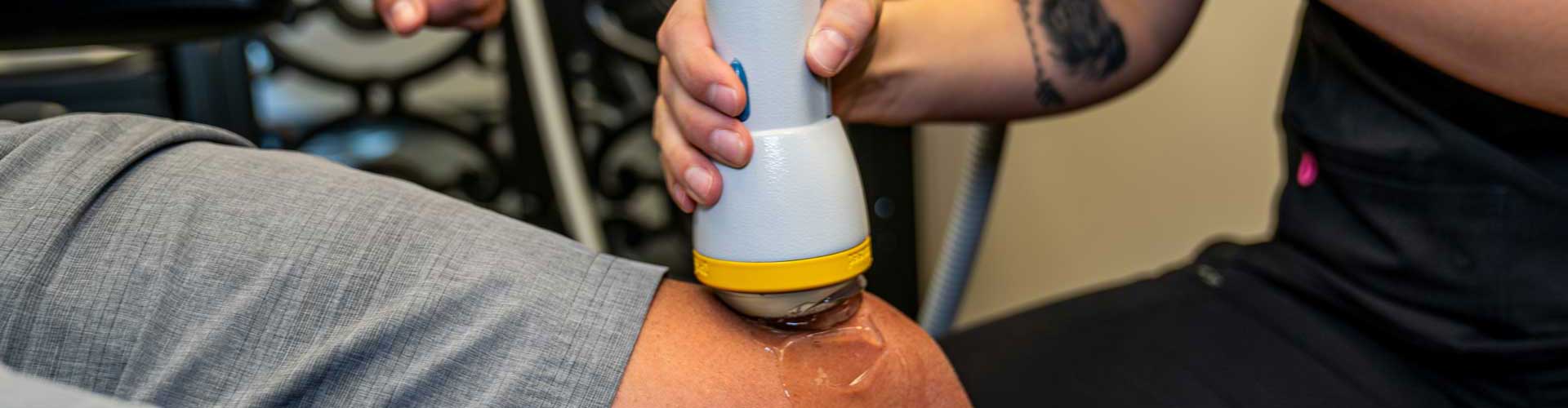
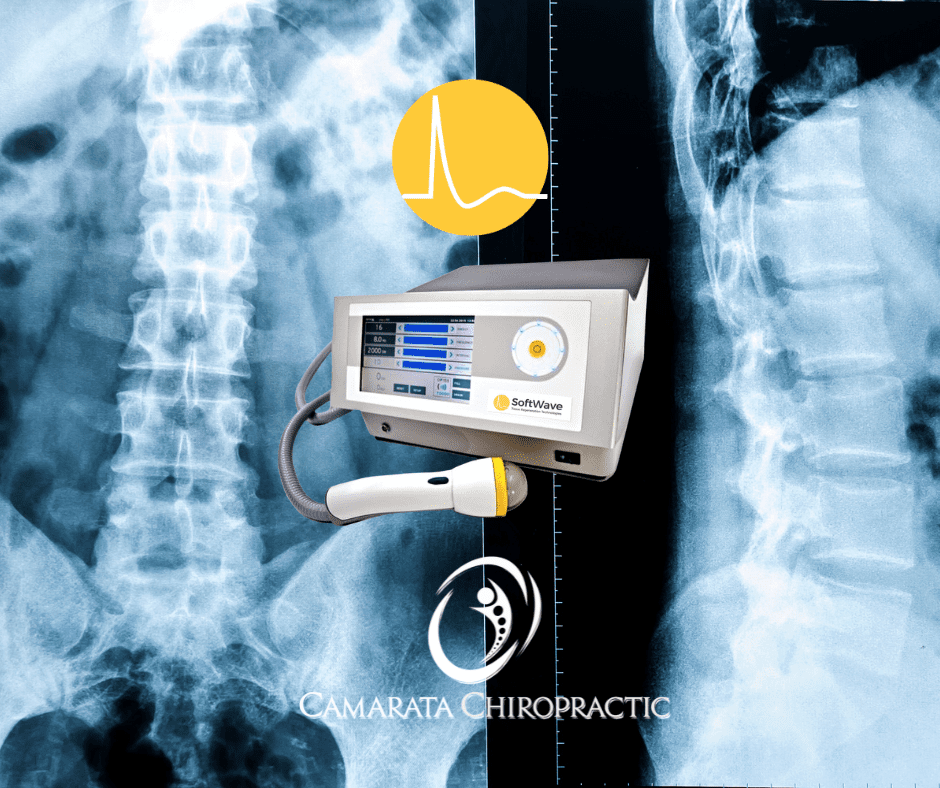
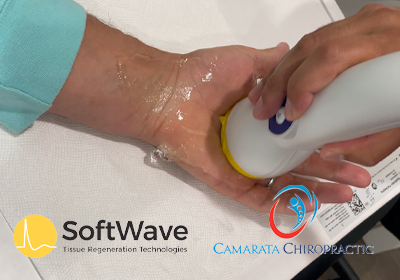
SoftWave Tissue Regeneration Therapy is one of the treatments we find most effective for the stubborn tendon, joint, and soft tissue complaints that come out of a heavy gardening season. It delivers a broad-focused electrohydraulic shockwave directly to the affected area, creating a mechanical signal that the body interprets as a call to repair.
The mechanism matters here: SoftWave doesn’t suppress the problem the way an anti-inflammatory injection might. It works through mechanotransduction, signaling resident stem cells to migrate to the area, stimulating new blood vessel formation (angiogenesis), promoting organized collagen remodeling, and nudging the local inflammatory environment from a chronic, stuck state into an active, productive repair state. Fibrotic adhesions that have built up in repeatedly stressed tissue can begin to break down. Many patients report noticeable improvement in pain and function within a few sessions, and the results tend to continue improving in the weeks that follow as the tissue remodels.
For gardening-related complaints like tendinopathy at the elbow or shoulder, chronic low back pain, or persistent knee soreness, SoftWave offers a drug-free, non-surgical option that works with your body’s own biology. You can read about what the experience is like at our Experience Healing page, and see what patients say at our SoftWave TRT reviews page.
If spring soreness has already started to linger, now is a good time to act. Book a SoftWave consultation and let us take a look before a manageable ache turns into a summer-long problem.
The Role of Chiropractic Care in a Yard-Work Recovery Plan
Chiropractic evaluation and adjustive care address something SoftWave alone doesn’t target directly: how the spine and pelvis are moving. When joints in the lumbar spine or sacroiliac region are restricted or misaligned, the muscles around them tighten protectively, altering how you move and increasing the load on adjacent structures. That compensatory pattern is part of why a “simple” back strain from lifting a bag of mulch can feel so much worse than it should, and why it takes longer to resolve.
Restoring joint mobility through chiropractic care reduces that protective tension, improves your movement mechanics, and allows the soft tissue treatments to work more effectively. The two approaches complement each other: chiropractic gets the structure moving correctly, while SoftWave addresses the tissue damage that accumulated when things weren’t moving well.
Who Benefits Most from This Approach?
This combination is a good fit for a wide range of people who enjoy gardening and outdoor work:
- Active adults who push hard on weekends but want to keep doing so without paying for it all week
- Anyone with a history of low back, knee, or shoulder problems who knows the gardening season tends to flare things up
- People whose elbow or wrist pain has been nagging since last season and never fully resolved
- Older adults who want to stay active in their gardens but are finding recovery takes longer than it used to
- Anyone who has tried rest and over-the-counter approaches but finds the same spots keep coming back
You don’t need to be in severe pain to benefit. Many of the patients who respond best come in at the early-nagging stage rather than waiting until they can’t move. If you’re curious what that process looks like and what other Rochester-area patients have experienced, the testimonials page is a good place to start.
Make This the Season You Stay Ahead of It
Spring gardening in the Rochester area is one of the real pleasures of living here, and there’s no reason to let preventable pain cut it short. A little preparation, a few smart habits in the garden, and prompt attention when something doesn’t resolve on its own can make the difference between a full season of yard work and one spent on the sideline. When your body is telling you it needs more than rest, we’re here to help you figure out what it actually needs.
Ready to Get Started?
If you’re dealing with chronic pain in Rochester, Chili, Churchville, Spencerport, Gates, Greece, Hilton, Rush, Henrietta, Scottsville, Caledonia, LeRoy, Brighton, or anywhere in the greater Rochester area, we’d love to help you find a path that works with your body, not against it.
Book your consultation here and let’s build a plan around what your tissue actually needs.
Get a Hold of Us
Ready to upgrade your health from the inside out?
At Camarata Chiropractic & Wellness, we focus on identifying the root cause of dysfunction and optimizing your body’s performance through SoftWave Therapy, Red Light Therapy, chiropractic care, recovery strategies, and lifestyle guidance.
Address: 3237 Union St, North Chili, NY 14514
Phone: 585-617-4145
Email: info@camaratachiropractic.com
Website: https://www.camaratachiropractic.com
Facebook: https://www.facebook.com/camaratachiropractic
Instagram: https://www.instagram.com/camarata_chiro/
Schedule Your New Patient Special Here!
Learn about our newest offering and the powers of red light therapy at RedLightRochester.com.
‹ Back




 3237 Union St,