
Blog & Resources
Chronic Low Back Pain in Rochester, NY: How SoftWave Targets the Source Instead of Masking It
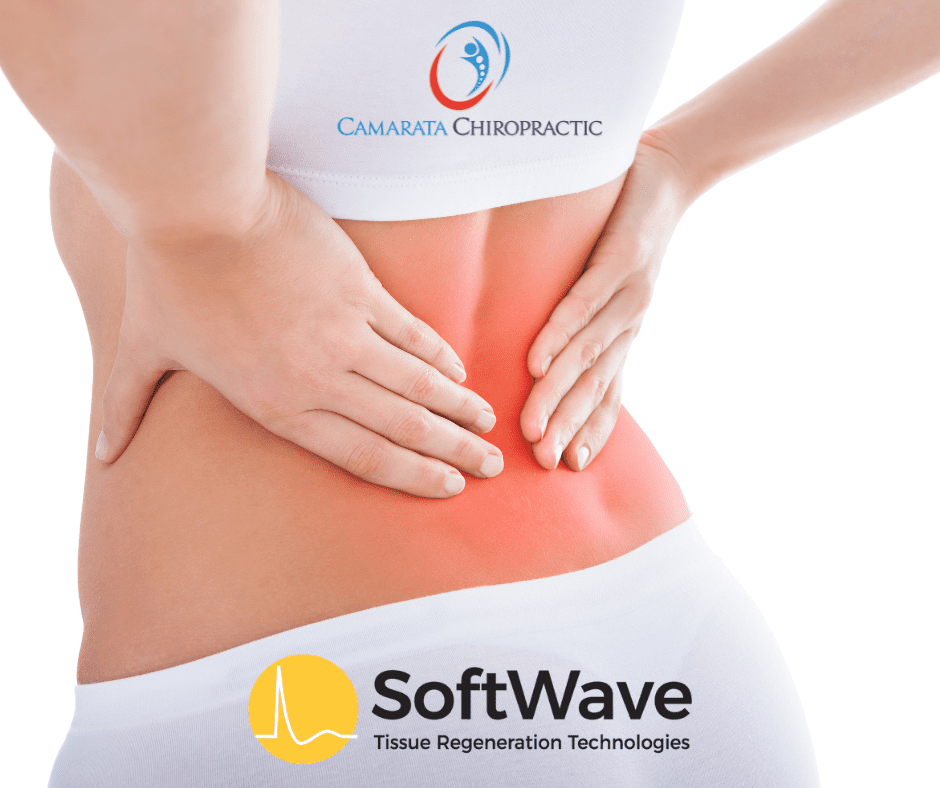
If you’ve been living with low back pain for months or years, you already know the routine. You see a doctor, leave with a prescription for muscle relaxers or anti-inflammatories, and feel some relief for a few days. Then it comes back. Maybe you’ve tried a cortisone injection or two. The pain quiets down for a while, then creeps back in. This cycle is incredibly common in Rochester and across the country, and for most people it doesn’t end in a cure. It ends in management, and not always very good management.
The reason that cycle keeps repeating isn’t a mystery. The medications and injections that most people rely on are designed to reduce symptoms, not to address what’s actually happening in the tissue. Your nervous system stops signaling as loudly, inflammation gets chemically suppressed, muscles unclench. But the underlying damage, the adhesions in the connective tissue, the paraspinal muscle dysfunction, the mechanical stress on the facet joints or discs, none of that has been touched. The moment the medication wears off, the pain has nowhere to go but back.
At Camarata Chiropractic & Wellness, we work with a lot of Rochester adults who are exactly at that point: tired of the hamster wheel of medications that mask the problem, and looking for something that actually targets what’s causing the pain. That’s where SoftWave Tissue Regeneration Therapy, combined with chiropractic care, offers a genuinely different approach.
Why Chronic Low Back Pain Is So Hard to Shake
Acute low back pain, the kind you get from a sudden lift or a bad night’s sleep, usually resolves on its own within a few weeks. Chronic low back pain is a different animal. It lingers because the underlying tissue has often gone through a cycle of injury, partial healing, and re-injury that leaves a disorganized structural footprint.
Several contributors tend to pile on top of each other:
- Paraspinal muscle dysfunction: The deep muscles that support and stabilize the spine lose their normal recruitment patterns after injury. They may stay in a chronic low-grade contraction, develop trigger points, or simply stop firing correctly, leaving the spine poorly supported.
- Facet joint stress: The small joints along the back of the spine can develop irritation and restricted motion, contributing to stiffness, localized tenderness, and referred pain into the hips and buttocks.
- Disc-related changes: Degenerative disc disease or disc bulges alter how load is distributed through the lumbar spine, stressing surrounding soft tissue and nerve roots.
- Fibrotic adhesions: Repeated micro-trauma causes connective tissue to lay down scar-like fibers in disorganized patterns. These adhesions restrict normal movement and create chronic tension and pain signals.
- Chronic inflammation: Unlike the productive, short-term inflammation that helps tissue heal, chronic low-grade inflammation becomes dysfunctional. It no longer drives repair. It just drives pain.
When all of these factors are present simultaneously, no single medication or injection is going to unravel them. The tissue itself needs a reason to reorganize and heal.
What Medications and Injections Actually Do (and Don’t Do)
This isn’t a criticism of anyone who has tried NSAIDs, muscle relaxers, or epidural steroid injections. For acute flare-ups, they serve a real purpose. The problem is when they become the long-term strategy.
NSAIDs and acetaminophen reduce pain signaling. Muscle relaxers interrupt the reflex arcs that keep muscles in spasm. Epidural steroids suppress inflammation around a nerve root. All of these can provide meaningful short-term relief, and there are situations where that relief is exactly what someone needs to keep functioning.
But none of them repair paraspinal muscle patterns. None of them dissolve fibrotic adhesions in the thoracolumbar fascia. None of them stimulate the production of new collagen or recruit the body’s own stem cells to injured tissue. When the drug clears your system or the steroid wears off, the structural situation that was generating the pain signal is unchanged, and often, months of reduced activity during that window has made the supporting musculature weaker.
How SoftWave Targets the Source
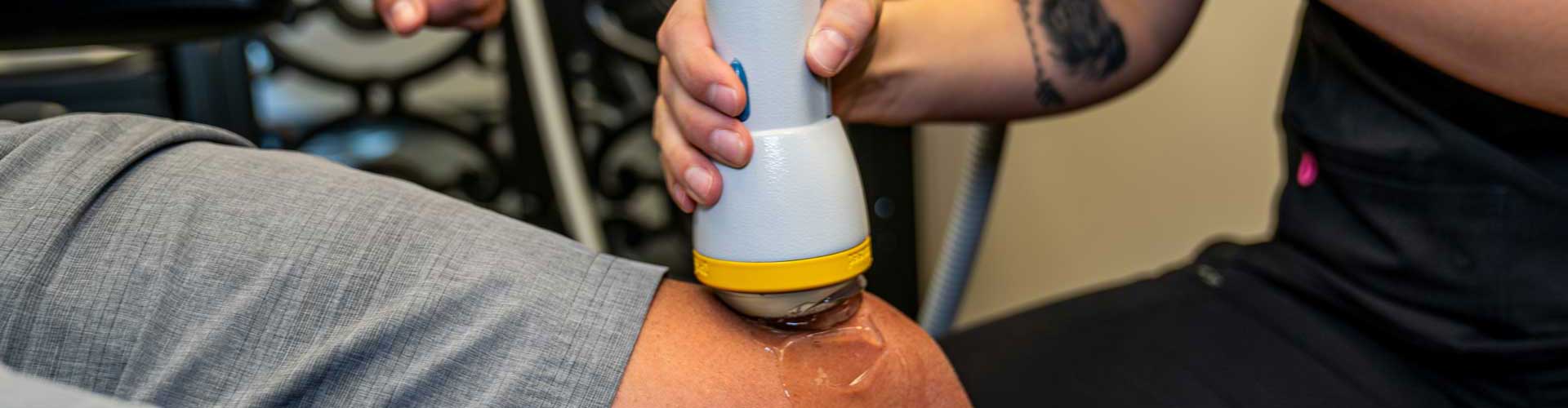
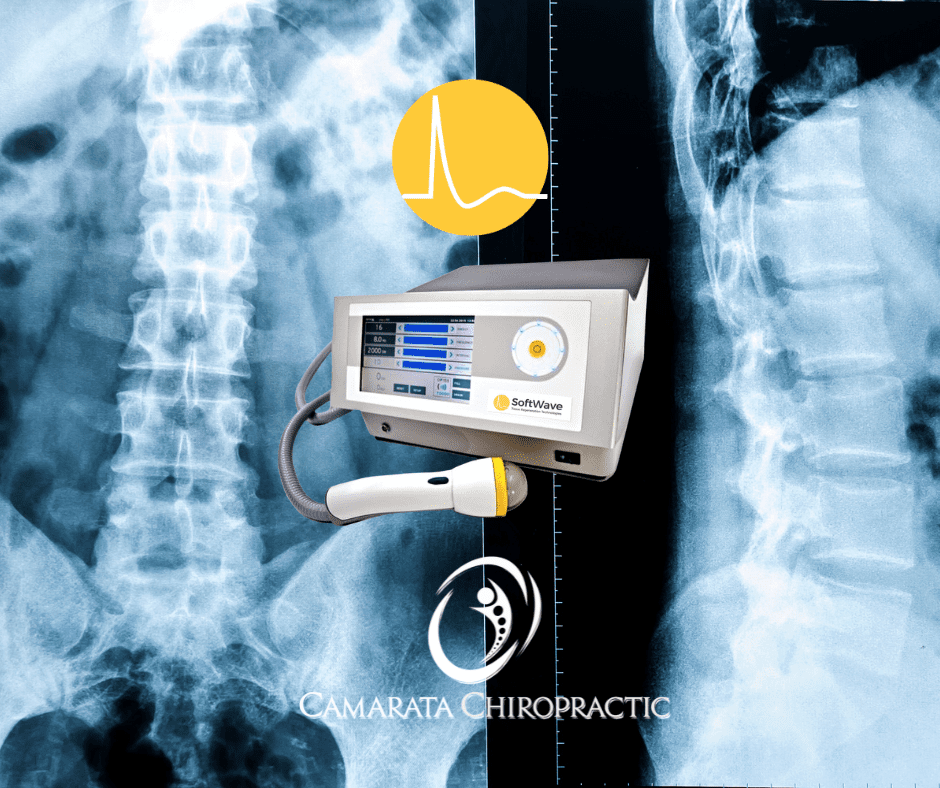
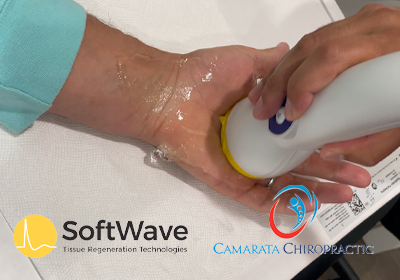
SoftWave Tissue Regeneration Therapy uses electrohydraulic technology to generate true unfocused shockwaves that spread through a broad area of tissue. This isn’t ultrasound. It’s a mechanical pressure wave that reaches deep into the paraspinal muscles, fascia, and surrounding soft tissue in a way that topical treatments or surface-level modalities simply cannot.
At the cellular level, SoftWave works through a process called mechanotransduction. The pressure wave creates mechanical stress at the cell membrane, which triggers a cascade of biological responses:
- Stem cell activation: SoftWave is designed to activate resident mesenchymal stem cells in the treated tissue, signaling them to migrate to areas of damage and begin repair work.
- Angiogenesis: New blood vessel formation increases circulation to tissues that may have become chronically underperfused, which is common in areas with longstanding scar tissue.
- Collagen remodeling: Disorganized scar tissue and fibrotic adhesions can be broken down and replaced with more functional collagen architecture.
- Inflammation modulation: SoftWave doesn’t suppress inflammation the way a steroid does. It modulates it, shifting the inflammatory environment from a chronic, dysfunctional state into a productive, repair-oriented state.
For chronic low back pain specifically, this means the deep paraspinal tissue and fascial layers that have been stuck in a dysfunctional pattern for months or years are finally receiving a biological signal to repair. Many patients report a meaningful reduction in both pain intensity and stiffness after a course of SoftWave sessions.
What Our Rochester Patients Are Saying
Real reviews from real SoftWave patients at Camarata Chiropractic & Wellness
Why Chiropractic Care Belongs in the Same Plan
SoftWave and chiropractic care are a natural pairing because they work on complementary levels. SoftWave addresses the soft tissue: the muscle, fascia, and connective tissue that contribute to chronic pain and movement restriction. Chiropractic adjustments address the mechanical and neurological component, restoring proper joint motion and reducing the protective muscle guarding that develops around restricted spinal segments.
When facet joints in the lumbar spine are restricted, the surrounding muscles brace against that restriction. That bracing creates chronic tension, altered movement patterns, and eventually tissue damage from overuse and strain. Adjustments restore joint mobility. SoftWave helps the surrounding soft tissue reorganize and recover. Together, they address the whole picture in a way that neither approach fully accomplishes alone.
If you’ve been wondering whether there’s a better path forward than the medication cycle, book a SoftWave consultation at Camarata Chiropractic & Wellness and let’s look at what’s actually driving your pain.
Who Is a Good Candidate
SoftWave combined with chiropractic care may be appropriate for a wide range of Rochester adults dealing with low back pain, including:
- People with chronic muscular low back pain that hasn’t responded to physical therapy or medications alone
- Those with facet syndrome or degenerative disc changes who want a non-surgical option
- People who have had partial relief from injections but are looking for something more lasting
- Adults dealing with post-surgical scar tissue or residual pain after a back procedure
- Anyone who wants to avoid long-term reliance on anti-inflammatory medications
- Active people, including those who want to return to sports, gardening, or simply moving through daily life without pain
We recommend a thorough evaluation first. Not every presentation of low back pain is the same, and we want to understand what’s contributing to yours before building a plan. You can read about how we approach that process on our Experience Healing page.
What a Typical Plan Looks Like
After an initial evaluation, most patients with chronic low back pain begin with a series of SoftWave sessions, typically scheduled close together in the early weeks to build on the biological response. Chiropractic adjustments are integrated based on what the evaluation reveals about joint mobility and spinal mechanics.
Sessions are relatively brief, usually under thirty minutes, and the SoftWave treatment itself is well-tolerated by most patients. There’s no downtime. You don’t need to clear your schedule for the rest of the day.
Improvement tends to be gradual rather than sudden. Many patients notice less morning stiffness and a reduced pain baseline within the first several weeks. As treatment progresses, the goal shifts from pain reduction to functional restoration: being able to walk longer, sit without discomfort, return to activities that chronic low back pain had sidelined.
Lifestyle and Movement Support
No treatment works in isolation from the rest of your life. Part of what we discuss with patients is how daily habits either support or undermine the healing process. For chronic low back pain, a few areas matter considerably:
- Movement frequency: Long periods of static sitting or standing increase compressive load on lumbar discs and facet joints. Breaking up sedentary time with short walks or movement breaks helps keep tissue hydrated and reduces guarding patterns.
- Sleep position and surface: Poor sleep mechanics can undo progress made during treatment. We often discuss positioning strategies that reduce lumbar strain overnight.
- Core engagement: Not aggressive core training, but restoring the deep stabilizing muscles that support the lumbar spine. This can be as simple as learning to brace correctly before lifting.
- Inflammation at the dietary level: Chronic systemic inflammation, fed by poor diet and insufficient sleep, creates a harder environment for tissue repair. Simple dietary improvements can support the biological work that SoftWave initiates.
What Rochester Patients Are Saying
The best way to understand what SoftWave and chiropractic care together look like in real life is to hear from people who have been through it. Many of our patients came in skeptical after years of trying other approaches. The SoftWave reviews from our patients give a candid picture of what the experience and results can look like for people dealing with chronic low back pain right here in the Rochester area.
Chronic low back pain doesn’t have to be a permanent fixture in your life. When the underlying tissue dysfunction is addressed directly rather than chemically masked, the body has a genuine opportunity to move toward repair. That’s the goal of every plan we build at Camarata Chiropractic & Wellness.
Ready to Get Started?
If you’re dealing with chronic pain in Rochester, Chili, Churchville, Spencerport, Gates, Greece, Hilton, Rush, Henrietta, Scottsville, Caledonia, LeRoy, Brighton, or anywhere in the greater Rochester area, we’d love to help you find a path that works with your body, not against it.
Book your consultation here and let’s build a plan around what your tissue actually needs.
Get a Hold of Us
Ready to upgrade your health from the inside out?
At Camarata Chiropractic & Wellness, we focus on identifying the root cause of dysfunction and optimizing your body’s performance through SoftWave Therapy, Red Light Therapy, chiropractic care, recovery strategies, and lifestyle guidance.
Address: 3237 Union St, North Chili, NY 14514
Phone: 585-617-4145
Email: info@camaratachiropractic.com
Website: https://www.camaratachiropractic.com
Facebook: https://www.facebook.com/camaratachiropractic
Instagram: https://www.instagram.com/camarata_chiro/
Schedule Your New Patient Special Here!
Learn about our newest offering and the powers of red light therapy at RedLightRochester.com.
‹ Back



 3237 Union St,