
Blog & Resources
Calcific Tendinitis of the Shoulder: Why Shockwave Therapy Has Long Been Explored and What SoftWave Offers
Calcium Deposits in the Shoulder: A Painful Problem Rochester Adults Often Do Not See Coming
Some shoulder pain builds slowly. Calcific tendinitis can do that, or it can arrive almost overnight: a deep, intense ache in the shoulder that makes it hard to lift your arm, sleep on that side, or even reach for a coffee mug. Many people in Rochester first learn they have it when an X-ray shows a bright white spot sitting in a rotator cuff tendon. That spot is a calcium deposit, and it can be surprisingly stubborn.
At Camarata Chiropractic & Wellness in North Chili, Dr. Sam Camarata often meets patients who have been told to wait it out, or who are weighing a needle procedure or surgery. This article explains what calcific tendinitis is, why shockwave therapy has been explored for it for so long, and what makes SoftWave Tissue Regeneration Technology (TRT) a different kind of option.
What Calcific Tendinitis Actually Is
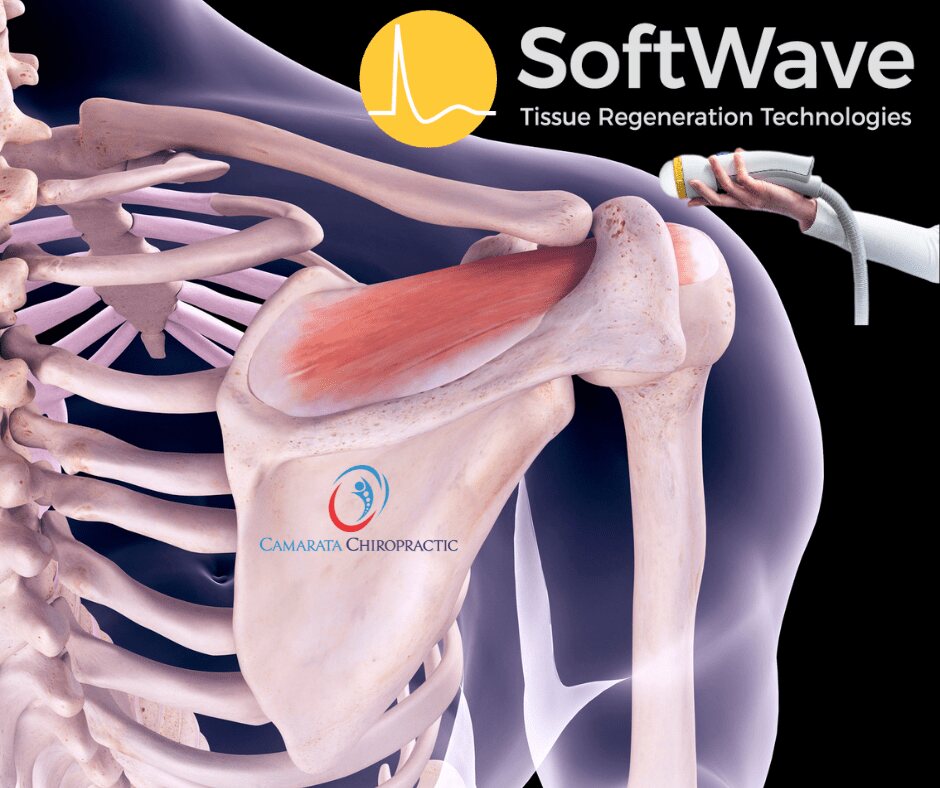
Your rotator cuff is a group of four muscles and tendons that hold the ball of the upper arm centered in the shoulder socket. In calcific tendinitis, calcium hydroxyapatite crystals build up inside one of these tendons, most often the supraspinatus, which runs across the top of the shoulder.
This is not the same as calcium from your diet, and it is not the same as bone spurs from arthritis. The exact cause is still not fully understood, but the process is thought to involve tendon cells changing behavior in an area of reduced blood flow and oxygen. The deposit usually goes through phases:
- Formative phase: Calcium is laid down in the tendon. This stage may cause mild pain or none at all.
- Resting phase: The deposit sits in place. Some people have aching and pinching with overhead movement; others have no symptoms.
- Resorptive phase: The body begins breaking the deposit down. Ironically, this is often the most painful stage, as the area becomes inflamed and the calcium takes on a toothpaste-like consistency.
Who Gets It
Calcific tendinitis is most often seen in middle-aged adults. It is not usually tied to a single injury or to sports. Office workers, parents, retirees, and people with conditions like diabetes or thyroid problems may all develop it. Some people have deposits in both shoulders.
Common Symptoms
- Deep ache in the front or outside of the shoulder, sometimes spreading down the upper arm
- Pain lifting the arm out to the side or overhead
- Night pain, especially lying on the affected shoulder
- Sudden, severe flares during the resorptive phase
- Loss of motion from pain and guarding
Why It Lingers
The body can eventually reabsorb calcium deposits on its own, but for many people that process stalls. The deposit may sit in the resting phase for months or years, irritating the tendon and crowding the space under the acromion, the bony roof of the shoulder. The tendon around the deposit can become weak and disorganized, and the surrounding muscles tighten to protect it. In Rochester, a winter of shoveling, scraping ice off the windshield, and carrying groceries through the snow can keep aggravating a shoulder that never quite settles down.
Conventional Options and Their Limits
- Rest, ice, and anti-inflammatories may ease a flare but do not remove the deposit.
- Physical therapy helps restore motion and strength, though pain from the deposit can limit progress.
- Cortisone injections can calm intense pain short term, but they do not heal the tendon, and repeated injections raise concerns about tendon quality.
- Barbotage, an ultrasound-guided needle procedure to break up and rinse out the calcium, is an option for some patients.
- Arthroscopic surgery to remove the deposit is generally reserved for cases that do not respond to conservative care, and recovery can take months.
What Our Rochester Patients Are Saying
Real reviews from real SoftWave patients at Camarata Chiropractic & Wellness
Why Shockwave Has Long Been Explored for Calcific Tendinitis
Calcific shoulder tendinitis is one of the conditions shockwave therapy has been studied for over many years in orthopedic and sports medicine research. The interest makes sense: acoustic waves can pass through the skin and soft tissue to reach the tendon without incisions, injections, or medication. Researchers have explored the idea that this energy may help the body's own processes break down and clear the deposit while also stimulating repair in the tendon around it.
Not all shockwave devices are alike, though. Many clinics use radial pressure wave devices, which spread energy out from the surface and lose intensity as they go deeper. Focused devices can reach deeper but typically concentrate energy into a small point. A calcified rotator cuff sits beneath the deltoid muscle, and the irritated tendon around the deposit is larger than the deposit itself, so how the energy is delivered matters.
If shoulder pain is keeping you up at night, schedule a SoftWave consultation with Dr. Sam and bring your imaging if you have it.
What SoftWave Offers: How It Works in Plain Language
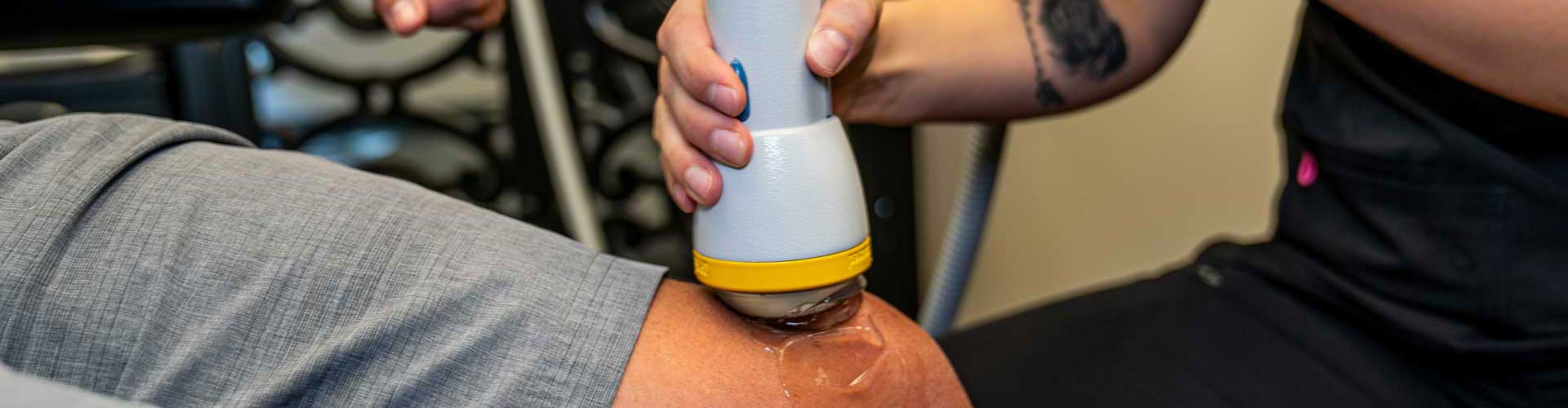
SoftWave uses electrohydraulic technology. A spark inside the applicator generates an acoustic wave, and a patented parabolic reflector shapes it into a broad-focused wave. SoftWave is the only broad-focused shockwave technology, meaning it reaches deep tissue while covering a wide treatment area, so the deposit, the surrounding tendon, and nearby muscles can all be treated.
Once that energy reaches the tissue, SoftWave is designed to:
- Activate resident stem cells so the tendon can begin true repair.
- Promote angiogenesis through VEGF and eNOS pathways, improving blood flow to a tendon area that tends to be poorly supplied.
- Support proliferation and new collagen through signals such as PCNA and BMP, helping rebuild healthier tendon fibers.
- Modulate inflammation, including through toll-like receptor regulation, which may matter in a painful resorptive flare.
- Clear senescent cells that can keep tissue stuck in a degenerative state.
SoftWave is FDA-cleared for activation of connective tissue, temporary increase in blood flow, and temporary relief of minor muscle and joint pain, among other uses. It is not cleared specifically for calcific tendinitis, and no one can promise a deposit will disappear, but these effects line up well with what a calcified, irritated tendon needs.
What to Expect During Treatment
Dr. Sam will review your history and any X-ray or ultrasound findings, then assess your shoulder motion, neck, and upper back, since mechanics in the thoracic spine and shoulder blade affect how the rotator cuff is loaded. SoftWave sessions take about 10 to 15 minutes, with no needles, drugs, or downtime. Most patients complete a series over several weeks. Many patients report improved sleep and easier reaching as the series goes on, and because the treatment is designed to start a healing process, changes can continue after the last visit. Chiropractic care and guided shoulder exercises help restore normal movement, and some patients add our Trifecta Red Light Therapy bed for general recovery support.
When to Seek Medical Care Right Away
See a physician promptly if your shoulder pain followed a fall or a hard pull, if you cannot lift your arm at all, if the shoulder is hot, red, and swollen with fever, or if you have left-sided shoulder or arm pain with chest pressure, shortness of breath, or sweating. Those symptoms need urgent evaluation.
Ready to Reach Overhead Without Wincing?
You do not have to wait years for a calcium deposit to settle down on its own. Let us help your shoulder move toward healing.
Book your SoftWave consultation here
Learn more: SoftWave Therapy for Shoulder Pain in Rochester, NY
Get a Hold of Us
Ready to get to the root of your pain instead of just managing it?
At Camarata Chiropractic & Wellness, we focus on identifying the root cause of dysfunction and helping your body heal through SoftWave Therapy, Red Light Therapy, chiropractic care, recovery strategies, and lifestyle guidance.
Address: 3237 Union St, North Chili, NY 14514
Phone: 585-617-4145
Email: info@camaratachiropractic.com
Website: https://www.camaratachiropractic.com
Facebook: https://www.facebook.com/camaratachiropractic
Instagram: https://www.instagram.com/camarata_chiro/
Schedule Your SoftWave Therapy Visit Here!
Learn about our newest offering and the powers of red light therapy at RedLightRochester.com.
‹ Back

 3237 Union St,