
Blog & Resources
Golfer's Elbow (Medial Epicondylitis) Relief in Rochester, NY: SoftWave for the Inside of the Elbow
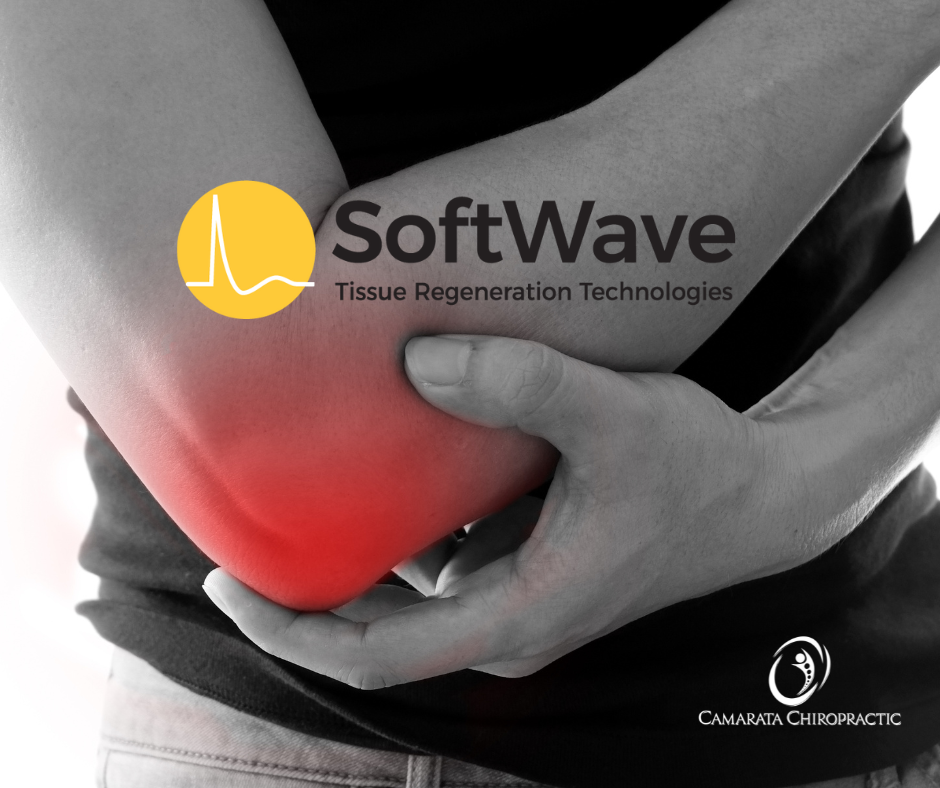
If the inner side of your elbow has been aching every time you grip a golf club, lift a bag of mulch, or even shake someone’s hand, you’re likely dealing with medial epicondylitis, better known as golfer’s elbow. Unlike its more commonly discussed cousin (tennis elbow, which affects the outer elbow), golfer’s elbow targets the tendons and muscles on the inside of the elbow, where the forearm flexors attach to the medial epicondyle. The pain can radiate down the forearm toward the wrist, and it has a frustrating habit of hanging around long after the activity that caused it has stopped.
Rochester’s golf courses open up each spring, and with them comes a familiar wave of patients limping in with inside-elbow pain they’ve been “pushing through” since the last round of the season. Gardening, landscaping, and home improvement projects that ramp up from May through September put the same forearm flexor tendons under repeated stress. The condition is not exclusive to golfers by any means. Weight trainers, carpenters, plumbers, and anyone who grips, lifts, or pulls repetitively can develop it. What most of these patients share is a tendon that simply refuses to heal on its own, no matter how long they rest it.
At Camarata Chiropractic & Wellness, we use SoftWave Tissue Regeneration Therapy to address the root cause of golfer’s elbow rather than just masking the pain. This page explains what’s actually happening inside the injured tendon, why conventional treatments fall short, and how SoftWave helps the body do what it could not manage to do alone.
What Is Golfer’s Elbow and Why Does It Hurt So Much?
The medial epicondyle is the bony bump on the inside of your elbow. Several forearm muscles, including the flexor carpi radialis, pronator teres, and flexor digitorum superficialis, share a common origin at this point. When these muscles are overloaded repeatedly, the common flexor tendon at that attachment site develops microscopic tears. The medical term for the resulting degenerative process is tendinopathy: the tendon tissue breaks down faster than the body can repair it.
- Pain and tenderness on the inside of the elbow, sometimes radiating toward the wrist or hand
- Weakness in grip strength
- Stiffness that is often worst in the morning or after rest
- Discomfort when flexing the wrist, shaking hands, or swinging a club
- Occasional numbness or tingling if the ulnar nerve is irritated nearby
The tendons around the elbow receive relatively little blood supply compared to muscle tissue. That limited circulation is exactly why tendon injuries heal so slowly. Without adequate blood flow, the building blocks of repair (oxygen, nutrients, and stem cell signals) simply do not arrive at the injured site in sufficient quantity or speed.
Why the Common Flexor Tendon Heals Slowly
Tendons are dense, fibrous structures made largely of type I collagen. After a micro-tear, the body tries to repair the damage by laying down new collagen. When the stress is chronic and the blood supply is poor, that repair process becomes disorganized. The replacement collagen is often weaker, less organized, and more prone to re-injury. Over time, the tendon develops what is called fibrotic adhesions: dense, scar-like tissue that restricts normal movement and perpetuates pain.
The medial epicondyle location adds another layer of difficulty. Every time you grip something, whether it is a golf club, a wrench, or a steering wheel, you load those flexor tendons again. True rest is nearly impossible in daily life, so the tissue never gets the extended recovery window it needs.
Why Braces, Rest, and Cortisone Only Go So Far
Counterforce braces and compression sleeves can redistribute some of the mechanical load and provide short-term relief. Rest reduces inflammation temporarily. Cortisone injections can quiet the pain quite effectively for a few weeks. The problem with all three approaches is that none of them change the underlying tissue quality of the tendon.
- Braces: Helpful for symptom management during activity, but do not stimulate tendon repair.
- Rest: Necessary but rarely sufficient. The poor blood supply means that even extended rest does not guarantee meaningful tissue regeneration.
- Cortisone injections: Suppress inflammation broadly, which reduces pain, but repeated injections are associated with tendon weakening over time. Inflammation, in the right form, is actually part of the repair process. Suppressing it entirely can slow healing.
- Physical therapy exercises: Eccentric loading protocols (like Tyler Twist or reverse wrist curls) are evidence-supported and valuable, but progress is slow and some patients cannot tolerate the loading until the underlying tissue quality improves.
Many patients cycle through these options for months or even years, getting temporary relief and then returning to the same pain once they resume normal activity. If that pattern sounds familiar, a different approach may be worth exploring.
What Our Rochester Patients Are Saying
Real reviews from real SoftWave patients at Camarata Chiropractic & Wellness
How SoftWave Therapy Addresses the Root Cause
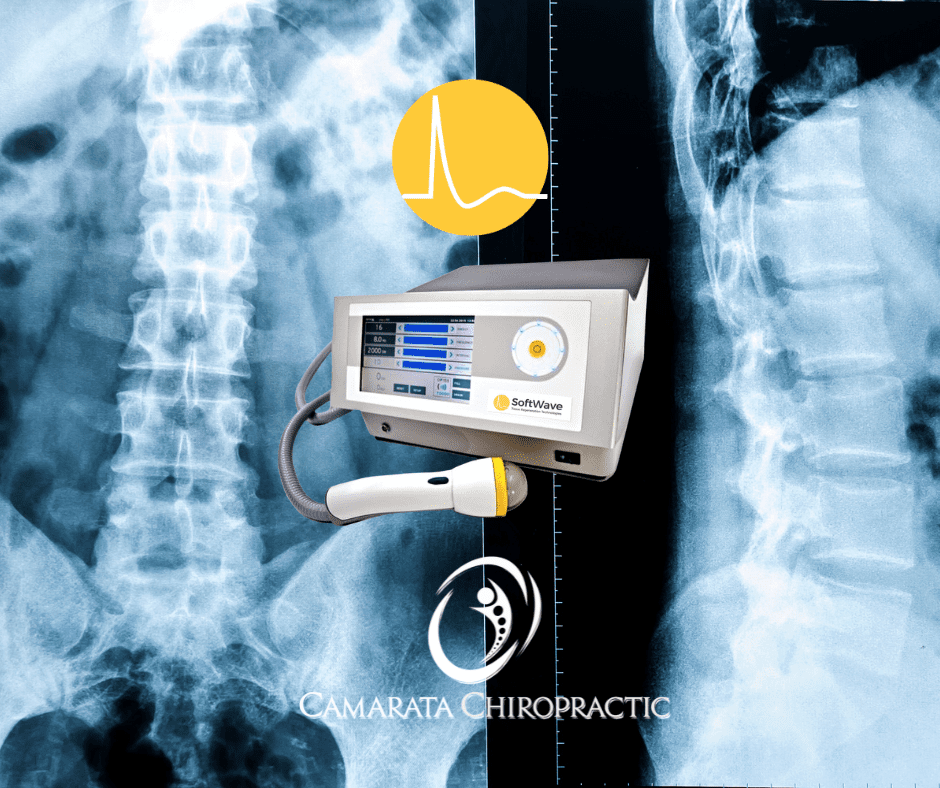
SoftWave Tissue Regeneration Therapy delivers electrohydraulic extracorporeal shockwaves through a broad-focused applicator placed directly over the medial epicondyle and surrounding flexor tendon. These acoustic waves travel into the tissue and trigger a cascade of biological responses through a mechanism called mechanotransduction: the cells of the tendon and surrounding structures physically sense the mechanical signal and respond by shifting their behavior.
Specifically, SoftWave is designed to:
- Stimulate angiogenesis: The formation of new blood vessels in and around the injured tendon, bringing the circulation the tissue desperately lacks.
- Activate resident stem cells: Signaling the body’s own repair cells to migrate to the site and participate in tissue rebuilding.
- Promote collagen remodeling: Encouraging the replacement of disorganized, fibrotic scar tissue with healthier, better-organized collagen fibers.
- Break up fibrotic adhesions: The mechanical energy helps loosen the dense scar tissue that has built up around chronically injured tendons.
- Modulate inflammation: SoftWave does not suppress inflammation the way a steroid does. It nudges the inflammatory response from a chronic, dysfunctional state into a productive, repair-oriented state.
The result is that the underlying tissue quality of the common flexor tendon can improve, not just the pain signal over it. Many patients report a noticeable reduction in tenderness within the first few sessions, with continued improvement in strength and function as the tissue rebuilds over the following weeks.
What to Expect During a SoftWave Session for Golfer’s Elbow
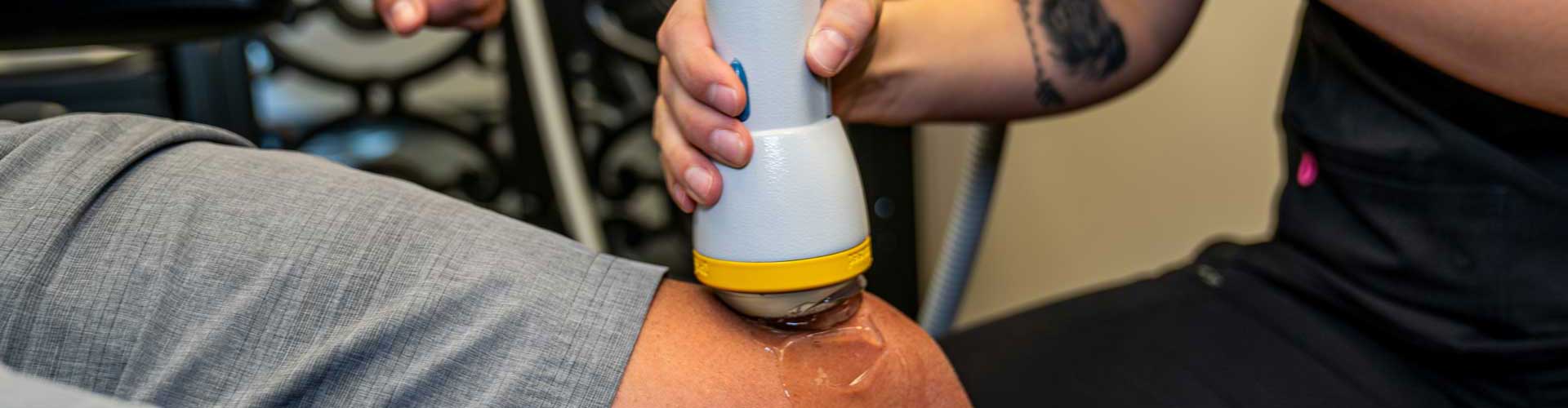
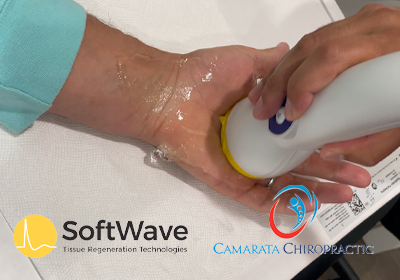
A typical session at our North Chili office takes about 10 to 15 minutes for the elbow itself. The SoftWave applicator is moved across the inner elbow and proximal forearm using ultrasound gel as a coupling medium. Most patients describe the sensation as a tapping or mild percussion. There is no injection, no incision, and no downtime. Many people return to desk work or light activity the same day.
If you’re curious whether SoftWave is right for your elbow pain, the first step is a consultation where we assess the location, duration, and severity of your symptoms. You can book a SoftWave consultation online to get started.
How Many Sessions Does It Take?
Most patients with medial epicondylitis follow a plan of six to eight SoftWave sessions, spaced out over several weeks. The exact number depends on how long the condition has been present and how the tissue responds. Chronic cases that have been symptomatic for a year or more may take longer to respond than a more recent overuse injury. We reassess at regular intervals and adjust the plan based on how you’re progressing.
Pairing SoftWave with appropriate eccentric tendon loading exercises (guided by our team or a physical therapist) tends to produce better outcomes than either approach alone. Chiropractic evaluation of the elbow, wrist, and shoulder can also identify any contributing mechanical factors that might be overloading the medial epicondyle in the first place.
Who Is a Good Candidate for SoftWave Golfer’s Elbow Treatment?
You may be a strong candidate for SoftWave therapy if:
- You have had inner elbow pain for six weeks or longer that has not resolved with rest, bracing, or stretching
- You have tried one or more cortisone injections with only temporary relief
- You want to return to golf, weight training, landscaping, or your trade work without relying on ongoing anti-inflammatory medication
- You have been told you “may need surgery” and want to explore a non-surgical path first
- You are a Rochester-area resident who prefers an in-office, drug-free treatment with no recovery period
SoftWave is not appropriate for patients with active infection at the treatment site, certain clotting disorders, or a pacemaker, among other contraindications. We review your health history at the consultation to confirm that you are a safe and appropriate candidate.
You can read what other patients have experienced on our SoftWave reviews page or visit our patient testimonials to hear more directly from people who came to us with elbow, shoulder, and knee tendon issues and found lasting relief. Golfer’s elbow does not have to be the thing that keeps you off the course or out of the garden all summer.
Golfer’s Elbow vs. Tennis Elbow: A Quick Distinction
Because the two conditions are commonly confused, it is worth stating clearly: golfer’s elbow affects the inner (medial) side of the elbow and involves the forearm flexor and pronator muscles. Tennis elbow affects the outer (lateral) side and involves the forearm extensor muscles at the lateral epicondyle. Both are tendinopathies of the elbow, and SoftWave can address both, but the treatment location, the muscles involved, and the activities most likely to provoke each condition are distinct. If your pain is on the outside of the elbow, that is a separate condition addressed in a different post. If your pain is on the inside, you’re in the right place.
Ready to Get Started?
If you’re dealing with chronic pain in Rochester, Chili, Churchville, Spencerport, Gates, Greece, Hilton, Rush, Henrietta, Scottsville, Caledonia, LeRoy, Brighton, or anywhere in the greater Rochester area, we’d love to help you find a path that works with your body, not against it.
Book your consultation here and let’s build a plan around what your tissue actually needs.
Get a Hold of Us
Ready to upgrade your health from the inside out?
At Camarata Chiropractic & Wellness, we focus on identifying the root cause of dysfunction and optimizing your body’s performance through SoftWave Therapy, Red Light Therapy, chiropractic care, recovery strategies, and lifestyle guidance.
Address: 3237 Union St, North Chili, NY 14514
Phone: 585-617-4145
Email: info@camaratachiropractic.com
Website: https://www.camaratachiropractic.com
Facebook: https://www.facebook.com/camaratachiropractic
Instagram: https://www.instagram.com/camarata_chiro/
Schedule Your New Patient Special Here!
Learn about our newest offering and the powers of red light therapy at RedLightRochester.com.
‹ Back


 3237 Union St,